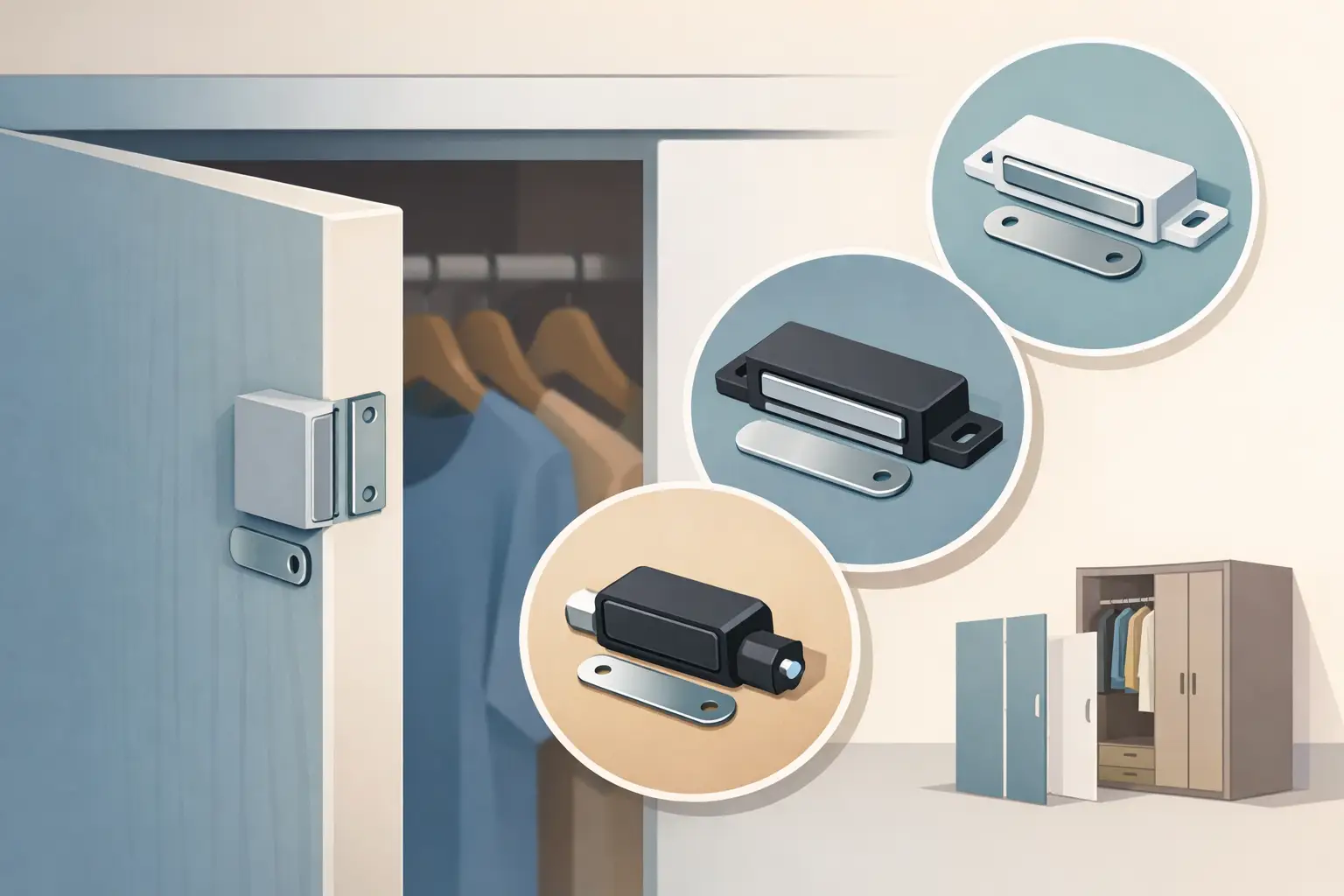
Choosing a Magnet Catch for Wardrobe Door
A wardrobe door that will not stay shut is a small problem that quickly becomes an everyday annoyance. If you are fitting new furniture, upgrading tired hardware, or fixing a door that keeps drifting open, the right magnet catch for wardrobe door use makes a noticeable difference. Get the size, strength and fitting style right, and the door closes cleanly, stays put, and feels properly finished.
Why a magnet catch works well on wardrobe doors
Wardrobe doors need a closure that is simple, reliable and compact. In many cases, a magnetic catch is the best answer because it holds the door shut without the extra movement of a latch, roller catch or lock. That matters on wardrobes used every day, especially in bedrooms, fitted furniture and utility spaces where you want a neat close rather than a clunky mechanism.
A good magnetic catch also helps when hinges have a little play or when a door is light enough that a full mechanical latch feels excessive. The magnet draws the strike plate into place and keeps the door closed with consistent holding force. For cabinet makers and DIY users alike, that usually means easier fitting and fewer adjustments once the job is done.
That said, not every wardrobe door needs the same catch. A lightweight MDF panel and a tall solid timber door place very different demands on the hardware. The best result comes from matching the catch to the door, not simply buying the first one that looks about right.
What to look for in a magnet catch for wardrobe door projects
The two things that matter most are holding strength and fit. If the magnet is too weak, the door creeps open. If it is too strong, the door can feel awkward to pull open, especially on smaller wardrobes or where children will be using it.
For most standard wardrobe doors, a compact magnetic catch with dependable pull performance is enough. For taller or heavier doors, or doors that are slightly warped, stepping up to a stronger catch makes sense. This is where quality matters. A stronger neodymium-based magnetic catch gives more reliable hold in a smaller format than many basic ferrite options, which is useful when space is tight inside the carcass.
The mounting style also matters. Some catches are surface-fixed and easy to install with screws, making them a practical choice for retrofits and repairs. Others are more discreet and better suited to cleaner furniture builds where appearance is important. Neither is automatically better. It depends on whether speed of fitting or a more hidden finish matters more on the job.
Material quality should not be overlooked either. In a wardrobe, the catch will be opened and closed repeatedly, often for years. Weak plastic housings, poor plating or inconsistent magnets tend to show their limits quickly. A well-made catch holds better, lasts longer and saves you from call-backs or repeat fixes.
Matching strength to the door
A light single wardrobe door usually needs moderate holding force rather than maximum pull. The aim is controlled closure, not a fight every time you open it. Heavier doors, mirrored doors or doors with a slight twist benefit from stronger magnetic pull because they put more strain on the catch and are more likely to spring back if the hold is too light.
If you are unsure, think about why the door opens in the first place. If it is simply drifting because there is no effective closure, a standard catch may be enough. If the hinges are slightly out, the frame is not perfectly true, or the door has some stored tension, a stronger catch gives you more margin.
Size and clearance
Wardrobe internals are often tighter than they first appear. Shelving, top panels and hinge positions can all limit where the catch can be placed. A compact catch is usually easier to work with, but there still needs to be enough face contact between the magnet and the strike plate for reliable performance.
Small catches can be very effective when built with strong magnets, which is one reason they are popular in furniture work. You get solid holding power without bulky hardware getting in the way.
Where to position the catch
Most wardrobe catches are fitted near the top inside corner of the cabinet, although double-door wardrobes and taller units sometimes benefit from more than one catch. Positioning affects both holding strength and how the door feels in use.
Fit the catch where the door closes naturally and squarely against the cabinet. If the catch has to pull the door a long way into line, it is doing too much work and performance will suffer. The magnet should support a good fit, not compensate for a poor one.
On tall or flexible doors, a single catch at the top may not always be enough. If the lower section can still move, adding a second catch can improve stability and stop the door from rattling or sitting unevenly. This is especially useful on bespoke furniture, utility cupboards and workshop storage where function matters more than minimal hardware.
Fitting tips that improve performance
A magnetic catch is simple hardware, but fitting accuracy still matters. Start by checking the door alignment and hinge adjustment before fixing anything permanently. If the door is badly out of line, no catch will perform at its best.
Offer the catch up to the inside of the carcass and check that the strike plate meets it cleanly when the door closes. The contact should be direct and consistent. If the plate only clips the edge of the magnet, holding force will drop and wear can increase over time.
Pilot holes are worth the extra minute, particularly in MDF, veneered board and hardwood. They help keep the screws straight and reduce the risk of splitting or stripped fixings. Once fitted, test the closure several times before tightening fully. Small adjustments at this stage can make the finished result feel far better.
If you are replacing an older catch, do not assume the same position is still best. Previous hardware may have been fitted around a problem rather than properly aligned. Treat it as a fresh installation and you are more likely to get a clean, dependable close.
Common problems and what usually causes them
When a wardrobe door will not stay shut, the magnet is not always the real problem. Hinges that have dropped, a bowed door, a swollen panel or a strike plate set too far off centre can all reduce performance. Replacing the catch with a stronger one may help, but only if the underlying issue is minor.
If the door slams too hard, the catch may be stronger than necessary or the closing action too direct. In that case, a lower-strength catch or a small adjustment in position often gives a better feel. There is always a balance between secure hold and comfortable opening force.
Rattling can point to weak pull, poor contact, or a gap between door and frame that lets the door move after closing. A stronger catch can solve it, but so can improving alignment. The right fix depends on whether the catch is underpowered or simply badly placed.
When stronger magnets are worth it
Not every wardrobe needs maximum magnetic force, but stronger magnets come into their own where reliability matters. Heavier doors, awkward alignments, trade installations and higher-use furniture all benefit from better pull performance. This is where specialist magnetic hardware stands apart from generic catches that look similar but do not hold as well in practice.
A compact catch built around stronger magnetic components can give you more confidence without taking up extra room. For installers and makers, that means fewer compromises. For homeowners and DIY buyers, it means the door stays shut day after day rather than working loose after a few weeks.
That is also why focused suppliers such as Magman appeal to both trade and domestic buyers. When the range is built around strength and practical use, it is easier to choose a catch that will do the job properly rather than settle for trial and error.
Is a magnetic catch always the best option?
Usually, yes, for standard wardrobe applications. It is tidy, effective and easy to use. But there are situations where another type of closure may suit better. If you need a firmer mechanical hold, more tamper resistance, or a very specific period style, a latch or lock may be more appropriate.
For most modern wardrobes, though, magnetic catches hit the right balance. They are quick to fit, discreet in use and available in sizes and strengths that suit everything from a basic flat-pack repair to a made-to-measure furniture build. The key is choosing one with the right pull performance and fitting it accurately.
A wardrobe door should shut properly without fuss. If the closure feels weak, awkward or inconsistent, that is usually a sign the catch is not well matched to the job. Choose for strength, fit and everyday use, and the result is simple – a cleaner finish, a better feel, and a door that stays where it should.