How to Fix Cabinet Doors That Won’t Close Properly
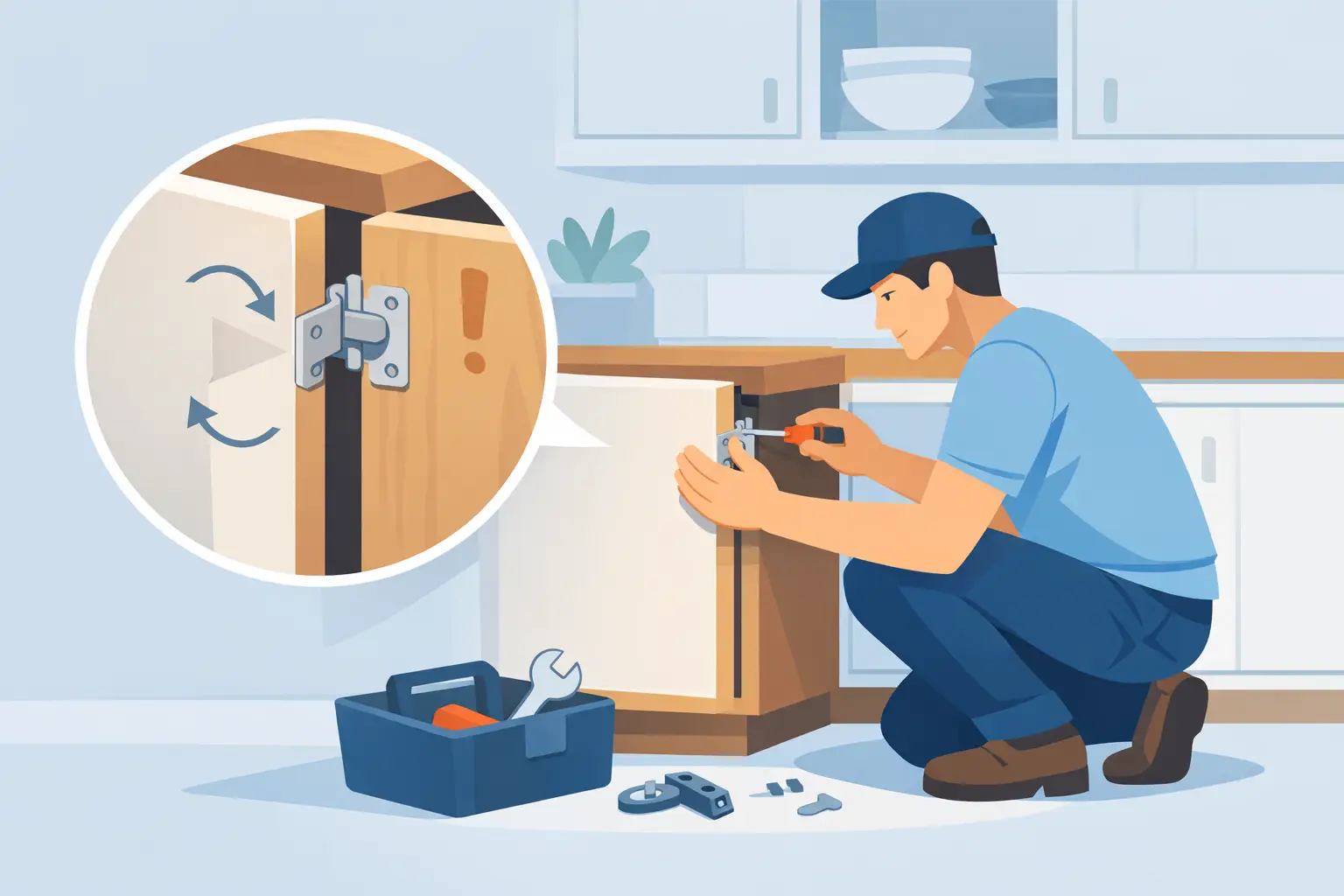
A cabinet door that catches on its neighbour, hangs lower than the frame or springs open again is usually a small mechanical problem, not a reason to replace the whole unit. Knowing how to fix cabinet doors starts with identifying what has moved: the hinges, the fixing screws, the cabinet carcass or the closing catch. A few careful adjustments can often make an older kitchen, workshop cabinet or retail display look and work properly again.
Before changing anything, open and close the door slowly. Watch where it rubs, whether the gap changes from top to bottom, and whether the door reaches the cabinet face before it stops. Those details point to the correct repair and prevent the common mistake of adjusting every hinge at once.
How to Fix Cabinet Doors by Finding the Fault
Most cabinet door issues fall into one of four categories: loose hinges, incorrect hinge adjustment, damaged screw holes or a poor closing method. Start with a suitable screwdriver and check every visible fixing screw on both the door and cabinet sides of each hinge. A loose mounting plate can make a door drop by several millimetres, while one loose screw at the top hinge can leave the door looking twisted.
Do not overtighten screws in chipboard or MDF. Once a screw turns without biting, forcing it further will enlarge the hole and reduce its holding power. If the screws are sound, establish whether the door is square within the opening. Uneven gaps usually mean the hinges need adjustment. A door that sits square but will not stay shut is more likely to need a catch or latch solution.
It also pays to inspect the cabinet itself. Wall units and freestanding cupboards can shift slightly over time, particularly on uneven floors or where a unit has been heavily loaded. If multiple doors are misaligned in the same direction, check that the cabinet is level and securely fixed before adjusting individual doors.
Adjust Concealed Hinges in Small Steps
Most modern kitchen and furniture doors use concealed European-style hinges. These normally provide three adjustments: side to side, up and down, and in or out. The exact screw layout varies by hinge manufacturer, but the principle is consistent.
The screw closest to the hinge arm often moves the door left or right. Use this to create an even gap between paired doors or between the door and cabinet side. Turn it a quarter turn at a time, then close the door and reassess. A small movement at the hinge produces a noticeable result at the edge of the door.
The screw that changes depth moves the door closer to or farther from the cabinet face. This is useful when the door will not sit flush, catches on an internal shelf, or leaves a visible gap when closed. If the door touches the frame too early, move it outward slightly. If it sits proud of neighbouring doors, move it inward.
Height adjustment is generally made by loosening the screws holding the hinge mounting plate to the cabinet. Support the door while doing this, especially if it is solid timber, glass-fronted or unusually wide. Move the plate a little, tighten the screws and test the door. Adjust both hinges together when raising or lowering the entire door, rather than relying on one hinge to carry the correction.
Work From the Top Hinge First
A sagging door often looks like a bottom-edge problem, but the top hinge is commonly the cause. Tighten it first and check whether the door lifts into position. If the door still drops, make a modest height adjustment at both hinges.
For tall doors with three or more hinges, inspect the middle hinges too. They help spread the load and stop the door bowing or moving over time. Repeatedly slamming a heavy door can loosen even good fixings, so it is worth checking them as part of routine maintenance.
Repair Stripped Hinge Screw Holes
A hinge screw that will not grip needs a proper repair before the door can stay aligned. For a solid wood door, remove the hinge, clean loose material from the hole and glue in a correctly sized hardwood plug or wooden dowel. Once the adhesive has fully cured, trim it flush, make a pilot hole and refit the hinge.
Chipboard and MDF need a different approach because they do not hold a repaired screw as reliably as solid timber. A purpose-made cabinet hinge repair plate is often the strongest option. It spreads the load across a wider area and gives the hinge new metal fixing points. This is particularly useful on kitchen cabinets, where the original screw holes may have broken down after years of use.
For a light door, a slightly larger screw may offer a short-term fix, but it is not always the best choice. The screw must not protrude through the other side of the panel, split the material or interfere with the hinge mechanism. If the cabinet material is visibly crumbling, use a repair plate or move the hinge position where practical.
Stop Doors Rubbing, Sticking or Catching
A door that rubs at the top or bottom edge may simply be out of alignment. Adjust the hinge height first, then use the side-to-side adjustment to restore a consistent gap. Check the door with the cabinet empty and again with shelves or drawers in place, as an internal obstruction can look like a hinge issue.
Timber doors can swell in damp rooms, especially around sinks, utility areas and unheated workshops. If the door has expanded and hinge adjustment cannot create enough clearance, allow the room to dry before removing material. Sanding or planing a swollen door too soon can leave an unnecessary gap once humidity drops.
Where trimming is genuinely needed, mark the contact point carefully, remove only a small amount and seal the fresh edge. Bare timber absorbs moisture quickly and may swell again. For painted or laminated doors, replacement is sometimes more cost-effective than attempting a finish repair, particularly if the panel is warped.
Fit a Magnetic Catch When the Door Will Not Stay Shut
When hinges are aligned but a door still opens on its own, a magnetic catch provides a straightforward, dependable closure. It is especially useful for older cabinets, utility cupboards, workshop storage, display units and doors without a built-in soft-close mechanism.
A magnetic catch has two parts: the magnet housing fixed inside the cabinet and a steel strike plate fixed to the door. Position the catch near the opening edge, usually towards the top of the door, where it can pull the door closed without fighting the hinges. On tall or heavy doors, two catches may be required, one near the top and one lower down.
Close the door gently and use the strike plate position to confirm where the magnet meets it. The faces need to align closely. Even a powerful magnet loses practical holding force when there is a large gap, an angled contact or a thick layer of packing between the parts. Fit the housing securely, then adjust the strike plate until the door closes cleanly and releases without a hard tug.
For compact, high-strength applications, neodymium magnetic catches offer superior pull performance compared with weak ferrite options. The trade-off is that strength must suit the door. An overly strong catch can make a light door feel abrupt to open, while an undersized catch may not hold a warped or heavy door against the cabinet. Choose the catch around the door weight, closing gap and how frequently it will be used.
If you are building a custom cabinet, countersunk neodymium magnets and matching steel plates can create a discreet closure with very little visible hardware. Keep magnets away from sensitive electronics and take care when handling strong neodymium magnets. They can snap together unexpectedly, chip on impact and pinch fingers.
When Adjustment Is Not Enough
Some faults cannot be solved with screws or catches alone. A badly warped door, split hinge area, damaged cabinet side panel or loose wall-hung unit needs a more substantial repair. Replacing a single door can be sensible if the cabinet carcass is sound and a matching size and finish are available. Replacing hinges is often worthwhile where they have lost tension, corroded or no longer hold their adjustment.
For cabinets used every day, the best result comes from addressing the cause rather than compensating for it. Tighten the structure, repair failed fixings, align the hinges and then add a powerful, properly positioned magnetic catch where a positive closure is needed. That approach keeps doors square, protects the cabinet edges and gives the finished unit the reliable feel it should have.