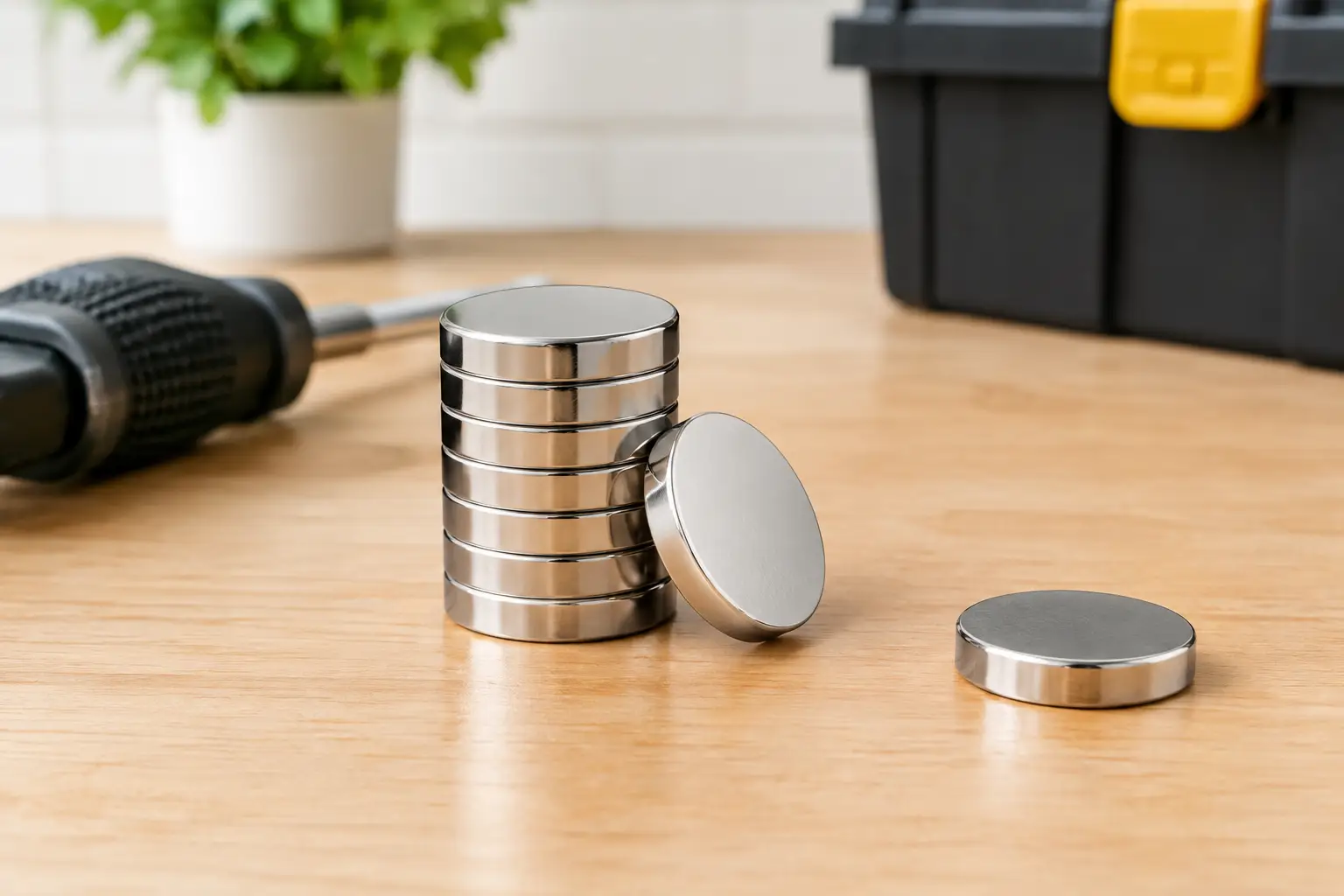
N52 Magnet Strength for Practical Fixing
A small N52 magnet can hold far more than its size suggests. That is exactly why it is so useful for cabinet doors, removable panels, retail displays and workshop fixtures – and why choosing the right shape, size and fitting method matters. N52 is the highest commonly available grade of neodymium magnet, giving you serious holding power where space is limited.
For practical work, the goal is not simply to buy the strongest magnet possible. It is to create a reliable fixing that suits the material, load and way the component will be used. A correctly selected N52 neodymium magnet delivers a clean, concealed and long-lasting solution without bulky catches or complicated hardware.
What makes an N52 magnet so strong?
N52 refers to the magnet grade. It indicates a high maximum energy product, which is a measure of the magnetic material’s potential strength. In straightforward terms, an N52 magnet can produce more magnetic force than lower grades of the same size and shape.
That makes N52 a strong choice when you need maximum performance from a compact component. A slim disc can secure a lightweight access panel; a small block can hold a display fitting in place; a countersunk magnet can provide a tidy, screw-fixed door catch. You get powerful and versatile holding performance without taking up valuable room in the build.
However, grade is only one part of the result. Pull force also depends on the magnet’s dimensions, the thickness and type of steel it contacts, the size of the air gap and whether the force is applied directly or sideways. An N52 magnet against clean, flat mild steel will perform very differently from the same magnet against painted metal, a thin steel plate or another magnet set slightly out of alignment.
Choose the format for the job
Disc, block and countersunk magnets all use the same high-strength neodymium material, but each suits a different type of installation.
Disc magnets for concealed fixing
N52 disc magnets are a practical option when you need a low-profile magnetic connection. They work well behind timber or acrylic panels, inside cupboard doors, on removable covers and within bespoke display pieces. Their round shape is easy to recess with a suitably sized drill bit, helping you achieve a neat finish.
A disc magnet is often paired with a steel strike plate rather than another magnet. This can make alignment easier and reduces the risk of two powerful magnets snapping together during assembly. It is also a sensible choice where only one side of the fitting needs to be magnetised.
Block magnets for greater contact area
Block magnets are useful where the fitting needs a wider, more stable contact area. Their flat faces suit jigs, workshop storage, signage, closures and fabricated assemblies. A rectangular shape can also resist rotation better than a small round magnet, depending on the arrangement.
For a panel or door that may be pulled at one corner, using two or more block magnets can spread the holding force more evenly. That can be more dependable than relying on one very strong magnet in the centre. The best set-up depends on the panel size, how often it is opened and whether the load is trying to slide, twist or pull directly away.
Countersunk magnets for screw-fixed installation
Countersunk N52 magnets are designed for secure mechanical fixing. The recessed hole allows a suitable countersunk screw to sit flush, making them ideal for cabinet catches, access hatches, timber doors and display units.
They offer a straightforward route to a professional installation, particularly when adhesive alone may not be dependable. Use screws that fit the countersink correctly and avoid overtightening. Neodymium magnets are hard but brittle, so excessive pressure, an uneven screw head or a distorted mounting surface can crack the magnet.
Pull force is not the same as real-world holding power
A quoted pull force is useful for comparison, but it is measured under controlled conditions. Typically, the magnet is pulled straight away from a thick, clean steel surface with full contact. Most finished projects are less ideal.
A fraction of a millimetre matters. Veneer, paint, laminate, fabric, tape and a poorly seated magnet all create an air gap that reduces attraction. Thin steel can also become saturated, meaning it cannot carry the full magnetic field available from a powerful N52 magnet.
Sideways loading is another common issue. Magnets are strongest when pulled apart directly. If a cabinet door, sign or panel is trying to slide down the face of a steel plate, the resistance comes mainly from friction rather than the full stated pull force. Add a small locating lip, pin, rebate or mechanical stop when the application will experience shear load. This takes pressure off the magnet and keeps the fitting positioned accurately.
Size the magnet around the application
Start by considering what the magnet is holding, how the item is used and what sits between the magnetic faces. A small inspection flap opened occasionally needs far less holding force than a heavy cupboard door in a busy retail unit.
For lightweight doors and covers, compact disc or countersunk magnets may provide more than enough hold. For larger panels, use multiple magnets rather than automatically selecting one oversized unit. Multiple contact points improve alignment, reduce rattling and give a more even closure.
Where a positive release is needed, avoid making the catch unnecessarily strong. A door that takes a sharp pull to open may be frustrating in daily use or may stress the fixings over time. Conversely, a display panel exposed to knocks, vibration or frequent handling needs a margin of holding force. The right balance is secure in normal use, but still practical to separate when required.
Material choice matters too. Mild steel generally provides a reliable magnetic target. Stainless steel varies considerably, and many grades are non-magnetic. Aluminium, brass, copper, timber and plastic are not magnetic, so they need a steel strike plate or a second magnet to complete the connection.
Fitting N52 neodymium magnets properly
Good installation protects both the magnet and the finished item. Recess-mounted magnets should sit level with the surface, with no proud edge that could be struck when the panel closes. Clean the recess thoroughly before bonding, and use an adhesive suited to the materials involved if adhesive fitting is appropriate.
For screw-fixed magnets, pilot holes help prevent timber splitting and make it easier to seat the screw without forcing the magnet. Check polarity before fixing a magnet-to-magnet pair. Marking one face before installation saves the inconvenience of discovering that two hidden magnets repel each other.
Keep magnets separated while working. Strong neodymium magnets can jump together suddenly and chip on impact. If you are fitting several units, use card, timber or plastic spacers to keep them apart until each position is ready. Never rely on fingers to control two powerful magnets as they come together.
Practical safety and care
N52 magnets deserve sensible handling. Their strength is an advantage in a finished product, but loose magnets can trap skin, damage brittle surfaces and interfere with magnetic-sensitive items. Keep them away from children, as swallowed magnets are a serious medical emergency.
Store magnets dry and away from electronic devices, bank cards and sensitive measuring equipment. Most neodymium magnets have a protective coating, commonly nickel, but the coating can be damaged by impact or prolonged damp conditions. For outdoor, wet or corrosive environments, consider whether the magnet will be fully protected within the assembly. A standard indoor magnet may not be the right choice for an exposed fitting.
Temperature is another trade-off. N52 magnets are ideal for many indoor DIY, joinery and workshop applications, but high heat can permanently reduce their magnetic performance. If the installation is near an engine, heater, industrial process or other heat source, the operating temperature needs checking before selection.
Build a fixing that stays reliable
The best magnetic fittings combine powerful N52 magnets with good alignment, suitable steel targets and sensible mechanical support. Magman focuses on high-strength disc, block and countersunk options because these are the formats that solve everyday fixing and closure problems without unnecessary bulk.
Before ordering, measure the available recess depth, consider the opening force you want and account for every layer between the magnet and its target. A well-matched N52 magnet should feel strong, controlled and dependable from the first close of the door or panel.