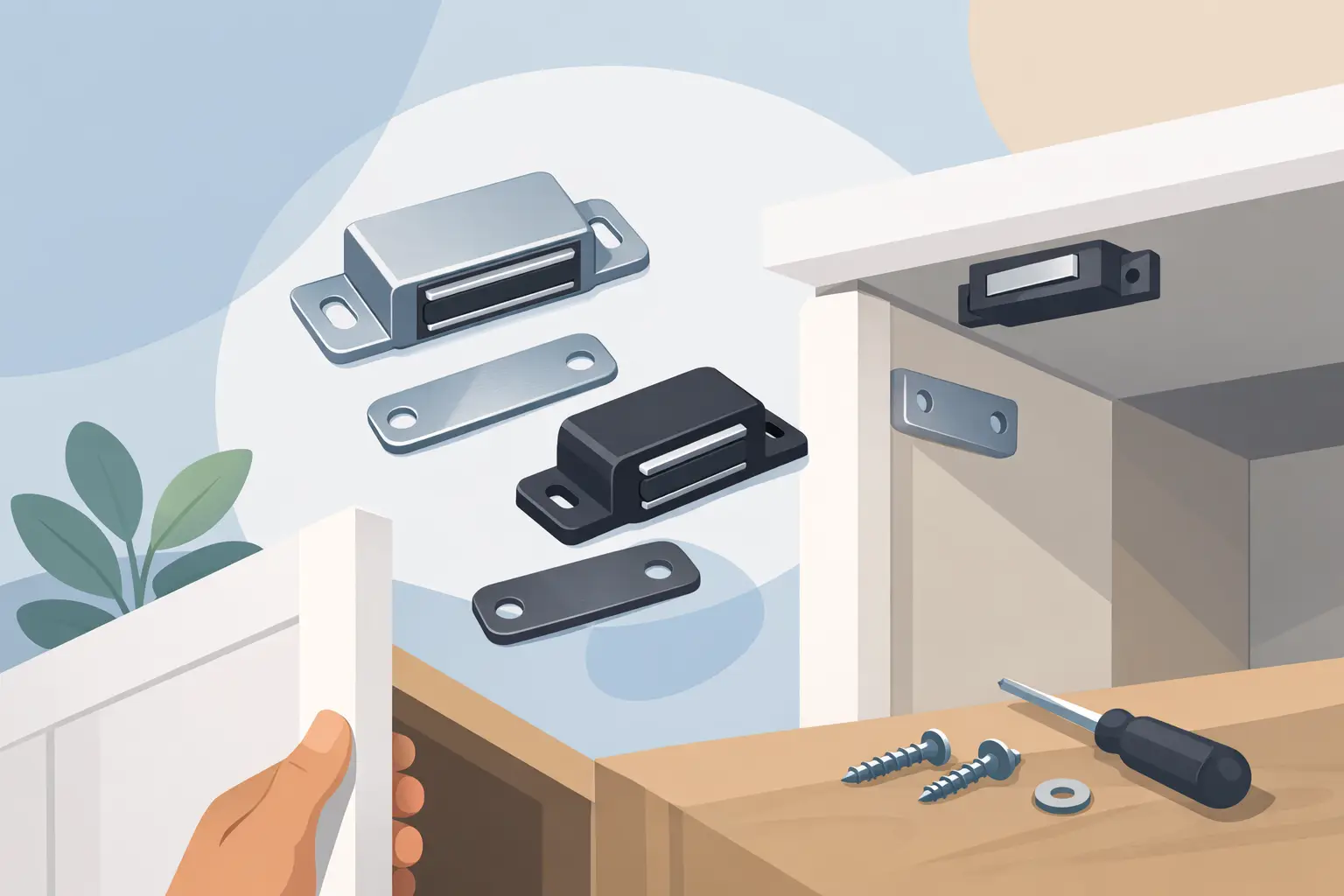
How to Choose Magnetic Catches for Cabinets
A cabinet door that will not stay shut is a small problem that quickly becomes annoying. In a kitchen, workshop, retail unit or utility room, weak closures lead to rattling doors, uneven gaps and a finish that feels poor even when the rest of the build is solid. That is exactly where magnetic catches for cabinets earn their place. They give you a clean, reliable way to hold doors closed without needing a heavy latch mechanism or an awkward workaround.
The key is choosing the right catch for the job. Not every cabinet door needs maximum holding force, and not every installation suits the same fixing style. A catch that works well on a lightweight painted MDF door may be a poor fit for a heavier timber door used all day in a busy commercial setting.
Why magnetic catches for cabinets work so well
Magnetic catches are popular because they solve a practical problem with very little fuss. Fitted correctly, they pull the door into position and keep it there until opened with a simple tug. There is no complicated action, no visible hardware dominating the front of the cabinet, and no need to rely on friction alone.
For cabinet makers, tradespeople and DIY users, that matters. A magnetic catch is quick to fit, compact, and easy to integrate into both new builds and retrofits. It can improve the feel of a cabinet straight away, especially where hinges are doing their job but the door still drifts open.
They are also versatile. You will see them used on kitchen cabinets, wardrobe doors, meter cupboards, shop fittings, workshop storage and custom furniture. The best results come from matching the magnet strength and catch format to the size, weight and frequency of use of the door.
What to look for before you buy
The first point is pull strength. This is where many buyers go wrong. If the magnet is too weak, the door will not stay properly closed. If it is too strong, a small or lightly fixed door can feel jerky to open, and repeated strain may not be ideal on lighter hinges or panels.
A light internal cabinet door usually needs a modest hold. A taller door, a heavier timber front, or a unit exposed to movement and vibration may need a stronger catch. In workshops and commercial spaces, where cabinets are opened repeatedly and sometimes less gently, better holding performance tends to be worth it.
The second point is the mounting style. Some catches are surface-mounted and straightforward to install, making them a sensible choice for quick upgrades or basic cabinet work. Others are designed for a more integrated fit where appearance and alignment matter more. If space is limited inside the cabinet, dimensions become just as important as strength.
Material quality matters too. A catch is a small component, but it is doing a repetitive job every day. Better-made magnetic catches tend to offer more consistent closure and a longer working life. If you have ever fitted a cheap catch that loses effectiveness or feels inconsistent from one door to the next, you will know the difference immediately.
Matching the catch to the cabinet
There is no single best option for every build because cabinet design varies so much. A bathroom vanity, a kitchen wall unit and a retail display cupboard may all need a magnetic closure, but the demands are not the same.
Lightweight household cabinets
For smaller domestic cabinets, a compact magnetic catch is often enough. The aim is tidy closure rather than aggressive holding force. You want the door to sit flush and stay closed during normal use, but still open comfortably without pulling the unit out of alignment.
Heavier doors and taller units
Larger cabinet doors usually need a stronger catch or, in some cases, two catches to spread the holding force more evenly. This is especially useful where the door height makes movement more noticeable at the top or bottom edge. One stronger catch is not always better than two well-positioned catches. It depends on the door construction and hinge setup.
Workshop and trade environments
In harder-working spaces, reliability matters more than looks alone. Cabinets may be opened frequently, knocked during use, or exposed to vibration from machinery. In those settings, stronger magnetic catches with dependable fixing can make a real difference. A closure that feels slightly over-specified in a spare room may feel exactly right in a workshop.
Installation matters as much as strength
Even a super-strong magnetic catch will underperform if it is badly fitted. Alignment between the magnet and strike plate is critical. If the contact point is off, the catch may only grip partially, reducing holding force and making the door feel inconsistent.
The fixing position also affects how the cabinet behaves. Mounting the catch too far from the natural closing point can create twist or uneven pressure. On some doors, especially wider ones, testing the position before final fixing saves time and gives a better result.
Screw choice matters more than people expect. A strong magnet fixed with poor screws into weak board is only as reliable as the fixing behind it. If the cabinet material is softer or thinner, take the time to choose fixings that suit it. A good catch installed badly is still a bad result.
Common mistakes to avoid with magnetic catches for cabinets
One of the most common mistakes is assuming stronger always means better. In reality, the best catch is the one that suits the application. Excessive pull can make everyday use feel clumsy, particularly on smaller cupboard doors.
Another issue is ignoring the hinge condition. A magnetic catch is there to hold the door shut, not to correct a badly hung or sagging door. If the hinges are loose or the door is already out of square, fitting a magnet may reduce the symptom without fixing the cause.
Buyers also sometimes overlook the closing surface. If the strike plate is not mounted flat or the door face is uneven, contact with the magnet will be reduced. That leads to a weaker hold than the product is capable of delivering.
Finally, there is the temptation to buy on price alone. For occasional, low-demand use, a basic catch may be fine. For repeated use, heavier doors or a professional finish, stronger and better-made magnetic hardware tends to justify itself quickly.
Why neodymium makes a difference
Not all magnetic catches use the same grade or type of magnet. This is where neodymium stands out. It offers superior pull performance in a compact size, which is exactly what many cabinet applications need. You get strong holding power without having to rely on an oversized catch.
That matters when space inside a cabinet is limited or when you want a closure that feels powerful and precise rather than bulky. For fabricators, fit-out teams and serious DIY users, neodymium-based catches are often the better choice because they deliver more strength from a smaller footprint.
A specialist supplier also makes selection easier. Instead of sorting through generic hardware with vague specifications, you can choose products built around magnetic performance. At Magman, that focus on powerful and versatile magnetic hardware helps buyers get to the right solution faster.
When a magnetic catch is the right choice
A magnetic catch is ideal when you want a simple, hidden or low-visibility closure with dependable daily performance. It suits cabinets that do not need a mechanical latch but do need more than gravity or hinge tension to stay shut.
It may be less suitable where you need a locking function, heavy-duty restraint under load, or a closure that must resist forced opening. In those cases, a magnetic catch can still play a supporting role, but it should not be expected to do a lock’s job.
For most cabinet applications, though, the appeal is clear. You get fast fitting, clean operation and strong everyday usability. That combination is hard to beat, particularly when the catch is properly matched to the door.
The best cabinet hardware often goes unnoticed because it simply works. If you choose magnetic catches with the right strength, quality and fit for the job, the result is a cabinet that closes properly, stays shut, and feels better every time it is used.