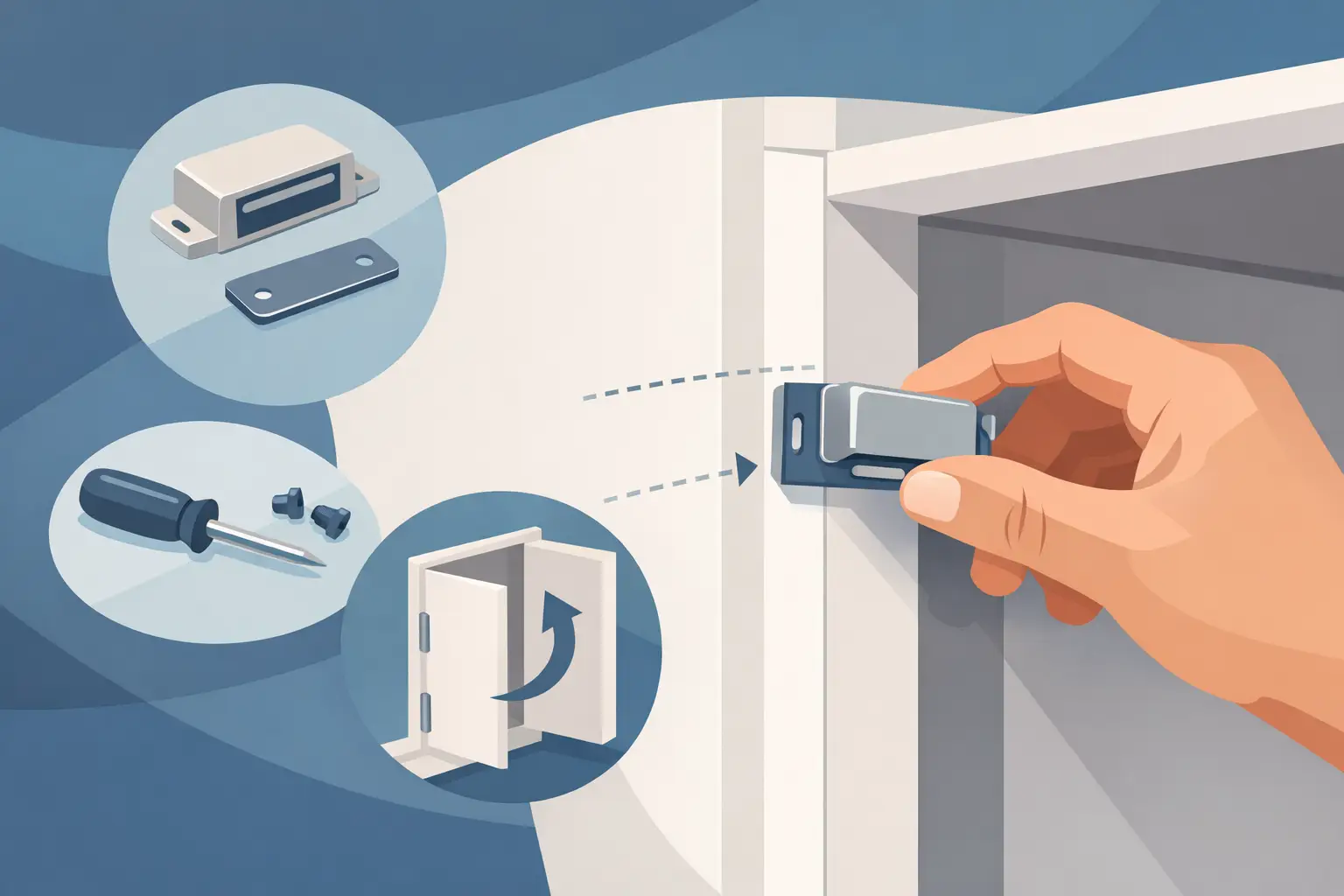
How to Fit Magnetic Catches Properly
A magnetic catch that sits 2mm out of line can turn a neat cabinet into a daily annoyance. Doors bounce open, the pull feels weak, and the whole job looks worse than it should. If you want to know how to fit magnetic catches so they close cleanly and hold with confidence, the key is simple – choose the right catch, position it accurately, and fix both halves without forcing the alignment.
What a magnetic catch needs to do
A magnetic catch is there to keep a door, flap or panel shut until you want it open. In practical terms, that means enough pull to resist movement, but not so much that the door becomes awkward to use. On a lightweight kitchen end panel or a small cupboard door, a modest catch may be enough. On heavier timber doors, retail display units or workshop cabinetry, you may need a stronger option or even two catches working together.
This is where many fitting problems start. The catch itself may be fine, but it is being asked to do the wrong job. If the door is warped, the hinges are loose, or the gap is inconsistent, even a powerful magnetic catch will only compensate so far. Good fitting starts with a door that already swings and sits correctly.
Before you fit magnetic catches, check the basics
Before drilling or screwing anything in place, close the door and look at the reveal. If the gap around the edge varies badly, sort the hinges first. Magnetic catches are for holding a door shut, not for pulling a twisted or badly hung door back into line.
You should also think about where the force is needed. Most catches are fitted at the top corner of a cabinet door, often on the opening side. That works well for many applications because it resists the point where the door is most likely to spring open. For taller or heavier doors, fitting one at the top and one at the bottom usually gives a much more reliable close.
Material matters as well. A catch fitted into solid timber behaves differently from one fixed into thin MDF or lightweight board. If the substrate is weak, screws can loosen over time and the magnet will shift. In those cases, pilot holes, sensible screw length and careful placement make a real difference.
Tools and parts you will usually need
For most installations, the job is straightforward. You will typically need a tape measure, pencil, bradawl or punch, drill, suitable pilot bit, screwdriver and screws. If the catch does not come with fixings, use screws that suit the material rather than whatever happens to be in the toolbox.
You will also need the two working parts of the catch – the magnetic body and the strike plate. Some catches use a flat metal plate, while others use a shaped plate or captive piece designed to meet the magnet more precisely. Always fit the plate that matches the catch. Swapping in a random offcut of steel often reduces holding performance.
How to fit magnetic catches step by step
Start by deciding the exact location of the magnetic body. Inside a cabinet, this is usually fixed to the top rail, side panel or inner face of the carcass where it will meet the back of the door. Hold it in place and check that the door can shut without fouling it. You want full contact with the strike plate, not a glancing touch.
Mark the screw holes lightly in pencil. If you are fitting into timber or MDF, make pilot holes first. This helps stop the material splitting and keeps the screws from dragging the catch out of position as they go in. Then fix the magnetic body loosely at first. Do not drive the screws fully tight until you are happy with the final alignment.
Next, line up the strike plate on the door. The easiest method is to close the door gently against the magnet and use the catch body as your visual reference, marking where the plate needs to sit so both faces meet squarely. Some fitters place a small bit of masking tape or a light mark on the opposing surface to transfer the position more accurately.
Once marked, open the door and fix the strike plate with pilot holes if needed. Again, keep the screws just shy of fully tight to allow minor adjustment. Close the door and test the contact. The catch should pull the door in neatly and release with a firm, controlled tug. If it feels weak, the plate is probably not meeting the magnet flush. If it feels rough or inconsistent, one side may be twisted or sitting too high.
Make small adjustments rather than starting over. Moving the plate by even 1mm can noticeably improve the hold. Once the action feels right, tighten all fixings fully and test the door several times.
Common fitting mistakes that weaken the hold
The most common problem is poor alignment. A magnetic catch works best when the plate lands flat against the magnet. If the plate only clips the edge, pull strength drops quickly. This is why careful marking matters more than brute force or bigger screws.
Another issue is setting the catch too far back from the door. If there is too much gap, the magnet cannot develop its full holding power. Magnetic force falls off fast with distance, so a tiny air gap can make a catch feel far weaker than it really is.
Overtightening is another avoidable mistake. On cheaper board materials, driving screws too hard can crush the surface slightly and skew the body of the catch. That leaves the magnet and plate sitting out of parallel. Tight enough is enough.
There is also the question of strength. Stronger is not always better. On a small bathroom cabinet, an overly aggressive catch can make the door feel jerky and unpleasant to open. On a heavier unit, a weak catch will fail early and frustrate the user. Matching pull performance to the size and weight of the door gives the best result.
Fitting magnetic catches to different applications
On small cupboards and kitchen-style cabinet doors, a single catch is often all you need if the hinges are sound and the door is light. Positioning near the top opening corner usually gives a tidy, dependable close.
For wardrobe doors, taller pantry units or heavier timber fronts, two catches are often the smarter option. One at the top and one at the bottom shares the load and stops the door racking slightly as it closes.
In retail units and workshop furniture, use matters as much as weight. A door opened dozens of times a day needs a catch that can handle repeated impact without shifting. In those settings, stronger magnetic hardware with solid fixings tends to pay off, because the closure stays reliable instead of wearing loose after a few weeks.
If you are fitting a catch to painted surfaces or finished joinery, take extra care with marking and pilot holes. A rushed installation can chip the finish around the screws and spoil an otherwise clean build.
When to choose a stronger magnetic catch
If the door has a tendency to spring open, if vibration is part of the environment, or if the unit is being used in a busier commercial setting, a stronger catch makes sense. The same applies when the contact area is limited and you need more holding power from a compact fitting.
This is where product quality matters. A well-made magnetic catch with superior pull performance gives a more positive close and more consistent long-term use than weak, generic fittings. For DIY buyers and trade users alike, that usually means less adjustment, fewer call-backs and a better finish on the job.
Magman focuses on powerful and versatile magnetic hardware for exactly this kind of practical use – not novelty magnets, but dependable fixing and closure solutions that do the work properly.
Final checks for a clean, reliable finish
Once fitted, open and close the door ten or twelve times. Listen for scraping, check the plate is landing square, and make sure the screws are staying firm. If the catch feels right on the first close but awkward after repeated use, there may still be slight hinge movement or the strike plate may be under tension.
A properly fitted magnetic catch should feel almost invisible in use. The door closes neatly, stays shut, and opens without a fight. Take the extra few minutes to position it accurately, and you get a result that feels stronger, cleaner and far more professional every time you use it.