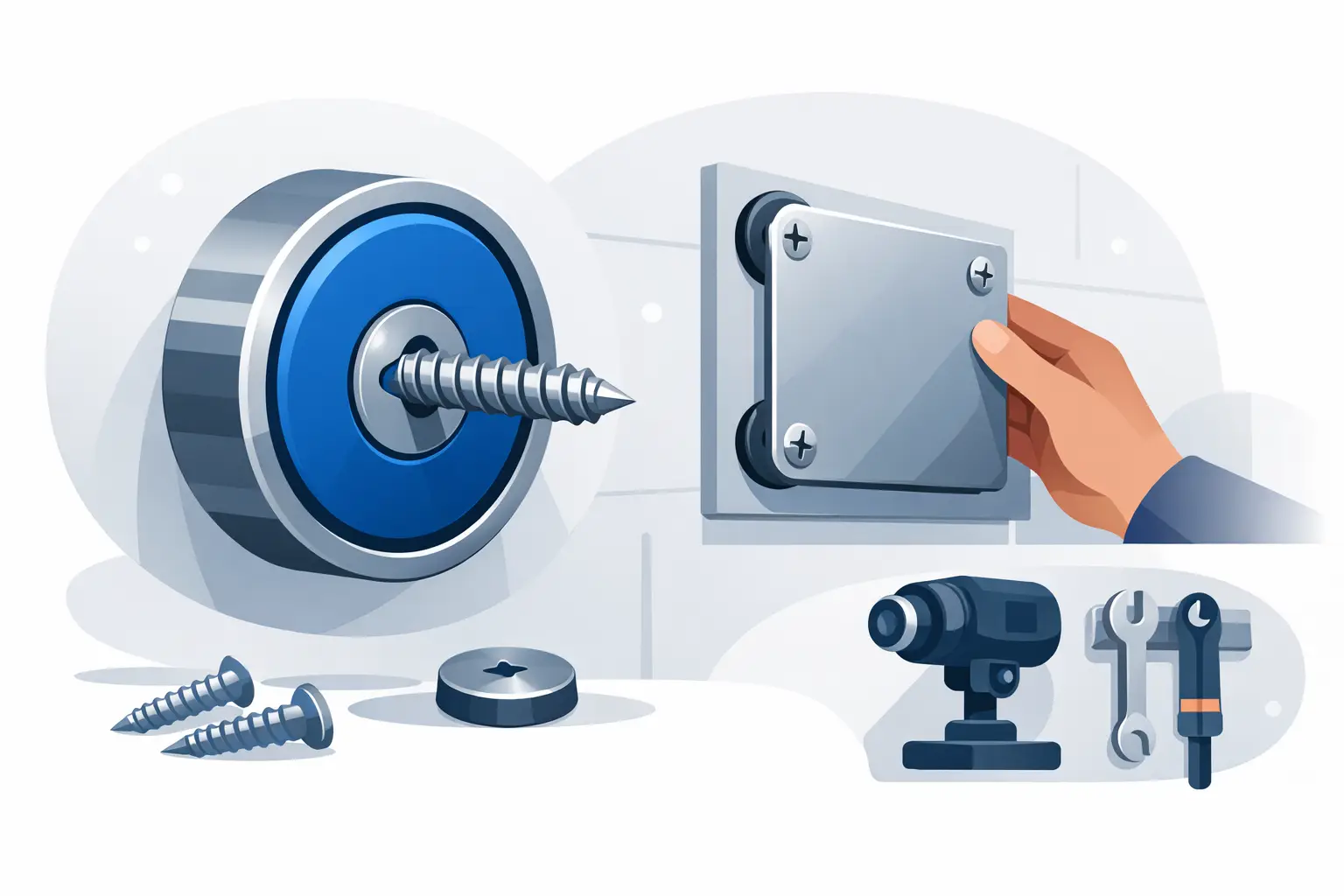
Screw Fixing Magnets for Stronger Mounting
A loose panel, a weak cabinet catch or a display fitting that shifts after a few uses usually comes down to one thing – the fixing is not strong enough for the job. Screw fixing magnets solve that neatly. They give you a compact, super-strong fixing point that can be mounted with standard screws, making them a practical choice for anyone building, fitting or repairing with reliability in mind.
What are screw fixing magnets?
Screw fixing magnets are magnets designed with a countersunk hole or fixing point so they can be attached firmly to a surface using a screw. That simple detail makes a big difference. Instead of relying on adhesive backing, tape or makeshift brackets, you get a secure mechanical fixing combined with powerful magnetic hold.
For DIY users, that means a cleaner and more dependable way to mount catches, access panels, signs or removable covers. For trade users, it means faster fitting and more consistent results across repeated jobs. In both cases, the appeal is straightforward – strong hold, tidy installation and less risk of failure over time.
Most buyers looking at this type of product are choosing between compact disc or block formats, often in neodymium. That matters because neodymium magnets offer superior pull performance for their size. If space is limited but hold strength matters, they are usually the right place to start.
Where screw fixing magnets work best
The best use cases for screw fixing magnets are jobs where you want a fitting to stay put, but still remain removable or easy to align. Cabinet doors are an obvious example. A properly sized magnetic catch can keep a door closed firmly without adding bulky hardware or affecting the finished look.
They also work well in retail units, point-of-sale displays and exhibition fittings. In those settings, speed of assembly matters just as much as strength. A magnetic fixing can make panels, signs and covers easier to remove for access while still giving a professional finish.
In workshops and fabrication settings, they are useful for tool boards, access hatches, machine covers and custom jigs. The format is especially helpful when you need repeatable positioning. Once the magnet is screwed into place, it stays where you put it. That gives a more controlled result than stick-on options, which can peel, creep or lose grip with time.
Why screw-fixed magnets beat adhesive options
Adhesive magnets have their place, particularly on lighter-duty jobs and smooth indoor surfaces. But they are not always the best choice. Heat, moisture, dust and surface texture can all affect bond strength. Even a decent adhesive pad can fail if the load shifts or the surface was not prepared properly.
Screw fixing magnets avoid that weakness. The screw provides the mounting security, while the magnet provides the holding force. That split is one of their main advantages. It gives you far more confidence in real-world conditions, especially on timber, MDF, sheet material and workshop fixtures.
There is a trade-off, of course. Screw fixing means drilling or preparing a fixing point, so installation takes a little more effort than peeling off a backing strip. It is also not suitable where the visible screw head would spoil the finish or where the substrate cannot take a screw. But for strength, durability and repeat use, screw-fixed options are usually the better long-term answer.
Choosing the right screw fixing magnets
Picking the right magnet is less about buying the strongest option available and more about matching the format to the job. Pull strength matters, but so do contact area, mounting surface, alignment and the gap between magnet and mating surface.
Size and pull strength
A larger magnet will generally give stronger holding force, but only when used in the right conditions. Published pull ratings are typically measured under ideal circumstances, with direct contact against a thick, flat steel surface. Real installations are rarely ideal. Paint, laminate, uneven surfaces and air gaps all reduce performance.
That means it is smart to build in a margin. If a door or panel only seems to need a light hold, do not assume the smallest magnet will do the job. A little extra strength usually improves reliability, particularly where there is vibration, repeated opening and closing, or slight misalignment.
Countersunk format
Countersunk magnets are especially popular because they let the screw sit flush within the magnet body. That keeps installation neat and helps the magnet sit properly against the mounting surface. It also reduces the risk of the screw head interfering with the mating face.
You do need to match the screw correctly. A screw that is too large can damage the magnet or sit proud. One that is too small may not give a stable fixing. The fit should be snug, secure and properly centred.
Material and coating
For compact power, neodymium is the clear choice. It gives a very strong hold from a relatively small part, which is ideal for cabinets, displays and fitted components where space is tight. Coating also matters. Nickel-plated neodymium magnets are common and suitable for many indoor uses, but if the magnet will face damp conditions, you should think carefully about exposure and product suitability.
Mounting surface
Timber, MDF and sheet materials are common mounting surfaces, but each behaves differently. Soft materials may compress slightly, while harder materials can make it easier to achieve a tight, flush fit. If the screw fixing is not firm, even a strong magnet can end up performing poorly because the assembly shifts under load.
Fitting screw fixing magnets properly
Good performance starts with correct fitting. The magnet should sit flat, the screw should be the right size, and the contact point should line up accurately with the steel plate or opposing magnet. Poor alignment is one of the main reasons magnetic catches feel weaker than expected.
Pilot holes are usually worth doing, particularly in timber and MDF. They help prevent splitting and reduce the chance of overtightening. That matters because neodymium magnets are powerful but brittle. They are not designed to be clamped down aggressively. Tighten the screw enough to secure the magnet, but not so much that you put unnecessary stress through it.
If you are using two magnets facing each other, take care with polarity before final fixing. It sounds obvious, but it is an easy mistake on multi-part jobs. In many practical builds, a magnet paired with a steel strike plate is the simpler choice. It often gives a reliable hold without the extra complication of matching poles.
Common applications that benefit from stronger magnetic fixing
Cabinets and furniture
Screw fixing magnets are widely used in cabinet doors, hidden catches and removable furniture panels. They help create a clean look without resorting to bulky latches. For lighter doors, one small magnet may be enough. For heavier or wider doors, two smaller fixing points can sometimes work better than one oversized unit because they improve stability across the panel.
Retail and display fittings
In retail, presentation matters, but so does quick access. Magnetic fixings are useful for covers, fascia panels, display headers and removable signage. They hold firmly in normal use while keeping maintenance simple. That is particularly useful where stock or wiring needs to be accessed without dismantling the whole unit.
Workshops and fabricated builds
Tool storage, machine guarding, removable covers and bespoke enclosures often benefit from a magnetic fixing that is secure but not permanent. Screw-fixed magnets give a more dependable result than adhesive pads in dusty or high-use settings. For many workshop users, that reliability is the whole point.
Mistakes to avoid with screw fixing magnets
The most common mistake is underestimating how much holding force the job really needs. Surface finish, gaps and movement all reduce real-world performance. If the application involves slamming, vibration or frequent opening, step up the strength rather than aiming for the bare minimum.
Another common issue is poor screw choice. The wrong countersunk head can crack the magnet, sit unevenly or reduce contact with the surface. Fitting also matters. If the magnet is mounted on an uneven face, the hold can feel inconsistent even when the magnet itself is strong.
Finally, think about brittleness. Neodymium magnets are powerful and versatile, but they can chip if knocked together or handled roughly during installation. A careful fit pays off.
When chosen well, screw fixing magnets give a stronger, tidier and more dependable answer to everyday fixing problems. If you want compact magnetic strength that performs properly in cabinets, displays or workshop builds, a screw-fixed neodymium option is often the one that gets the job done right first time.