Magnetic Catches That Keep Doors Properly Closed
A cabinet door that creeps open, a retail panel that will not sit flush, or a workshop enclosure that rattles in use usually has the same underlying problem: the closure is not matched to the job. Magnetic catches offer a clean, practical answer. They hold doors and panels shut without a visible latch, making them ideal where a neat finish and quick access both matter.
The best result is not simply a matter of choosing the strongest catch available. Holding strength, door weight, gap, alignment and fixing surface all affect how a catch performs once fitted. Select the right format from the start and you get a closure that feels positive, stays reliable and does not complicate the build.
What Magnetic Catches Do Best
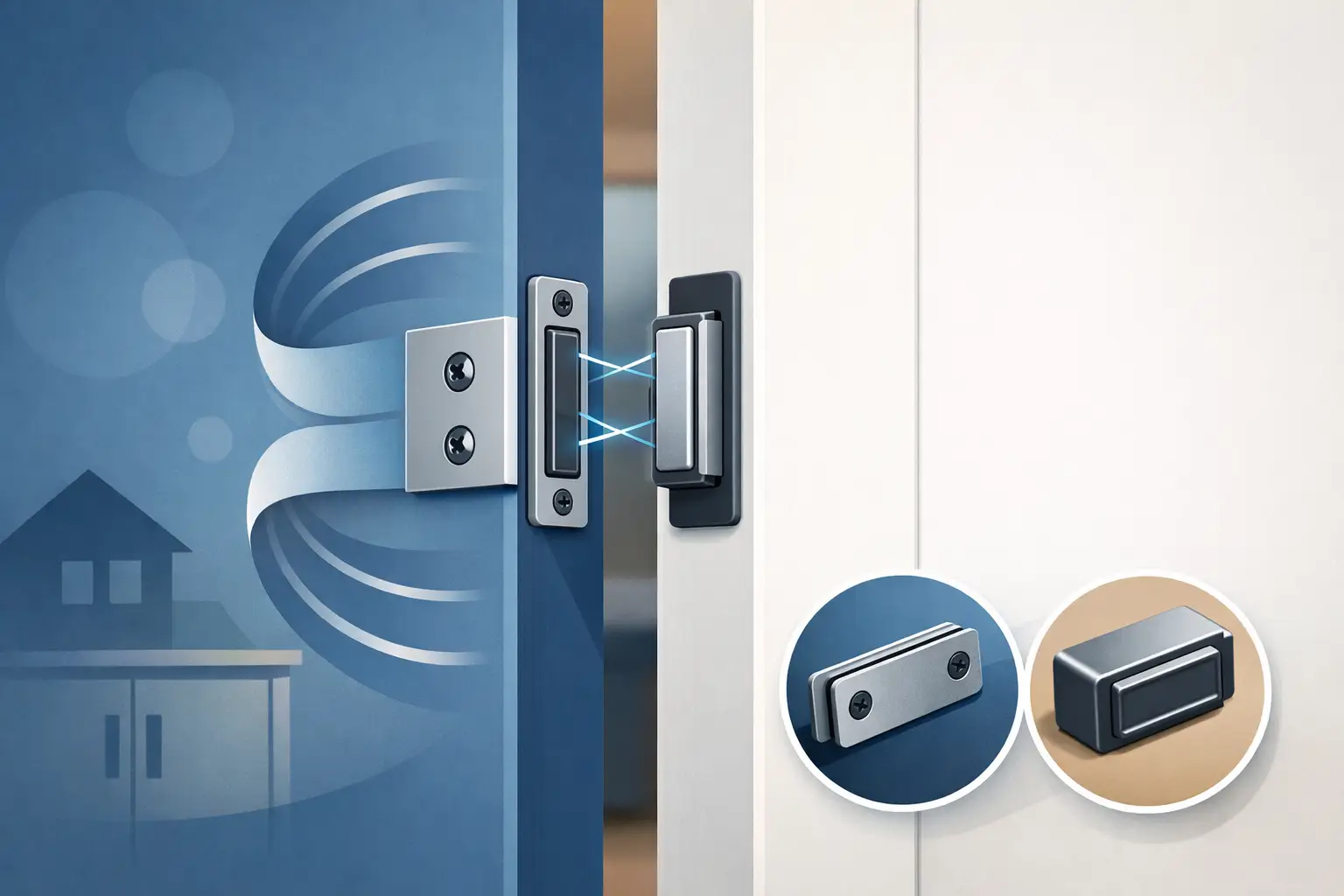
A magnetic catch combines a magnet with a steel strike plate, or a matching magnetic component. When the door, panel or lid closes, the two faces meet and create enough pull to keep it in position. Opening remains easy because the user pulls the door away rather than operating a separate mechanism.
This simple action suits cupboards, wardrobe doors, access panels, display cabinets, tool storage, lightweight gates and retail fixtures. It is particularly useful when a conventional catch would be awkward, visually intrusive or likely to snag. There is no sprung latch to wear in the usual way, and no need to cut a deep mortice into a cabinet frame.
For workshop and trade applications, magnetic closures can also save time during fitting. A surface-mounted catch and strike plate can be positioned, tested and adjusted with straightforward tools. That makes them a practical choice for one-off builds as well as repeat installations.
Choosing Magnetic Catches for the Job
The catch needs enough pull to resist normal movement, vibration and a slightly warped door, but it should not make everyday opening frustrating. A small cupboard in a kitchen or utility room usually needs a different level of retention from a tall retail display door or a heavy MDF access panel.
Start with the weight and size of the moving part. Larger doors create more leverage at the opening edge, especially when the catch is mounted near the opposite side from the hinges. A catch that feels secure on a compact cabinet may be inadequate on a wide door, even if the door itself is not particularly heavy.
Next, consider the gap between the catch and strike plate. Magnetic pull falls away quickly as the distance increases. Paint build-up, edge banding, rubber buffers, bowed timber or an uneven frame can all stop the faces meeting properly. A perfectly adequate catch can therefore seem weak when the real issue is a gap of only a few millimetres.
The fitting position matters just as much. Install the catch where the door naturally closes square against the frame, and where the strike plate can meet it face-on. If the plate approaches at an angle, the closure may slide, click loosely or fail to hold consistently. On wider or taller doors, fitting two catches can provide a more even hold and reduce movement at the corners.
Pull Strength Is Not the Whole Story
High-strength neodymium magnets provide exceptional pull for their size, which is valuable where space is limited or a compact catch must hold a firm panel. Yet maximum pull is not automatically the correct specification. A very powerful closure on a light, frequently used cupboard can feel abrupt and place unnecessary stress on the fixings when opened.
Look for practical holding performance rather than a headline figure alone. The stated pull is normally measured under ideal conditions: clean, flat steel in direct contact. Real installations introduce paint, imperfect alignment, gaps and a pulling force that may be sideways rather than straight apart. Allow a sensible margin, particularly for commercial fittings, mobile units or doors exposed to vibration.
Surface-Mounted, Recessed and Countersunk Options
Surface-mounted magnetic catches are the straightforward choice for many cabinet and panel installations. They fix to the inside face of a frame, with a strike plate mounted to the door. They are easy to inspect, replace and adjust, which makes them well suited to workshop builds, utility furniture and retrofits.
Recessed fittings offer a more discreet result. They sit within a drilled hole or routed recess, leaving less visible hardware when the door is open. This can suit bespoke cabinetry, display work and clean-lined furniture, although accurate drilling is essential. A recess that is oversized or out of line can compromise the meet between magnet and plate.
Countersunk magnetic components are useful where a flush finish is required. The screw head sits level with the magnet face, helping the fitting sit neatly against timber, plywood or fabricated panels. They are especially practical for custom closures and removable panels, provided the magnet is installed with the right pole orientation and the fixing is not overtightened.
Fitting for a Positive Closure
Good installation begins before the first pilot hole is drilled. Hold the door in its closed position and mark where the catch and strike plate will meet. Check that the door is properly hung first. Magnetic hardware can retain a door, but it will not correct hinges that are loose, a carcass that is out of square or an edge that is binding.
Fix the catch securely to a firm surface. In solid timber, suitable pilot holes reduce the chance of splitting and help screws bite cleanly. In chipboard or thin sheet material, choose fixings appropriate to the substrate. A powerful magnet is only as dependable as the screws or inserts holding it in place.
Before fully tightening the strike plate, close the door several times and watch how the two parts engage. The plate should land centrally on the magnetic face. If it is offset, adjust it while there is still movement in the screw holes. This short testing stage prevents the common problem of a catch that works once on the bench but feels unreliable after the unit is installed.
Avoid placing a thick rubber buffer directly between the magnet and strike plate unless the catch has been sized to allow for it. Buffers are useful for reducing noise and protecting painted surfaces, but they create a gap. Position them away from the contact point, or use a catch with enough capacity to maintain a secure hold.
Common Problems and Practical Fixes
When a magnetic catch does not hold, alignment should be the first check. Look for a strike plate that is sitting too high, too low or at an angle. Also check whether the door is springing back because of hinge tension, warped material or contact with another part of the cabinet.
If the catch holds but releases too easily, reduce the gap and confirm that the strike plate is steel rather than a non-magnetic lookalike. A larger plate can improve the contact area in some applications. Where the door is large or subjected to regular knocks, adding a second catch may be more effective than relying on one oversized unit.
If opening takes too much force, the answer may be a lighter-duty catch, a revised mounting position or a small finger pull to give the user better leverage. A closure should feel secure, not like a contest every time the door needs opening.
Corrosion is another consideration in garages, utility spaces, vans and damp outbuildings. Choose fittings with an appropriate protective finish, and avoid allowing bare steel components to remain wet. For outdoor work, assess the whole assembly rather than the magnet alone: screws, plates, timber movement and water ingress all influence long-term performance.
Where Strong Magnetic Closures Earn Their Keep
Magnetic catches are often chosen for their tidy appearance, but their real value is versatility. Cabinet makers can use them to keep handleless doors closed. Retail fit-out teams can secure access panels while preserving a clean display surface. DIY users can improve storage cupboards, box lids and workshop units without installing complicated hardware.
They are also useful where components need regular removal. A magnet-and-plate arrangement can retain a lightweight inspection panel or decorative cover while allowing it to be lifted away when access is required. In these applications, the balance is especially important: enough pull to stop rattling, without making maintenance awkward.
For compact, high-performance magnetic hardware, Magman provides a focused range built for practical fixing and closure work. The key is to choose the format that suits the material, the available fitting space and the real force the closure will face.
A well-fitted magnetic catch should disappear into the everyday use of the item. The door closes cleanly, stays shut when it should and opens without fuss. Measure the gap, test the alignment and select strength for the real installation rather than the ideal one – those small decisions are what turn a simple magnet into a dependable closure.