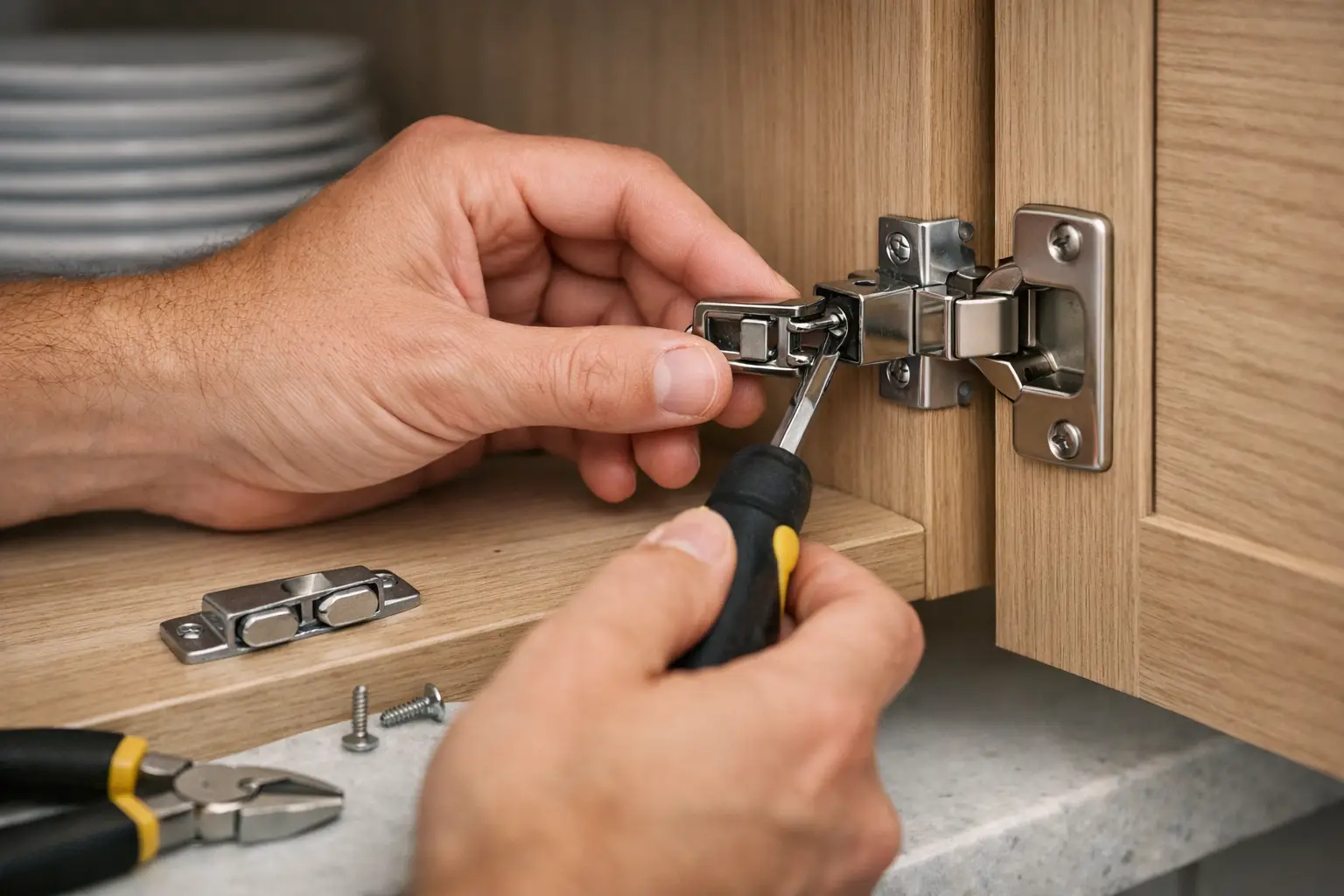
Fixing a Loose Cabinet Door Catch Properly
A cabinet door that drifts open by a few millimetres can make otherwise good joinery feel poorly finished. Fixing a loose cabinet door catch usually takes far less time than replacing a hinge or rebuilding a door, but only if you identify whether the problem is the fixings, alignment, wear or insufficient magnetic pull.
For kitchen cupboards, workshop cabinets, retail units and utility furniture, a catch must do two jobs: pull the door shut reliably and release without a hard tug. The best repair is therefore not always the strongest catch available. It is the catch and fitting method that suit the door’s weight, gap and daily use.
Start by finding why the cabinet catch is loose
Open the door and inspect both halves of the catch. A traditional magnetic cabinet catch has a magnet body fixed to the carcass and a steel strike plate fixed to the inside of the door. Other units may use a spring roller, ball catch or a push-to-open magnetic mechanism. The repair depends on which component has moved or stopped working.
First, hold the catch body and strike plate in turn. If either moves under finger pressure, the fixing screws are likely loose or the screw holes have enlarged. This is common in chipboard cabinets, MDF doors and older units where the door has been pulled open against the catch thousands of times.
If both parts are secure, close the door slowly and watch where the strike plate meets the magnet. A door that has dropped on its hinges may meet too high or too low. A door set too far forward can leave a gap too wide for the magnet to hold well. In this case, tightening the catch alone will not solve the problem.
Also check the condition of the catch itself. A chipped ceramic magnet, cracked plastic housing, worn roller or bent strike plate is a replacement job. Trying to rescue a damaged component often leads to a door that works for a week, then starts opening again.
Check the hinges before changing the catch
Loose hinges are frequently mistaken for a loose catch. Lift the outer edge of the open door gently. Any obvious upward movement suggests hinge screws need tightening or the hinge mounting plate has shifted. On concealed hinges, adjust the height and depth until the door sits square in the opening and the gap is even.
Do this before moving the strike plate. Otherwise, you may align the catch to a sagging door, only to lose the alignment when the hinges are repaired. A cabinet door should close naturally against its stops before the magnetic catch takes over.
Tighten sound fixings without overtightening
Where the screw holes are still firm, remove one screw at a time, position the catch correctly and refit it by hand. Avoid driving screws too hard, particularly into chipboard or MDF. Overtightening can strip the material and turn a small repair into a larger one.
If the screw spins without biting, remove the catch and repair the hole before refitting. For a timber cabinet, a small amount of wood glue and tightly fitted timber splinters can give a stripped hole new material to grip. Let the glue cure fully, trim it flush if needed, then drill a fine pilot hole for the screw.
For chipboard and MDF, moving the catch slightly can be the more dependable option, provided the new position still gives correct contact. Where there is no room to move it, use suitable repair plugs or a larger fixing method designed for the material. Do not simply fit a much larger screw without checking that it will not break through the cabinet side or door face.
A thin door needs particular care. Screws that are only a few millimetres too long can leave a raised point or split the decorative face. Measure the material thickness and choose fixings that provide grip without creating damage on the visible side.
Realign the strike plate for a positive close
A magnetic catch works best when the strike plate lands flat against the magnet face. It will still attract when it is slightly off-centre, but holding force drops quickly as the gap increases. A bent plate, loose screw head or proud piece of debris can be enough to weaken the close.
Loosen the strike plate screws just enough to slide the plate. Close the door carefully, then open it while keeping note of the contact mark or meeting point. Reposition the plate so its centre meets the centre of the magnet. Tighten the screws and test the door several times from different opening angles.
If the door has a noticeable bow, fitting a catch at the point where the door naturally sits closest to the cabinet may work better than forcing the existing location. On wide doors, two catches can be more effective than one central catch. They spread the holding force and help prevent a corner from springing open.
Replacing a weak cabinet door catch
A catch can be tightly fixed and perfectly aligned yet still lack the pull needed for the job. This is common when a lightweight original fitting is used on a solid timber door, a tall pantry door or a cabinet subject to vibration. Workshop storage, caravan furniture and retail displays often need more reliable closure than a basic domestic catch can provide.
When replacing it, consider the door rather than choosing by magnet size alone. A small, light cabinet door with a close-fitting stop may need only modest holding force. A heavier door, or one with a slight warp, needs a more powerful magnetic catch and solid screw fixing. Very strong magnets are useful, but they can make a frequently used cupboard irritating to open if the door has no handle or finger pull.
A quality magnetic catch using strong neodymium magnets gives considerably more pull in a compact housing than many older ferrite designs. That makes it useful where fitting space is limited or a dependable hold matters. Magman supplies super-strong magnetic hardware suited to practical cabinet closures, DIY builds and trade installations where ordinary catches have proved inconsistent.
Match the format to the installation
Surface-mounted catches are straightforward to fit and easy to adjust. They suit most existing cabinets because the body and plate can be moved slightly during setup. Countersunk magnetic fittings create a cleaner finish, but require accurate drilling and are less forgiving if the original position is wrong.
Block magnets and separate steel plates can be practical for custom cabinetry, flush doors and bespoke workshop projects. They need careful positioning, however, because bare neodymium magnets can snap together forcefully and may chip if allowed to strike hard. A purpose-made catch housing adds protection and makes fixing simpler where appearance and repeatable alignment matter.
For doors that are meant to open when pressed, use a purpose-designed push latch instead of relying on an extra-powerful standard magnet. The operating mechanism is different. A strong ordinary catch will hold a door shut, but it will not provide the controlled release needed for a push-to-open setup.
Fit the replacement catch accurately
Mark the centre line of the catch on the cabinet, then transfer that line to the door. Fit the magnet body first, using pilot holes where appropriate. Close the door with a small piece of masking tape or a dab of removable marker on the magnet face to show the exact strike plate position.
Fit the plate loosely, test the closure, then make fine adjustments before fully tightening the screws. The door should pull shut for the final part of its travel and sit flush without needing to be slammed. It should also open with a controlled pull rather than a sharp jerk.
Test the repair at least ten times. Open and close the door from the handle side, then press gently at the opposite corner. If it opens under light pressure, check the alignment again before assuming the magnet is too weak. If the door closes too aggressively, move the catch back slightly, reduce contact area where the design allows, or choose a lower pull option.
Keep the repair reliable
Once the catch is working, avoid storing loose metal items where they can stick to the magnet face. Fine swarf, screws and steel filings reduce clean contact and can scratch surfaces. Wipe the catch and strike plate occasionally, especially in workshops and utility areas.
If a door starts drifting open again after a successful repair, inspect the hinges and screw holes rather than repeatedly shifting the plate. Movement in the cabinet structure is usually the underlying issue. A properly aligned, securely fixed magnetic catch should give a clean, firm close for years, turning a small irritation into a cabinet that feels right every time.