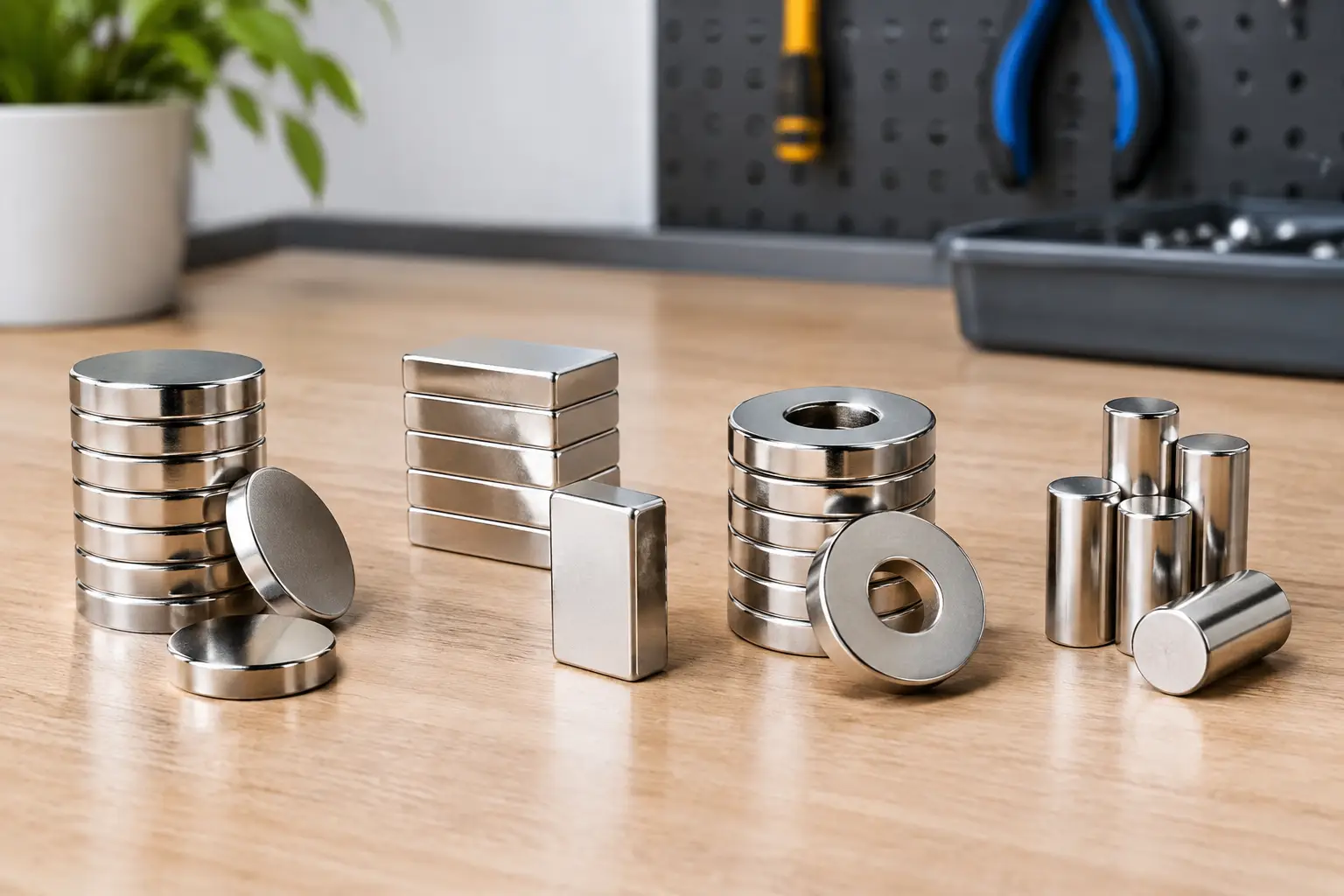
Magnet Shape Comparison for Stronger Fixings
A magnet that is exceptionally strong on paper can still be the wrong choice for the job if its shape does not suit the contact area, fixing method or direction of pull. This magnet shape comparison focuses on the three practical formats most commonly used for high-strength fixing work: disc, block and countersunk neodymium magnets.
All three can deliver serious holding power in compact sizes, particularly in N52 grade. The right format depends on what you are securing, how the parts meet and whether the magnet needs to remain visible, removable or permanently fixed in place.
Magnet Shape Comparison: Start With the Job
Magnet shape affects more than appearance. It changes how easily a magnet can be installed, how much contact it makes with a steel surface and how well it resists movement once fitted. A wide, flat magnet is usually better for direct pull against a flat plate. A long, narrow magnet may be more useful where space is restricted or where the load needs support across a greater length.
It is also worth separating pull force from real-world holding performance. Published pull figures are measured in controlled conditions, with a clean, thick steel plate and direct contact. Paint, gaps, thin steel, timber, uneven surfaces and sideways force will all reduce the force available in use. Choosing the right shape gives your fixing the best possible starting point.
For cabinet doors, access panels and removable covers, the best choice is often the shape that sits neatly within the available space. For jigs, workshop fixtures and display work, surface coverage and resistance to sliding may matter more than a flush finish.
Disc Magnets: Compact Strength on Flat Surfaces
Disc magnets are the familiar round, flat format. Their simple shape makes them a dependable option for general-purpose holding, positioning and closures. They are particularly effective when both the magnet and the opposing steel surface are flat and aligned face to face.
A disc magnet spreads its holding area evenly around its centre, which suits cabinet catches, box lids, removable signs, craft builds and concealed closures. In a shallow recess, a disc can provide powerful pull performance without taking up much depth. This is valuable where a standard mechanical catch would look bulky or require more adjustment.
Thickness makes a noticeable difference. A larger-diameter disc is useful when you need more contact area, while a thicker disc generally provides a stronger magnetic field and greater pull at a small gap. Neither dimension should be chosen in isolation. A very thin, wide disc may fit a shallow mounting area but can be less effective through a gap than a smaller, thicker alternative.
The limitation of the disc shape is installation. Unless it has a fixing hole, it normally needs adhesive, a routed recess or another mechanical housing. Adhesive can work well on properly prepared surfaces, but it must cope with the force of repeated opening and closing. For permanent, high-use fittings, a recessed installation or a purpose-designed magnetic catch is often the more reliable option.
Block Magnets: More Coverage and More Placement Options
Block magnets have flat rectangular faces and straight edges, giving them a practical advantage where a round magnet wastes space. They suit long, narrow fixing points, timber frames, retail displays, tool holders and fabrication work where the magnet needs to line up with an edge or sit inside a rectangular recess.
The key benefit is usable surface coverage. A block magnet can support a load across a broader section of steel or create a strong closure along the edge of a door or panel. It is also easier to position accurately in a square-sided rebate, which helps when you need a tidy, repeatable installation across several units.
Blocks are often the better choice when resisting twisting or sideways movement matters. This does not mean a block magnet automatically prevents sliding. Magnetic pull acts most strongly perpendicular to the contact surface, while a sideways load relies on friction. However, a longer contact area can improve stability and gives more room to place the magnet where it best supports the item.
For example, a narrow block can be fitted along the inside edge of a cupboard door to create a clean, concealed closure. A larger block can hold a removable timber-faced panel against a steel frame. In both cases, the rectangular format makes better use of the available space than a disc would.
There are trade-offs. Block magnets have sharp edges and can chip if they snap together or strike steel. Their powerful attraction also makes handling more demanding as size increases. Keep fingers clear, separate magnets by sliding them apart where possible, and protect the coated surface during fitting. A damaged coating can allow the magnet to corrode over time.
Countersunk Magnets: The Best Shape for Screw Fixing
Countersunk magnets are designed for one clear purpose: secure screw mounting with a flush or near-flush finish. Their central countersunk hole accepts a suitable countersunk screw, making them a practical choice where adhesive is unsuitable or where the magnet must be fixed firmly to timber, plastic or another non-magnetic base material.
For cabinet making, shopfitting and access panels, this is often the most straightforward route to a reliable magnetic fixing. The screw holds the magnet in position, while the magnet supplies the closing force. It also makes replacement easier if the fitting is changed later.
A countersunk magnet is not simply a disc with a hole. Removing material for the fixing hole reduces the magnetic volume, so it may not match the pull strength of a solid disc of the same outside diameter and thickness. That is usually a worthwhile compromise when installation security and speed are the priority.
Care is needed when tightening the screw. Neodymium magnets are hard but brittle, and overtightening can crack the countersunk section. Use the correct screw head, ensure the hole is properly centred, and tighten only until the magnet is seated securely. In hardwood, drilling a pilot hole helps prevent excessive stress on both the screw and magnet.
Orientation matters too. If you are using two countersunk magnets as a closure, check that their poles attract before fitting the second one. When pairing a magnet with a steel washer or strike plate, make sure the plate is large and thick enough to provide a worthwhile contact surface.
Choosing the Right Shape for Common Applications
For a simple door, lid or drawer closure, discs work well when they can be recessed neatly and the contact point is centred. Countersunk magnets are usually preferable if you need a screw-fixed fitting, particularly for timber doors, removable panels and repeated-use applications.
For a long cabinet edge, display panel or workshop fixture, blocks give more flexibility. Their straight sides are easier to align with frames and rebates, while their length can distribute holding force more effectively across the area that needs support.
For metal-to-metal positioning, a disc often provides the cleanest compact solution. For a fixture that needs to locate in one direction and resist rotation, a block may be better. If the project calls for a finished surface with no visible adhesive and no loose magnet to manage, choose countersunk.
The opposing material deserves equal attention. Neodymium magnets perform best against clean, flat mild steel. Aluminium, brass, copper and most stainless steels are not suitable magnetic targets. Thin steel can also become magnetically saturated, meaning it cannot make full use of a powerful magnet. A thicker steel strike plate may improve the holding result more than simply selecting a larger magnet.
Size, Grade and Safety Still Matter
Shape is only one part of the specification. N52 neodymium magnets offer superior pull performance for their size, allowing compact fittings where ordinary ferrite magnets would be too weak. But stronger is not always better. Excessive force can make a cupboard difficult to open, chip a magnet on contact or create a pinch hazard during assembly.
Choose enough pull strength for the weight, gap and frequency of use, then allow a sensible margin for surface finishes and wear. Test the arrangement before committing to multiple recesses or drilled fixing points. This is especially useful for painted steel, veneered doors and panels that may not meet perfectly flat.
Keep high-strength magnets away from children, electronic devices and anyone with a pacemaker or other implanted medical device. Handle larger magnets individually and with care. Their compact size can be deceptive.
A well-chosen magnet should disappear into the job: the door closes cleanly, the panel stays put and the fitting does not need constant adjustment. Whether you select a disc, block or countersunk format, matching the shape to the way the force is used will give you a stronger, more dependable result.