Practical Guide to Choosing Magnet Coatings
A cabinet catch that works perfectly on the bench can fail early once it is fitted in a damp utility room, a garden gate or a frequently cleaned retail unit. Often, the magnet strength is not the problem. The finish is. This guide to choosing magnet coatings will help you match the outer protection of a neodymium magnet to the conditions it will actually face.
High-strength neodymium magnets are usually supplied with a coating because the magnetic material beneath is vulnerable to corrosion and can chip if knocked. The right finish protects the magnet, supports its appearance and helps it deliver reliable holding power for longer. The wrong one can leave a powerful magnet looking worn, corroded or damaged well before the rest of the installation needs attention.
Why magnet coatings matter
Neodymium magnets offer exceptional pull performance for their size. That makes them a practical choice where space is limited – inside cabinet doors, display fittings, access panels, jigs, enclosures and custom closures. But neodymium alloy is not designed to be left exposed to moisture, salt, cleaning chemicals or repeated impact.
A coating acts as the barrier between the magnet and its working environment. It can also affect how the part looks, feels and stands up to contact with steel surfaces. For a dry indoor project, a standard plated finish is often the most sensible choice. For a wet, outdoor or highly handled application, specifying a more protective coating can save a replacement job later.
Coating does not make a magnet stronger in the same way that size, shape and grade do. However, it can preserve useful performance by keeping corrosion and damage away from the magnetic material. It also adds a small amount of distance between the magnet and the steel surface. Usually this is negligible, but on a very tight air gap or a finely balanced holding application, every fraction matters.
A guide to choosing magnet coatings by environment
The quickest way to narrow the options is to assess the environment before looking at the finish. Ask where the magnet will be installed, what it may touch and how often it will be handled.
Nickel coating for clean indoor work
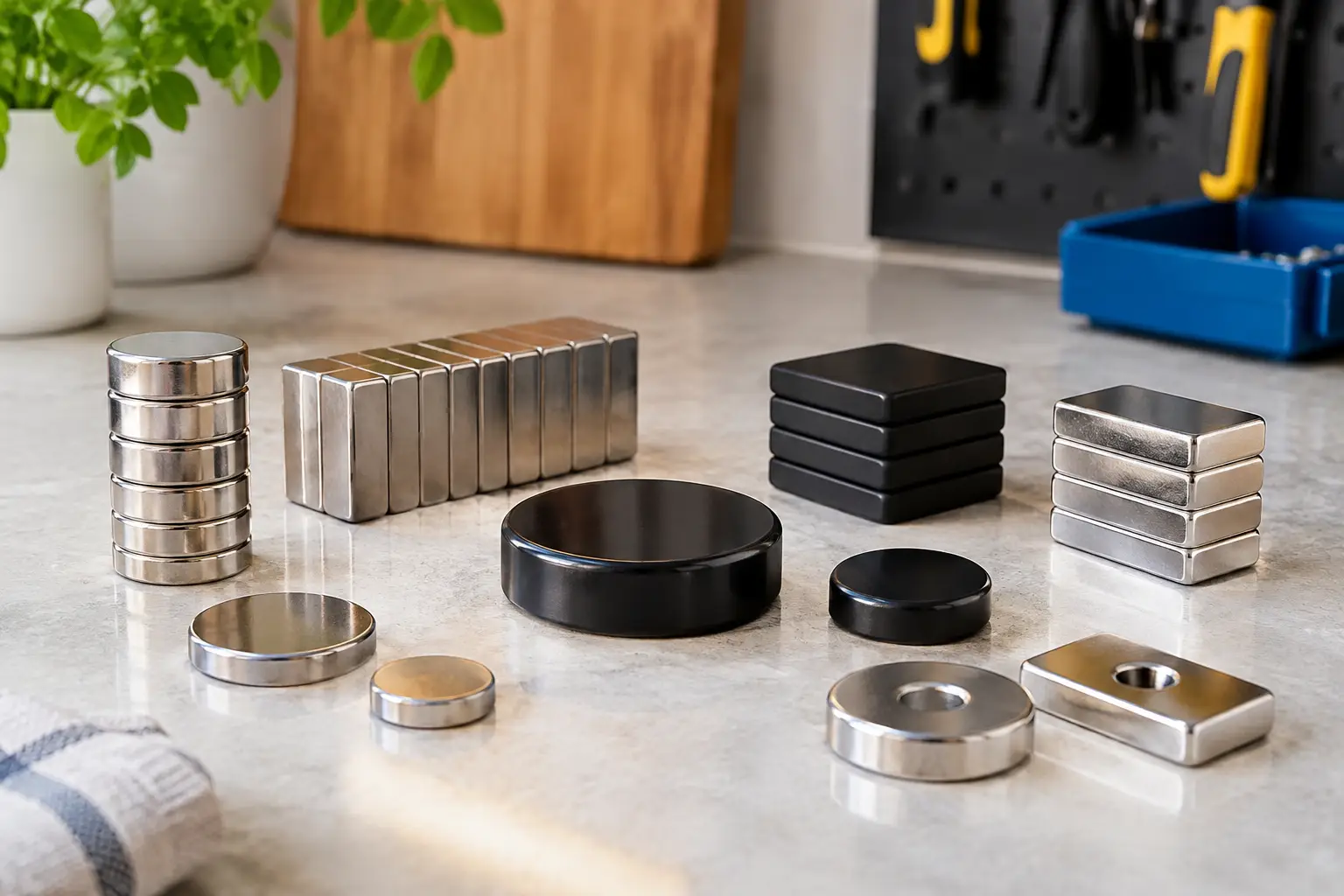
Nickel-copper-nickel plating, often simply called nickel plating, is the familiar bright silver finish found on many neodymium magnets. It is a strong all-round option for dry indoor applications. It looks clean and professional, resists ordinary handling well and suits workshop fixtures, internal cabinetry, displays, signs, craft builds and enclosed equipment.
For most indoor DIY and trade installations, nickel-coated disc, block and countersunk magnets provide the best balance of appearance, durability and value. If the magnet is protected inside a cupboard, housing or recess, the coating is unlikely to be the limiting factor in the job.
Nickel is not the best choice where water sits on the magnet, condensation is common or salt is present. A nickel surface can eventually suffer from scratches, edge damage or corrosion in demanding conditions. If the magnet will be exposed, choose with more caution rather than assuming a shiny finish means it is weatherproof.
Zinc coating for practical protection
Zinc-coated magnets have a more muted, often bluish-silver appearance than nickel. The finish is widely used where straightforward corrosion resistance is needed at a practical price. It can suit general-purpose indoor fixtures, packaging, light fabrication and installations where the magnet is not intended to be a visible feature.
The exact suitability depends on the coating thickness and the conditions, so zinc should not be treated as a permanent solution for rain, marine air or repeated wash-down. It is a sensible working finish, but it is still best used where exposure is limited or controlled.
Epoxy coating for damp and demanding areas
Epoxy-coated magnets are commonly chosen when moisture resistance matters more than a bright metallic appearance. The finish is usually black and provides a thicker protective layer than standard metal plating. This makes it useful for damp internal locations, protected outdoor fittings, wet-area enclosures and applications where the magnet may face occasional splashes or condensation.
There is a trade-off. Epoxy can be more susceptible to damage if its surface is cut, deeply scratched or repeatedly struck against hard steel. Once that barrier is breached, moisture can reach the magnet beneath. Use it where its added moisture protection is valuable, but design the fitting so the magnet is not taking unnecessary impact.
Rubber and plastic coatings for surface protection
Rubber-coated and plastic-coated magnetic assemblies are useful when protecting the item being held is as important as protecting the magnet itself. A softer outer layer improves grip and reduces marking on painted steel, glass-adjacent frames and finished surfaces. It can also help where vibration might otherwise cause a hard magnet to rattle or slide.
This type of coating is especially practical for temporary mounts, retail displays, workshop positioning and finished metalwork. The added layer creates a larger gap between the magnet and the steel target, so pull strength can be lower than an equivalent bare plated magnet. If holding force is critical, allow for that reduction by choosing a suitable size or using more than one fixing point.
Consider contact, impact and handling
The environment is only part of the decision. A magnet buried inside a timber door is treated very differently from one that snaps onto a steel frame dozens of times a day.
Repeated impact is hard on any plated magnet. Neodymium magnets are brittle, and their coatings can chip at sharp edges if they collide with another magnet or steel surface. A countersunk magnet, for example, should be tightened carefully with an appropriate screw. Over-tightening can crack the magnet or damage the coating around the hole, even if the installation initially feels secure.
For moving closures and catches, think about how the parts meet. A magnetic catch with a purpose-made housing is often more suitable than an exposed disc magnet when alignment, repeatable operation and protection are required. It gives a more controlled result for cabinet doors, access panels and lightweight closures.
If magnets will be frequently removed from a steel surface, a rubber-coated assembly or a recessed design may protect both the magnet and the workpiece. If they are permanently enclosed and never handled, a standard nickel finish is usually the efficient choice.
Do not choose coating in isolation
A durable finish cannot correct a magnet that is too small, incorrectly shaped or poorly mounted. Coating should be selected alongside pull requirement, fixing method, target material and available space.
Disc magnets are effective for direct face-to-face contact and compact holding points. Block magnets provide more surface area and can suit latches, jigs and fabricated components. Countersunk magnets allow a flush mechanical fixing, but need a matching screw head and careful installation. The right format often does more for dependable performance than moving up to a more specialised coating.
Also consider the steel target. A thick, clean mild-steel plate gives a magnet far more to work with than thin sheet, stainless steel or a painted surface. Air gaps caused by paint, tape, timber veneer, rubber feet or a heavy coating reduce pull. If there is any gap in the finished assembly, build in a margin rather than selecting a magnet based only on its stated pull force.
Common coating mistakes to avoid
The most expensive mistakes are usually simple ones: using an indoor plated magnet outdoors, allowing magnets to slam together, or relying on coating alone in a chemically harsh setting. Avoid fitting a magnet with damaged plating, even if the damage looks minor. The exposed area can become the starting point for corrosion.
It is also worth avoiding paint or adhesive as a substitute for a proper protective finish unless the product and surface preparation are proven for the job. Added paint can crack, create an air gap or interfere with a close-fitting magnet assembly. Where a magnet needs extra protection, use a housing, recess, cover or suitable coated magnetic assembly instead of improvising after installation.
Keep magnets dry before fitting and store them away from damp workshop conditions. If a project involves cutting, grinding or drilling nearby, protect the magnet from metal dust. Fine swarf is strongly attracted to neodymium magnets and can scratch a plated surface or make a clean installation look untidy.
Choose for the job, then protect the installation
For dry indoor cabinetry, displays and general workshop use, nickel-coated neodymium magnets are usually the dependable starting point. For greater exposure to damp, choose an epoxy-coated option where available and protect it from impact. Where surface marking and grip matter, a rubber-coated magnetic assembly may be worth the reduction in direct pull force.
Magman focuses on powerful, versatile magnetic components for jobs where compact size and superior pull performance matter. Once you have matched the coating to the environment, choose the magnet format and fixing method with equal care. A well-protected magnet, fitted with proper alignment and enough holding margin, will give the clean, reliable result your project needs.