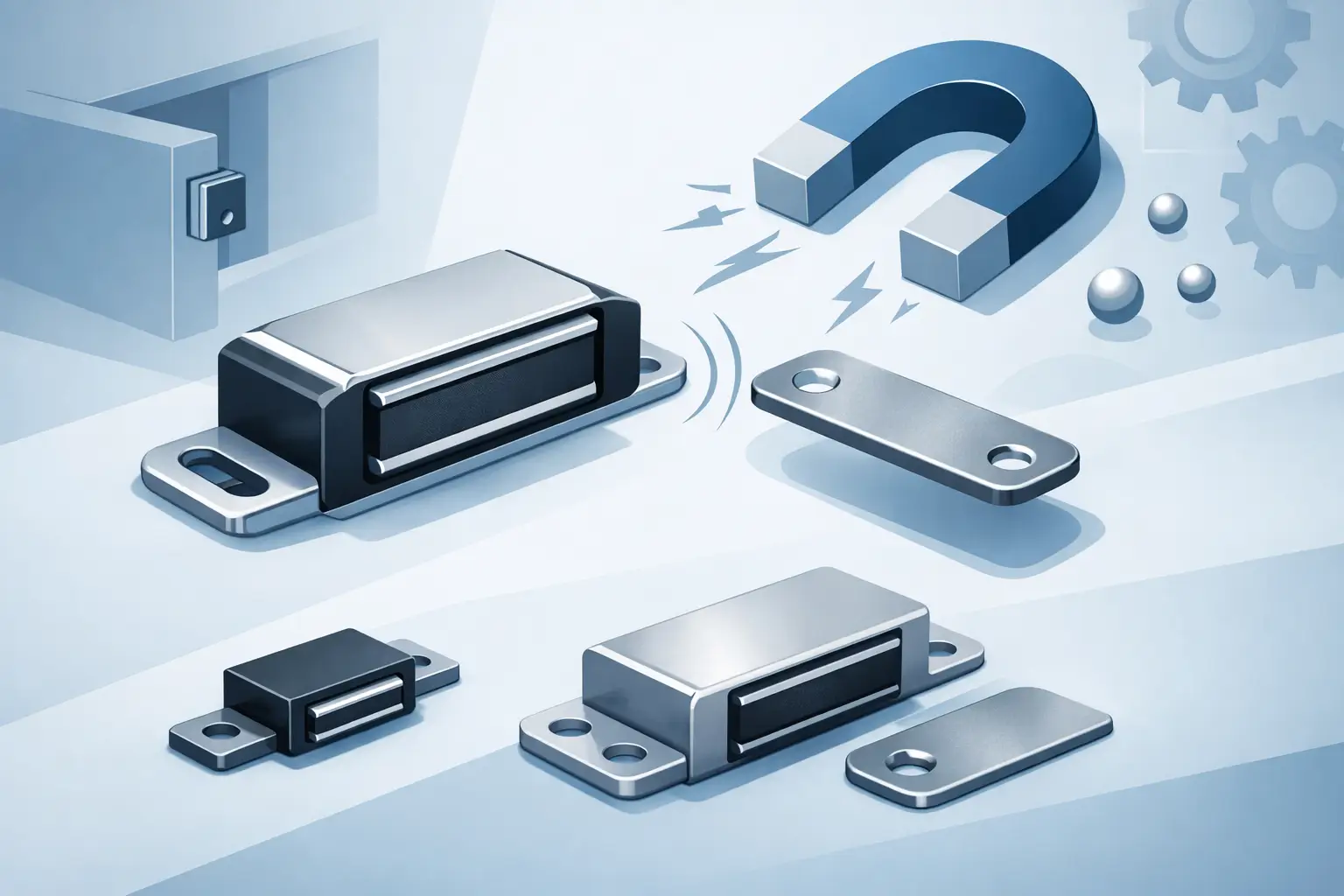
Heavy Duty Magnetic Catches Explained
A cupboard door that refuses to stay shut is a small problem until it becomes a daily irritation. The same goes for access panels that rattle, retail units that drift open, or workshop storage that never quite closes cleanly. That is where heavy duty magnetic catches earn their place. When chosen properly, they give a strong, tidy and dependable closure without the fuss of more complex latching hardware.
What heavy duty magnetic catches actually do
At a basic level, a magnetic catch holds a door, panel or lid closed by pulling a metal strike plate against a magnet assembly. The idea is simple, but the result depends heavily on the strength of the magnet, the quality of the housing, the alignment of the parts and the way the catch is fitted.
A heavy duty version is designed for jobs where a lightweight cupboard catch would be a poor match. That might mean a larger door, a thicker panel, a higher-use environment or a setting where vibration and repeated opening put more strain on the fixing. In those situations, weak catches tend to show their limits quickly. They let doors creep open, lose consistency, or need replacing far sooner than expected.
A stronger magnetic catch gives you more holding force and more confidence in the finished result. For cabinet makers, fit-out teams, workshop users and practical DIY customers, that usually matters more than anything else.
Where heavy duty magnetic catches work best
The biggest advantage of magnetic catches is that they solve closure problems neatly. There is no visible latch tongue, no awkward mechanical release and no need to force a misbehaving door into place. You push it shut and the magnet does the rest.
That makes them especially useful in fitted furniture, kitchen and utility cabinetry, retail displays, access hatches, van fit-outs, workshop storage and fabricated units where a clean finish matters. They are also useful when you want a door to stay firmly shut but still open easily by hand.
That said, there is always a question of application. A magnetic catch is excellent for holding closed. It is not always the right answer where a door must lock, resist tampering or stay secured under very high movement. If you are dealing with safety-critical enclosures or heavy external gates, you may need a different type of fastening altogether.
Choosing heavy duty magnetic catches for real use
The phrase heavy duty gets used loosely in hardware, so it helps to look beyond the label. What matters is whether the catch matches the size, weight and use pattern of the item it is holding.
Strength matters, but so does control
More pull strength is usually better than too little, but there is a limit. If the catch is excessively strong for a small lightweight door, it can make opening feel abrupt or uncomfortable. On the other hand, if the magnet is too weak, the door may bounce open or sit slightly proud instead of closing flush.
For most buyers, the right choice sits in the middle – enough force to hold securely, without making the door awkward to open repeatedly. This is especially relevant in homes, workshops and retail settings where the unit may be used many times a day.
Size and format affect fitting
Some catches are compact and easy to hide. Others are larger because they are built to deliver more holding power or to suit heavier-duty housings. Before buying, check the available fixing space inside the cabinet or behind the panel.
A catch can be strong and well made, but still be wrong for the job if it clashes with hinges, shelves or frame edges. Compact but powerful designs are often the best fit where space is limited.
Material quality changes long-term performance
If the magnet is strong but the housing is flimsy, the whole assembly becomes the weak point. The same applies to poor strike plates or low-grade screws. Better magnetic catches are built to cope with repeated use and maintain reliable contact over time.
For trade users and regular DIY buyers, consistency is a major part of value. A cheap catch that needs replacing, adjusting or apologising for is rarely a bargain.
Installation is where performance is won or lost
Even very strong heavy duty magnetic catches can disappoint if they are fitted badly. In practice, alignment is everything. The magnet and strike plate need to meet cleanly and squarely. If the plate lands off-centre or at an angle, you lose holding performance straight away.
The gap between the two parts also matters. Magnetic pull drops off quickly when distance increases, so a catch with a visible gap will never perform as well as one fitted tightly and accurately. If a door is warped, poorly hinged or not sitting correctly in the frame, changing the catch alone may not solve the problem.
It is also worth thinking about substrate. Fitting into solid timber is different from fitting into MDF, metal or lightweight board. The correct screws and a firm fixing point make a real difference, especially on larger doors that get opened with force.
Common fitting mistakes
One of the most common mistakes is choosing a catch based only on the door width or cabinet appearance, without thinking about weight and usage. Another is placing a single catch where two would give a more balanced hold across a wide panel.
The other frequent issue is poor positioning. If the catch is fitted too far from the closing edge, or if the strike plate is not level, the door may twist or fail to close positively. A few extra minutes spent checking alignment usually saves a lot of frustration later.
Why neodymium makes a difference
Not all magnetic catches are built around the same magnetic material. Neodymium magnets are known for delivering very high pull strength in a compact size, which is exactly why they suit practical closure hardware so well.
For customers who need strong holding power without using bulky fittings, neodymium-based catches are often the smarter choice. They allow a smaller catch to do more work, which is useful in furniture, displays and fabricated units where space is tight but performance still matters.
This is also why specialist suppliers tend to stand out. A focused range built around stronger magnetic products is generally easier to buy from than a broad hardware catalogue filled with mixed-quality options. At Magman, the emphasis is on powerful and versatile magnetic hardware that performs properly in real installations, rather than novelty or low-spec items.
When to use one catch and when to use two
There is no single rule here, because the right setup depends on door size, panel rigidity and hinge position. A narrow cabinet door may close perfectly with one well-placed heavy duty catch. A wider or taller panel often benefits from two, especially if you want even pressure and a neater shut line.
Using two catches can also reduce the tendency for corners to spring away from the frame. That said, doubling up is not always necessary. If the door is light and aligned properly, one strong catch may be the cleaner and more cost-effective option.
This is one of those situations where stronger hardware helps, but good judgement still matters.
Heavy duty magnetic catches versus mechanical latches
Magnetic catches are popular because they are quiet, simple and unobtrusive. They work well when you want fast access and a clean finish. Mechanical latches have their place too, especially where you need a positive click-shut action or more resistance to forced opening.
If your priority is convenience, tidy appearance and reliable day-to-day closure, magnetic catches are often the better option. If your priority is security or a more deliberate locking action, mechanical hardware may be more suitable. In some builds, the best result comes from combining both depending on the panel and its purpose.
Getting the best result from the start
The best heavy duty magnetic catches are not just about force on paper. They are about how confidently a door closes, how well it stays shut, and how little attention the hardware needs once installed. That comes from matching the catch to the job rather than guessing or simply buying the cheapest option available.
If you are fitting cabinetry, retail units, access panels or workshop storage, start with the practical questions. How heavy is the door? How often will it be opened? Is space tight? Does the unit need a discreet fixing or maximum holding power? Those answers will usually point you towards the right catch far more quickly than marketing terms ever will.
A good magnetic catch should feel like a small upgrade that fixes an annoying problem properly. Once it is in place, the door shuts cleanly, stays put and gets on with the job. That is what makes the right choice worth it.