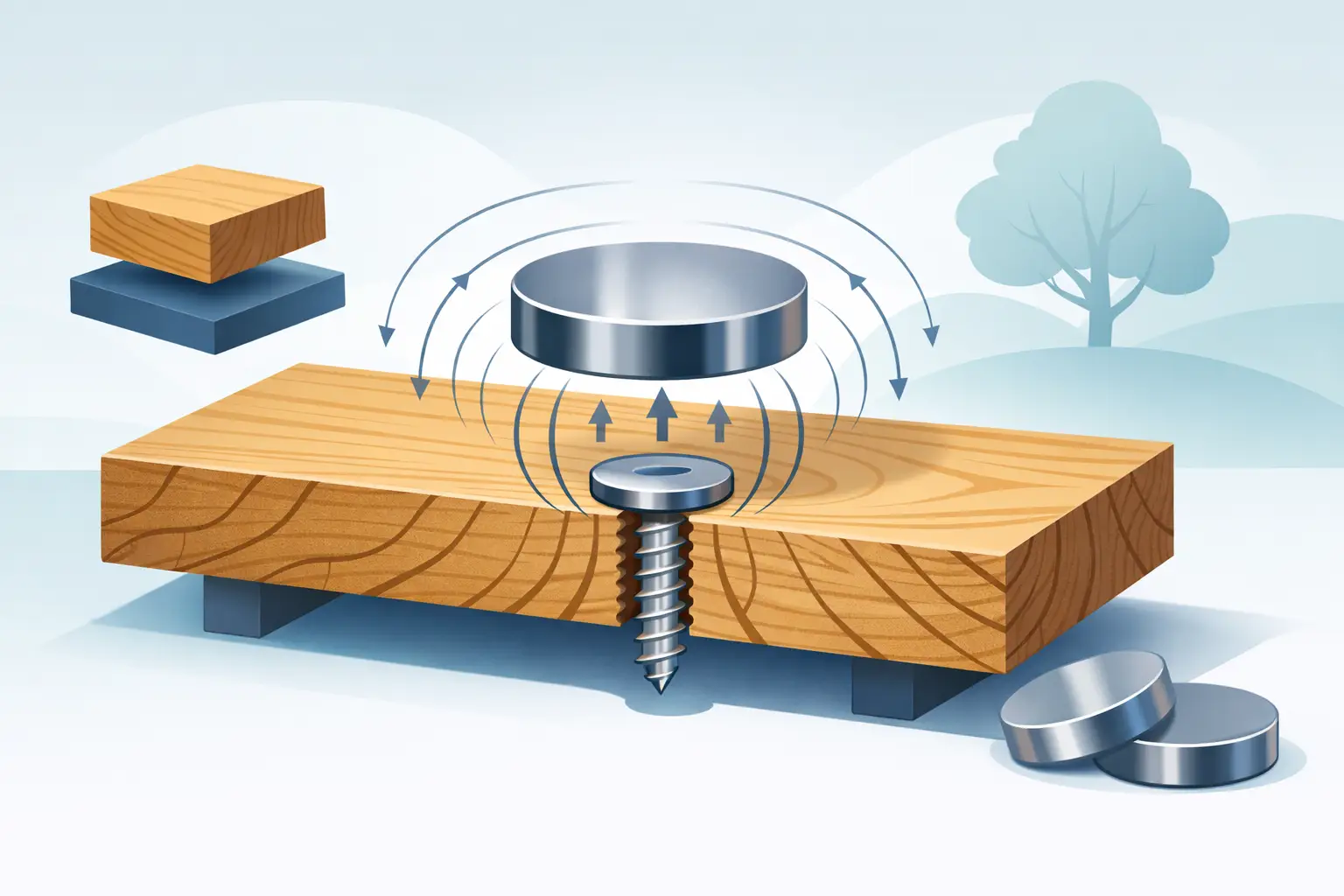
Can Neodymium Magnets Hold Through Wood?
A cabinet door that will not stay shut, a removable panel that needs a clean fixing, a display piece with hidden fasteners – this is usually where the question comes up: can neodymium magnets hold through wood? The short answer is yes, they can, but the result depends heavily on wood thickness, magnet size, the air gap, and how much force the application needs in real use.
That matters because wood does not block magnetism in the way steel does, but it does create distance. And distance is what weakens magnetic pull fastest. If you are relying on a magnet to work through a timber door, a plywood panel or an MDF fascia, the job is less about whether neodymium magnets work through wood at all and more about choosing enough magnetic strength for the gap involved.
Can neodymium magnets hold through wood in real projects?
Yes – and they are often one of the cleanest ways to create hidden closures and removable fixings. Neodymium magnets are powerful and versatile, so they can attract another magnet or a steel strike plate through a wooden surface, provided the wood is not too thick.
In practical terms, this is why they are used for cupboard catches, access panels, shop fittings, tool holders and bespoke joinery details. The attraction passes through the wood because timber is not magnetic. The issue is that every extra millimetre of material between the magnet and its target reduces pull strength quite sharply.
A thin timber veneer or 3 mm plywood panel is very different from an 18 mm cabinet door. The first may allow a surprisingly firm hold from a compact neodymium disc. The second may need a much larger magnet, a different fitting method, or direct contact rather than through-wood attraction.
What actually affects magnetic hold through wood?
The biggest factor is thickness. A neodymium magnet that feels super-strong in your hand can become underwhelming once it has to pull through even a modest timber gap. Magnetic force drops quickly with distance, so a magnet that grips securely at 1 or 2 mm may struggle at 10 mm.
Magnet size and grade matter next. Larger magnets generally provide more holding force, and high-grade neodymium magnets such as N52 offer superior pull performance compared with lower grades of the same size. Shape also plays a part. Disc magnets are popular for concealed fixing, while block magnets can offer a broader contact area depending on the setup.
The target material matters too. A magnet pulling directly to another neodymium magnet will usually outperform a magnet pulling to a mild steel plate through the same thickness of wood. Steel quality, thickness and surface contact all affect the result. Thin steel can saturate and limit the available pull, while a thicker strike plate often performs better.
Wood type has some effect, though not because one species is magnetic and another is not. Dense hardwood and softer timber both mainly act as spacers. What changes in practice is consistency. Solid wood can move slightly with humidity, while plywood and MDF tend to be more stable. That movement may alter the gap and change how positive the closure feels over time.
How thick can the wood be?
This is where broad claims become unreliable. There is no single maximum thickness because hold strength depends on the load, orientation and the magnet pair you use.
For very light-duty jobs, such as keeping a small panel closed or holding a lightweight cover in place, neodymium magnets can work through several millimetres of wood without much trouble. Once you move into thicker cabinet materials, the magnet needs to be sized properly and tested against the actual piece of timber.
As a rough practical view, thin panels and fascias are usually the best candidates for through-wood magnetic fixing. When the wood becomes thick enough that the hold feels vague or inconsistent, the better option is often to recess the magnet closer to the surface or mount the magnet and strike plate so they meet directly.
That is why hidden magnetic catches in furniture are often morticed into the timber rather than asked to pull through the full thickness of a door. You keep the appearance clean while reducing the gap enough to get reliable holding force.
Best uses for neodymium magnets through wood
Through-wood magnetic holding works best where the load is light to moderate and where convenience matters more than maximum retention. Cabinet doors, removable trim panels, hidden access hatches and display covers are all good examples.
It also suits jobs where a mechanical latch would look untidy or take too much space. A compact neodymium magnet behind a wooden face can give a neat, low-profile fixing with no visible hardware from the outside. For retail units and workshop projects, that combination of strength and clean presentation is often exactly the point.
Where it is less suitable is any application exposed to vibration, impact or a constant peeling force. A magnet may hold a hatch shut at rest but release too easily if the panel is tugged from one edge. Likewise, a vertical door under repeated use may need a stronger catch arrangement than a simple hidden magnet through timber can provide.
Through wood or recessed into wood?
If you want the best performance, recessed is usually better. Setting the magnet into a drilled hole or routed recess near the timber surface cuts down the air gap and makes far better use of the magnet’s pull.
Through-wood mounting still has its place when you need a fully concealed look or cannot machine the face side, but it is a compromise. You gain a cleaner installation and lose some effective holding force. For many projects that trade-off is fine. For others, especially heavier doors or frequently opened panels, it is the reason a fitting feels disappointing.
Countersunk magnets can be especially useful where you want a secure mechanical fixing into the wood while keeping the magnet itself firmly positioned. Disc and block magnets suit bonded or press-fit installations where the magnet can sit close to the working surface.
Common mistakes that make magnets seem weaker than they are
The most common mistake is underestimating distance. Buyers often judge a magnet by how strongly it snaps to steel in the hand, then expect the same effect through timber. In reality, even a small increase in gap can reduce usable hold enough to change the job outcome.
Another mistake is using a very small steel target. If the magnet is larger or stronger than the strike plate can support, you do not get the full benefit of the magnet. The same goes for using thin or poor-quality steel.
Alignment is another issue. Magnets perform best when the faces meet squarely. If the magnet pulls at an angle, or if the door or panel flexes, the hold can feel weaker and less positive. Glue choice and fixing method matter as well. A magnet that shifts in its recess or sits below the intended level can lose valuable performance.
How to choose the right magnet for wood applications
Start with the real job, not just the timber thickness. Ask whether you are holding a lightweight flap, a solid oak door, a removable sign panel or a machine cover. Then consider whether the force is straight pull or whether the panel will be twisted, slid or peeled away.
For lighter closures, compact neodymium disc magnets are often enough if the gap is small. For stronger catches, larger discs or block magnets can offer more holding force. If the magnet needs to be screwed into place, countersunk formats make installation simpler and more secure.
If there is any doubt, size up rather than down. A stronger magnet gives you more margin, and in many builds that extra confidence is worth having. This is especially true when timber tolerances vary, paint adds thickness, or the finished product will see regular use. A specialist range such as Magman’s makes that choice easier because it is built around high-strength options rather than general-purpose hardware.
A practical way to test before committing
The smartest approach is a simple mock-up. Use an offcut of the actual timber, place the magnet behind it, and test against the intended steel plate or second magnet. That tells you far more than a theoretical pull figure on its own.
Test it in the same orientation the finished piece will use. A horizontal panel supported by gravity behaves differently from a vertical door that is opened ten times a day. If the hold feels just acceptable on the bench, it is probably too weak for daily use. Aim for clear, confident attraction rather than something that only just works.
Neodymium magnets can absolutely hold through wood, and in the right setup they do it extremely well. The key is to treat wood as distance, not as a barrier, and choose a magnet with enough strength to overcome that gap with room to spare. When the fit is right, you get a hidden fixing that feels clean, strong and properly engineered.