How to Install Cabinet Catches Properly
A cabinet door that will not stay shut is a small fault that quickly becomes irritating. If you want to know how to install cabinet catches properly, the job is straightforward, but the difference between a quick fix and a reliable closure usually comes down to positioning, alignment and choosing enough holding strength for the door.
Magnetic cabinet catches are popular because they are compact, clean-looking and easy to use. For kitchen units, cupboards, workshop cabinets and retail displays, they provide a simple way to keep doors closed without relying on a more visible latch. The best result comes from fitting the catch so the magnet meets the strike plate squarely and closes with consistent contact every time.
What you need before you start
You do not need a large kit of tools for this job. In most cases, a tape measure, pencil, screwdriver or drill driver, suitable screws and a bradawl or small pilot drill are enough. If the cabinet is older or made from hardwood, drilling pilot holes is worth the extra minute because it helps prevent splitting and keeps the screws straight.
It also helps to check what type of cabinet catch you are fitting. Some magnetic catches are surface mounted and screw directly to the inside of the carcass. Others use countersunk fixings for a neater and more secure fit. The strike plate usually fixes to the inside face of the door. Before anything is screwed down, offer both parts up by hand and check that the door can close without fouling the frame or hinges.
Choosing the right catch strength
Before looking at how to install cabinet catches, it is worth getting the catch itself right. A lightweight bathroom cupboard door needs far less holding force than a solid timber workshop cabinet. If the magnet is too weak, the door can spring open or sit slightly proud. If it is too strong for a small, lightly hinged door, opening can feel sharper than you want.
This is where product choice matters. A quality magnetic catch with superior pull performance gives a firmer, more dependable closure, especially on heavier doors or cabinets used often through the day. Neodymium magnetic catches are particularly useful where compact size and strong hold are both important. For trade users and DIY fitting alike, the aim is not just to make the door shut, but to make it stay shut without fuss.
Where to position a cabinet catch
Most catches are fitted near the opening edge of the cabinet door, on the opposite side to the hinges. That gives the magnet the best leverage to hold the door closed. Fit it too close to the centre and the door may still flex or rattle at the outer edge.
For a single catch, place it near the top corner unless the cabinet design suggests otherwise. On taller or heavier doors, a catch near the top is often enough, but some doors benefit from two catches, one at the top and one at the bottom, to prevent twisting. This is common on utility cupboards, retail units and larger workshop cabinets.
If the door is slightly bowed or the frame is not perfectly square, do not assume one catch will solve everything. A stronger catch can help, but alignment matters just as much. Magnets perform best when the contact surfaces meet directly rather than at an angle.
How to install cabinet catches step by step
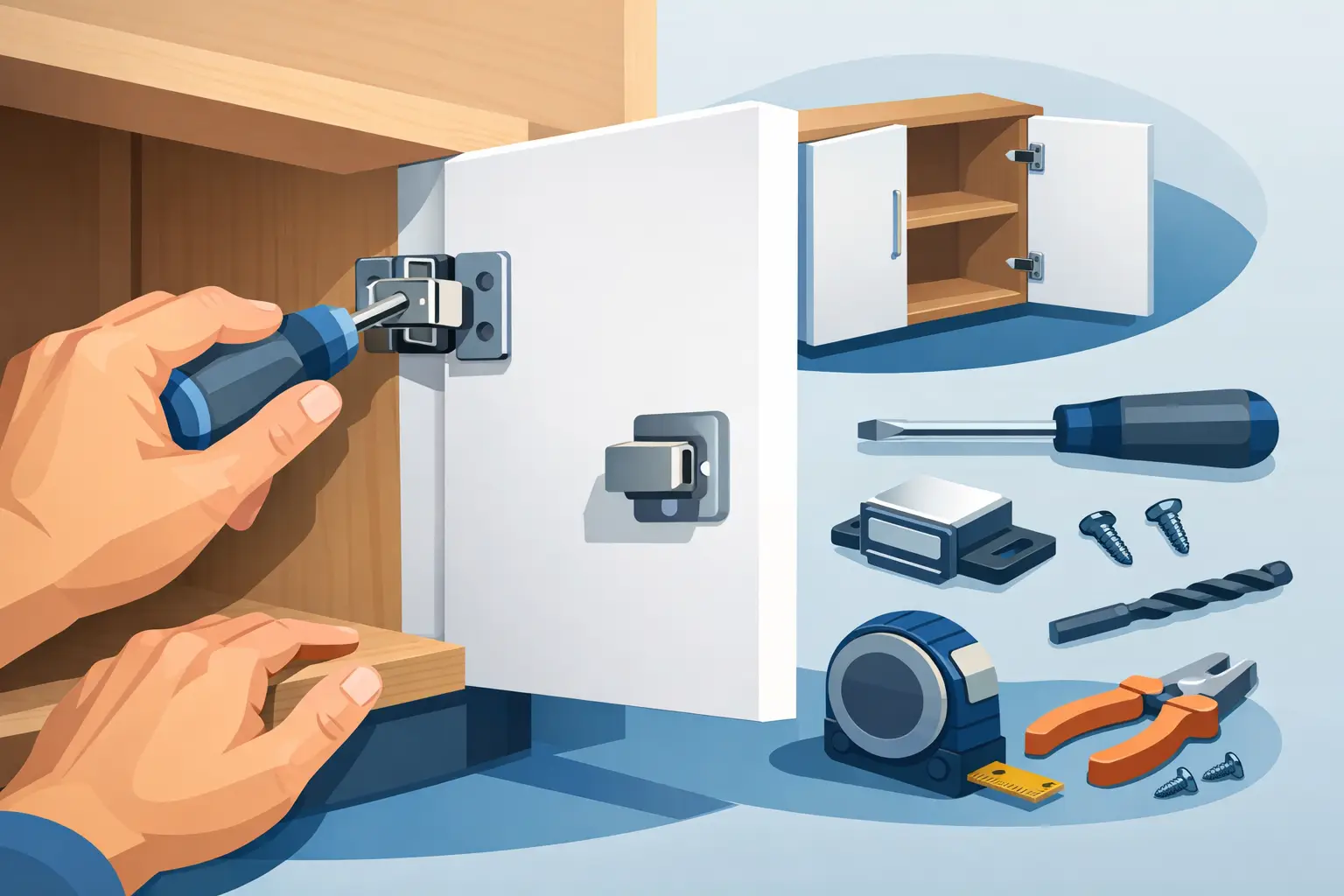
Start by closing the door and marking where the catch should sit inside the cabinet. The body of the magnetic catch fixes to the cabinet frame or side panel, with the metal strike plate fitted to the back of the door. In most cases, you are aiming for the centre of the magnet to line up with the centre of the plate when the door is shut.
Hold the catch body in position and mark the screw holes lightly in pencil. Then use a bradawl or pilot drill to start the holes. Screw the catch in place, but do not fully tighten it yet. Leaving a slight amount of movement can help with final adjustment.
Next, close the door gently and use the magnet or catch face to identify where the strike plate needs to meet it. Some installers mark this position by placing a small piece of masking tape on the door, then transferring the location with pencil. Another simple method is to apply the strike plate to the magnet, close the door carefully, and mark the plate position once it touches the door. Whichever method you use, accuracy here saves rework later.
Fix the strike plate to the door with pilot holes if needed. Again, tighten the screws enough to hold it securely, but leave a little adjustment until you test the closing action. Then shut the door a few times. You want a positive close, full contact and no scraping. Once the alignment is right, fully tighten all screws.
Common fitting mistakes
The most common problem is misalignment. If the strike plate lands partly off-centre, the magnet may still grab, but the hold will be weaker and less consistent. Over time that can lead to rattling, poor closure and extra wear on the fittings.
Another mistake is mounting the catch where the door does not naturally meet the cabinet squarely. Hinges that are out of adjustment can make the catch seem faulty when the real issue is the door line. If the gap around the door is uneven, adjust the hinges first and fit the catch second.
Using screws that are too long is another avoidable issue, especially on thinner cabinet doors. Always check the material thickness before fixing the strike plate. You want a secure fixing, not a screw tip appearing through the front face.
There is also the matter of substrate. Chipboard, MDF and hardwood all behave differently. MDF can hold well with the right pilot holes, but repeated refitting in the same spot weakens the screw hold. If you are replacing an old catch, it is often better to move the new fixing position slightly rather than reuse a worn hole.
Fitting magnetic catches on different cabinet types
Kitchen and bathroom cabinets are usually the easiest because the doors are relatively light and the internal faces are clean and accessible. Here, a compact magnetic catch is often enough, provided the door hinges are in good order.
Workshop cupboards and garage cabinets are different. Heavier doors, vibration, uneven flooring and frequent use all put more demand on the catch. This is where a powerful and versatile magnetic catch earns its keep. If the cabinet stores tools or hardware, a firmer closure helps prevent doors creeping open.
Retail display units sit somewhere in the middle. They often need a tidy appearance and dependable hold without making the door awkward for staff to open repeatedly. In those settings, neat mounting and consistent pull strength matter just as much as raw holding power.
When one catch is not enough
If a door is tall, heavy or slightly warped, adding a second catch can give a better result than simply choosing a stronger single one. Two points of contact distribute the holding force and help the door sit flatter against the cabinet.
That said, more holding power is not always better. On a delicate painted door or a lightweight unit, too much force can create a harsher opening action and stress the fixings over time. It depends on the door weight, hinge quality and how often the cabinet is used. A well-chosen magnetic catch should feel controlled, not aggressive.
Final checks that improve the result
Once the catch is fitted, open and close the door ten or fifteen times. Listen for any rattle, check that the plate is landing cleanly, and make sure the screws stay tight. If the door needs a push to line up, the issue is usually hinge adjustment rather than magnet strength.
It is also worth checking how the catch performs after the cabinet is fully loaded and in normal use. A freestanding unit may shift slightly once positioned on an uneven floor, which can alter alignment. Small adjustments at this stage can make a big difference to long-term performance.
For buyers who want dependable closure without oversizing the hardware, specialist magnetic products make selection easier. A focused range with strong, consistent pull takes some of the guesswork out of cabinet fitting, which is exactly why many trade and DIY customers look to specialists such as Magman when closure strength matters.
A cabinet catch is a small part, but when it is fitted properly it improves the whole unit. Take a few extra minutes to line it up well, match the strength to the door, and you will get a closure that feels clean, secure and built to last.