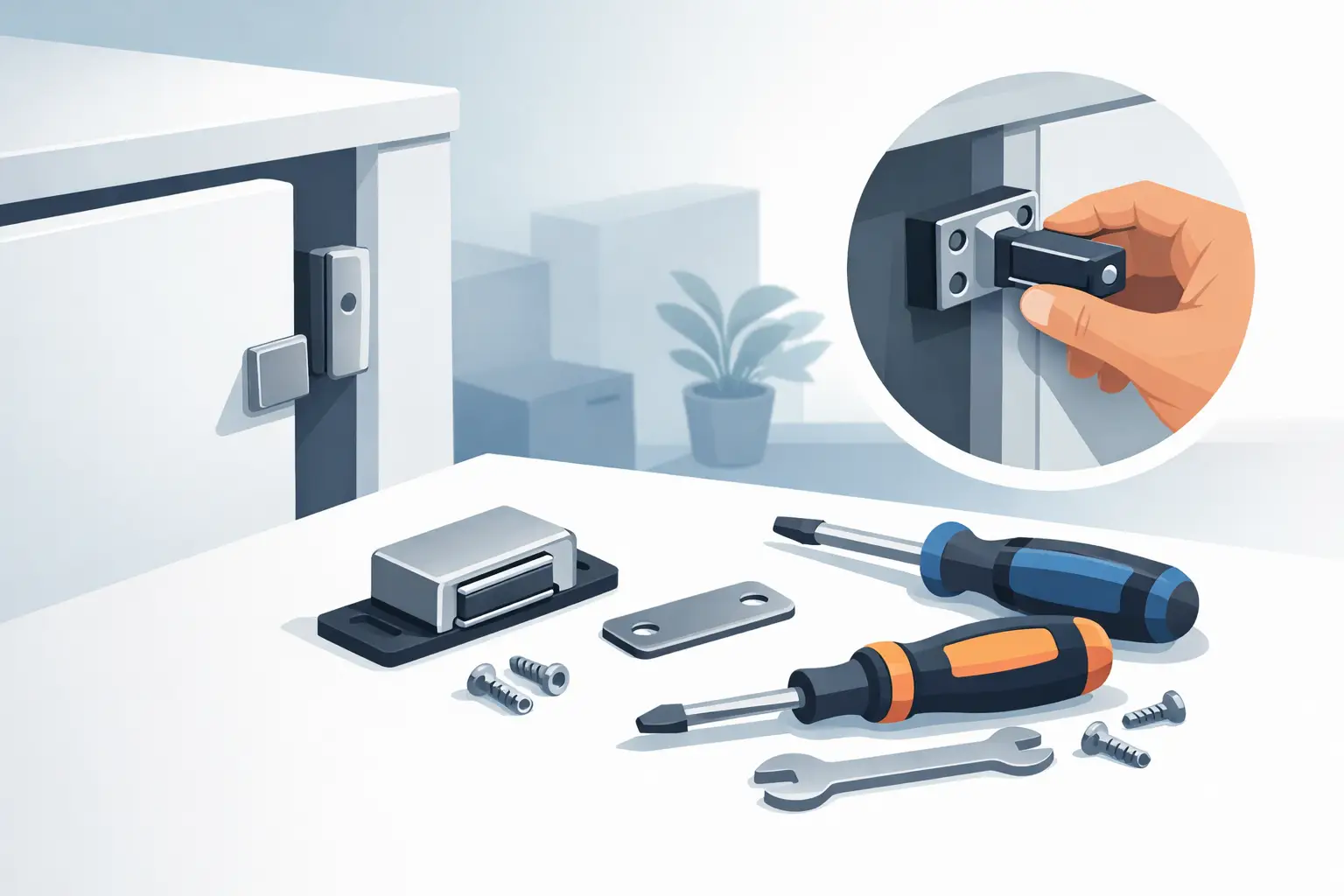
Door Catch Magnet Replacement Guide
A cupboard door that will not stay shut is usually not a hinge problem. More often, the magnetic catch has lost strength, shifted out of line, or simply worn out after years of use. This door catch magnet replacement guide is built for that exact job – helping you replace a weak catch with a stronger, more reliable fix that actually holds the door closed.
Magnetic catches are simple parts, but the wrong replacement creates the same annoyance all over again. Too weak, and the door springs open. Too strong, and a lightweight door feels awkward every time you use it. The best result comes from matching the catch to the door size, door weight and fixing surface, then fitting it so the magnet and strike plate meet cleanly.
When a door catch magnet needs replacing
The obvious sign is a door that drifts open instead of closing firmly. In kitchens, workshops and retail units, that usually means the original catch has weakened or the strike plate no longer lines up properly. Sometimes the plastic housing cracks before the magnet itself fails, especially on older cabinet catches that have had years of repeated use.
It is also worth checking whether the fault is really the catch. Loose hinges, a warped door, swollen timber or a badly mounted carcass can all affect closure. If the door has dropped by a few millimetres, even a strong magnetic catch will struggle because the contact point is wrong. Replacing the magnet without correcting alignment can work temporarily, but it rarely lasts.
If the catch is undersized for the job, replacement is the right move. This happens a lot on heavier cupboard doors, utility units and bespoke furniture where a standard light-duty catch was fitted simply because it was available. Upgrading to a stronger magnetic catch usually solves the problem properly.
Choosing the right replacement catch
A good door catch magnet replacement guide should save you from buying by guesswork. The main things that matter are pull strength, format, mounting style and the environment the catch will work in.
Pull strength comes first. A small internal cupboard door needs far less holding force than a tall pantry door or a workshop cabinet used every day. If the door is light and the catch is too powerful, opening it can feel jerky and put extra stress on screws and hinges. If the door is heavier, a weak catch is a false economy. It will close once, then start failing as soon as the door flexes or the unit settles.
Format matters too. Some catches are housed in plastic or metal casings, while others use compact neodymium magnets in a more stripped-back fixing arrangement. For many cabinet and furniture applications, neodymium magnets are the stronger and more versatile option because they offer serious holding power in a compact size. That is especially useful where space is limited or where you want a cleaner, less bulky fitting.
Mounting style affects how easily the replacement fits the existing holes. If you can use the same screw positions, the job is faster and cleaner. If not, you may need to fill old holes and redrill. Countersunk magnetic catches are often a good choice where you want a secure mechanical fixing and a tidy finish.
The installation environment also makes a difference. In kitchens, utility rooms and workshop spaces, catches deal with moisture, temperature changes and constant use. A stronger, better-built magnetic catch is usually worth it because it keeps performing in real conditions rather than just looking suitable on paper.
Door catch magnet replacement guide: what to check before fitting
Before you remove anything, open and close the door a few times and watch how it lands. You want to see whether the catch and strike plate meet squarely or whether the door is coming in high, low or at an angle. That tells you whether you are doing a straightforward replacement or whether some adjustment is needed as well.
Next, inspect the fixing surface. If the timber is split or the screw holes are worn out, the new catch will not hold properly unless that is repaired first. On chipboard cabinets, tired screw holes are common. Slightly longer screws, wood filler or repositioning the catch by a small amount can all help, depending on the condition of the material.
Measure the available space rather than relying on the old catch size alone. A previous installer may have used whatever was to hand, and that does not mean it was the best fit. Check depth, width and the gap between the door and carcass when closed. If the gap is too large, even a powerful magnet may not engage as well as expected.
How to replace a magnetic door catch
Start by removing the old catch and strike plate. Keep the screws if they are still sound, but replace them if heads are worn or threads have lost grip. Once the old parts are off, clean the mounting area so the new catch sits flat. Dust, grease and chipped paint can all throw off alignment by just enough to matter.
Position the new magnetic catch on the cabinet frame or internal panel, depending on the original layout. Do not fully tighten the screws at once. Leave a little movement so you can make final adjustments after testing. Fit the strike plate on the door so it meets the magnet face as directly as possible when shut.
Close the door gently and check the contact point. The magnet should pull the door in without needing a hard push, and the strike plate should not scrape across the catch body. If the pull feels weak despite using a strong catch, alignment is the first thing to revisit. Even a few millimetres out can reduce performance.
Once the position is right, tighten all fixings and test the door repeatedly. Open and close it from different angles, including with a normal everyday push rather than a careful one. That matters because a catch that works only when you guide the door perfectly is not really fitted properly.
Common replacement mistakes
The most common mistake is choosing the cheapest catch rather than the right one. Light-duty magnetic catches often look similar to stronger versions, but performance is very different in use. If the door sees regular traffic, stronger materials and superior pull performance pay off quickly.
Another mistake is assuming stronger is always better. On a very light cupboard door, an overly powerful magnet can make the unit feel clumsy and can gradually loosen fixings. It depends on the door construction, hinge quality and how cleanly the catch aligns.
Poor positioning is the other big issue. If the strike plate meets only the edge of the magnet, holding force drops sharply. People often blame the magnet when the real problem is contact area. The best magnetic catch in the wrong position still gives poor results.
When to upgrade instead of doing a like-for-like swap
A direct replacement makes sense if the original catch worked well for years and only failed through wear. But if the door has always been unreliable, treat replacement as a chance to improve the setup.
Upgrading to a neodymium-based magnetic catch is often the best move where you need more hold from a compact fitting. That can be especially useful on custom cabinets, workshop units, retail displays and heavier furniture doors where standard ferrite catches feel underpowered. A smaller but more powerful magnet gives you more flexibility without adding unnecessary bulk.
It is also worth upgrading if the installation needs a cleaner finish. Compact magnetic hardware can be easier to conceal, and stronger magnets can reduce the need for oversized catch bodies. For tradespeople and makers, that usually means a neater result and fewer callbacks.
Getting a reliable result that lasts
A good replacement should make the door close with confidence, not just stay shut on a good day. That comes down to using a quality magnetic catch, matching the strength to the application, and taking a few extra minutes to align it properly. For UK DIY buyers and trade users alike, the difference between an average catch and a strong, well-fitted one is obvious from the first close.
If you are replacing more than one catch in a kitchen, workshop or fitted unit, consistency matters. Using the same style and strength across similar doors gives a more uniform feel and avoids the stop-start annoyance of one firm door beside one weak one. Specialist suppliers such as Magman focus on exactly that kind of practical, high-strength magnetic hardware, which makes selection simpler when performance matters.
A door catch is a small part, but it does an everyday job. Get the replacement right, and the door closes cleanly, stays put, and stops demanding your attention.