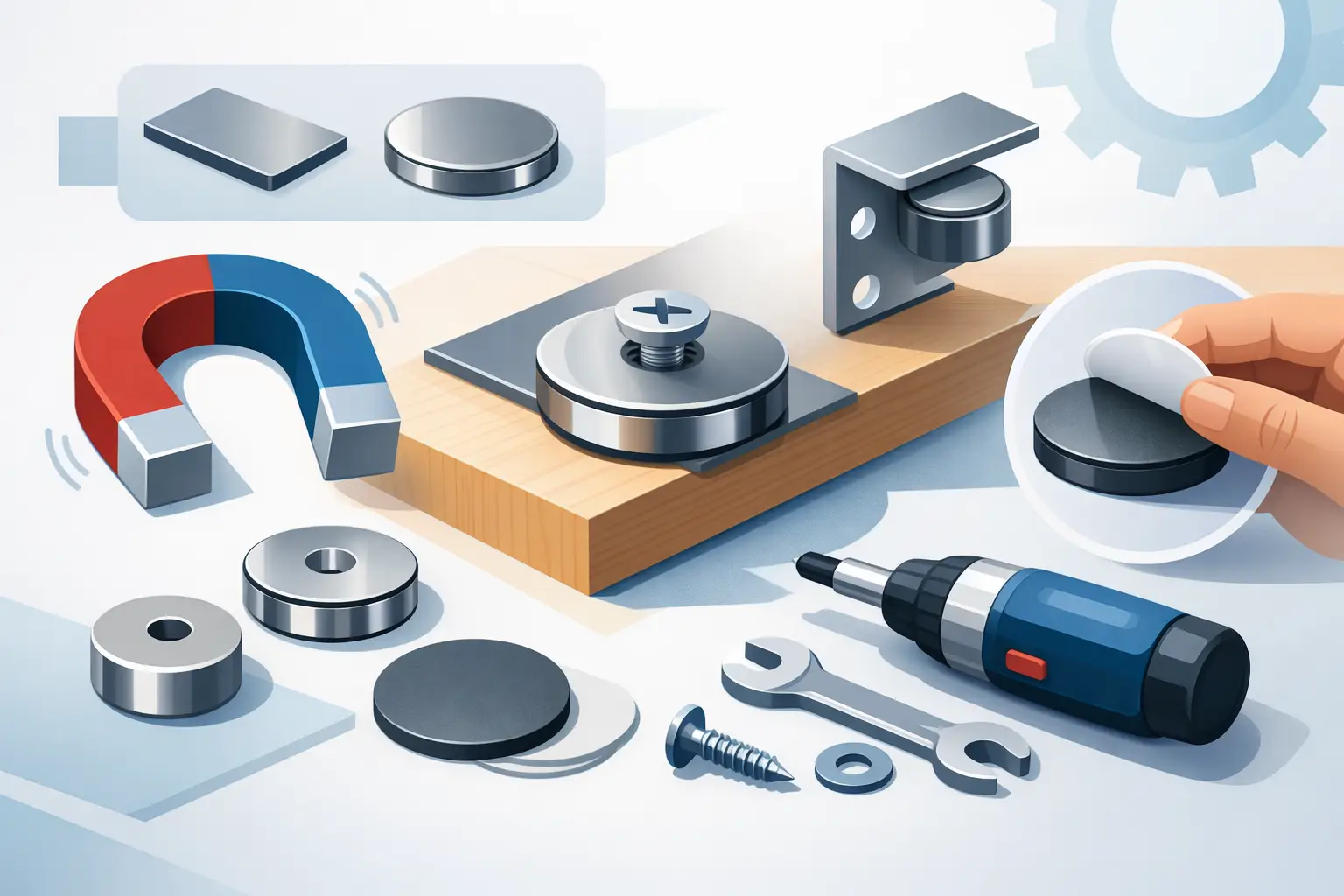
Magnet Fixing Hardware Guide for Stronger Fits
A weak fixing usually shows itself at the worst moment – a cabinet door that won’t stay shut, a display panel that slips, or a cover plate that shifts under vibration. That is where a proper magnet fixing hardware guide earns its keep. If you are choosing magnetic fixings for a real job, the difference between a tidy, reliable result and a frustrating one often comes down to matching the right magnet format with the right fixing method.
Magnetic hardware is popular for good reason. It gives you a clean finish, quick access, and repeatable closure without visible mechanical latches. But magnet performance is never just about the magnet itself. Pull strength, mounting style, contact surface, alignment and surrounding materials all affect the result. Choose well and you get a compact fixing that feels strong and dependable. Choose badly and even a powerful magnet can disappoint.
How to use this magnet fixing hardware guide
Start with the job, not the product. A magnetic catch for a lightweight cupboard door needs something different from a removable panel in a retail unit or a workshop fixture that gets knocked about every day. The first question is whether you need closure, location, mounting or retention. Those sound similar, but they place different demands on the hardware.
For closures, you want a magnet that pulls the part shut cleanly and holds it in place during normal use. For location, the magnet helps parts register in the correct position. For mounting, the magnet may carry the load directly. For retention, it is mainly stopping movement or rattle. Once you know the job, the right hardware choice becomes much clearer.
The next step is thinking about access. If the fitting needs to be opened often, a magnetic catch is usually the practical answer. If you want a more permanent installation with a flush look, countersunk magnets fixed with screws often suit better. If space is tight and the fixing needs maximum strength in a small footprint, neodymium magnets are usually the go-to option because they offer superior pull performance for their size.
Choosing the right magnet fixing hardware
Disc magnets are often the simplest place to start. They are compact, versatile and easy to integrate into timber, plastic and fabricated assemblies. Where a magnet can be bonded into a recess or paired with a steel strike plate, discs give a neat fixing with very little visual impact. They work well for cupboard catches, access panels, display fittings and light workshop jigs.
Block magnets come into their own when you need more contact area or a shape that suits a rectangular fitting. On longer edges, panels and fabricated parts, that extra surface can improve stability and make alignment easier. They are also useful when the installation space is shallow but wider.
Countersunk magnets are often the best choice where mechanical fixing matters. Because they are designed to take a screw, they are especially useful for timber joinery, cabinetry and trade installations where you want a more secure mount than adhesive alone can provide. They also help when serviceability matters, as the part can be removed or replaced more easily than a bonded magnet.
Magnetic catches sit slightly differently in the range because they are built around the closure job itself. Rather than asking you to build the whole fixing around a raw magnet, they give you a purpose-made solution for doors, flaps and panels. For many cabinet and furniture applications, that makes selection quicker and installation more straightforward.
What affects holding strength in real use
Published pull strength figures are useful, but they are not the whole story. Those figures are usually achieved in ideal conditions – direct contact, clean surfaces and a thick steel plate. Real installations rarely match that perfectly. A painted surface, a small air gap, poor alignment or thin mating steel can reduce holding force sharply.
That is why over-specifying slightly is often sensible. If a panel only just holds in the workshop, it may not hold as well once it has felt pads fitted, a coat of paint applied, or regular wear on the contact point. A stronger magnet gives you margin, though there is a balance to strike. Too much holding force can make a cupboard awkward to open or a removable panel harder to service than it needs to be.
Surface material matters as well. Magnets perform best against suitable ferrous metal. If you are fixing magnet-to-magnet, orientation becomes critical, and assembly can be trickier. In many practical builds, pairing a magnet with a steel strike plate is the cleaner and more controllable solution.
Shear force is another common misunderstanding. A magnet may feel very strong when pulled directly away from steel, but side loading is different. If the fitting is likely to slide, twist or vibrate, you may need a recess, lip, frame or mechanical stop to support the magnet. The best magnetic fixing often combines magnetic pull with physical location rather than relying on magnetism alone.
Fixing methods: screw, adhesive or recess
Screw fixing is usually the most dependable option when the magnet format allows it. Countersunk magnets are particularly useful here because they give a direct, secure installation into timber, MDF and other substrates. For trade users and regular-use applications, screw fixing tends to offer the most confidence over time.
Adhesive fixing has its place, especially where you need a clean face or cannot use screws. It can work very well with disc and block magnets in routed pockets or pre-formed recesses. The key is to match the adhesive to the substrate and the working environment. A quick bond may be tempting, but if the part sees repeated shock, temperature change or moisture, that shortcut can become the failure point.
A recessed installation often gives the best finish and better performance. By housing the magnet neatly into the material, you improve alignment, reduce snagging and protect the edges from knocks. It also helps keep the mating surfaces close, which improves holding strength. For cabinet makers and fabricators, that extra prep work usually pays back in a cleaner result.
Common applications and the best fit
In cabinetry, magnetic catches and countersunk magnets are usually the first options worth considering. Catches are ideal for simple door closure, while countersunk magnets suit concealed fixings and bespoke joinery details. The right choice depends on whether ease of fitting or a more custom result matters more.
For retail units and display work, neat appearance and repeatable access tend to matter most. Disc or block magnets set behind panels can create clean, hidden retention for removable graphics, access covers and display parts. Here, consistency matters just as much as raw strength, because a fitting that sits square and opens cleanly looks more professional.
In workshops and light manufacturing, magnets often do more than close doors. They can hold guards, secure covers, position removable fixtures and reduce the need for fiddly mechanical fasteners. In those settings, stronger grades and more secure fixing methods are usually worth it because the hardware sees frequent handling.
DIY users often need versatility. A compact neodymium magnet can solve jobs around the home, garage or shed where traditional catches are bulky or awkward. The main thing is not to buy on size alone. Small magnets can be surprisingly powerful, but they still need the right mounting and contact conditions to perform properly.
Mistakes that cause most fixing failures
The most common mistake is choosing by diameter or thickness without thinking about the full installation. A larger magnet is not always the better fit if the mating steel is poor or the fixing method is weak. The second mistake is ignoring alignment. Even strong magnets lose effectiveness if they do not meet squarely and consistently.
Another issue is using magnets without mechanical support in jobs that involve movement. If a door can slam, a panel can rack, or machinery creates vibration, the magnet should not be doing all the work on its own. A simple rebate, locating pin or edge support can transform reliability.
It is also easy to underestimate safety and handling. High-strength neodymium magnets can snap together with force, chip if mishandled, and pinch fingers. On the bench they may look small, but in use they are powerful and versatile components that deserve proper care.
For buyers who want a focused range built around strength rather than novelty, Magman’s approach makes selection more straightforward. That matters when you need fixing hardware to work first time rather than after a string of trial and error.
Getting the best result from your magnetic fixing
The strongest installations are usually the simplest ones. Pick a magnet format that suits the job, give it a secure mounting method, and design for proper contact with the mating surface. If there is likely to be shock, movement or side load, add physical location so the magnet supports the fitting rather than fighting the whole job alone.
If you are unsure between two sizes, think less about maximum pull on paper and more about daily use. A cabinet door needs comfortable opening force. A removable panel needs enough grip to stay put but not so much that servicing becomes awkward. Good magnetic fixing is practical, not exaggerated.
A reliable result comes from matching strength, format and fitting method to the real conditions on site. Get that right, and magnetic hardware stops feeling like a workaround and starts looking like the cleanest solution in the build.