Best Magnets for Exhibition Stands That Hold
A stand that looks sharp at 9am can look tired by lunchtime if its graphics lift at the corners, its panels shift, or a cupboard door will not stay shut. The best magnets for exhibition stands give fit-out teams a clean, repeatable fixing method without visible screws, damaged surfaces or slow last-minute adjustments.
For most temporary display work, high-strength neodymium magnets are the practical choice. They deliver serious holding power from a compact size, making them ideal where the fixing needs to stay out of sight. The right format still depends on the material being fixed, the gap between surfaces and whether the component must be removed repeatedly during the event.
Why neodymium magnets suit exhibition stands
Exhibition stands are often built under pressure, transported in sections and assembled on site. Mechanical fixings can be reliable, but they add time and leave holes in panels, printed boards and finished joinery. A well-planned magnetic fixing makes changeable graphics, access panels and lightweight display elements quicker to fit and easier to replace.
N52 neodymium magnets are particularly useful because they offer superior pull performance for their size. A small magnet can hold far more securely than a larger, lower-grade alternative. That means less bulk behind a panel and more freedom to keep the visible face clean.
Magnets are not a universal answer, however. They work best when one surface is ferrous steel or has a steel plate fitted behind it. Aluminium frames, acrylic, timber and most exhibition board materials are not magnetic on their own. In those cases, pair the magnet with a suitable steel washer, strike plate or concealed steel strip.
Best magnets for exhibition stands by job
The most effective choice starts with the task, not simply the strongest magnet available. More pull strength is useful only if the magnet can be installed securely and released safely when the stand needs to come down.
Disc magnets for flush graphic panels
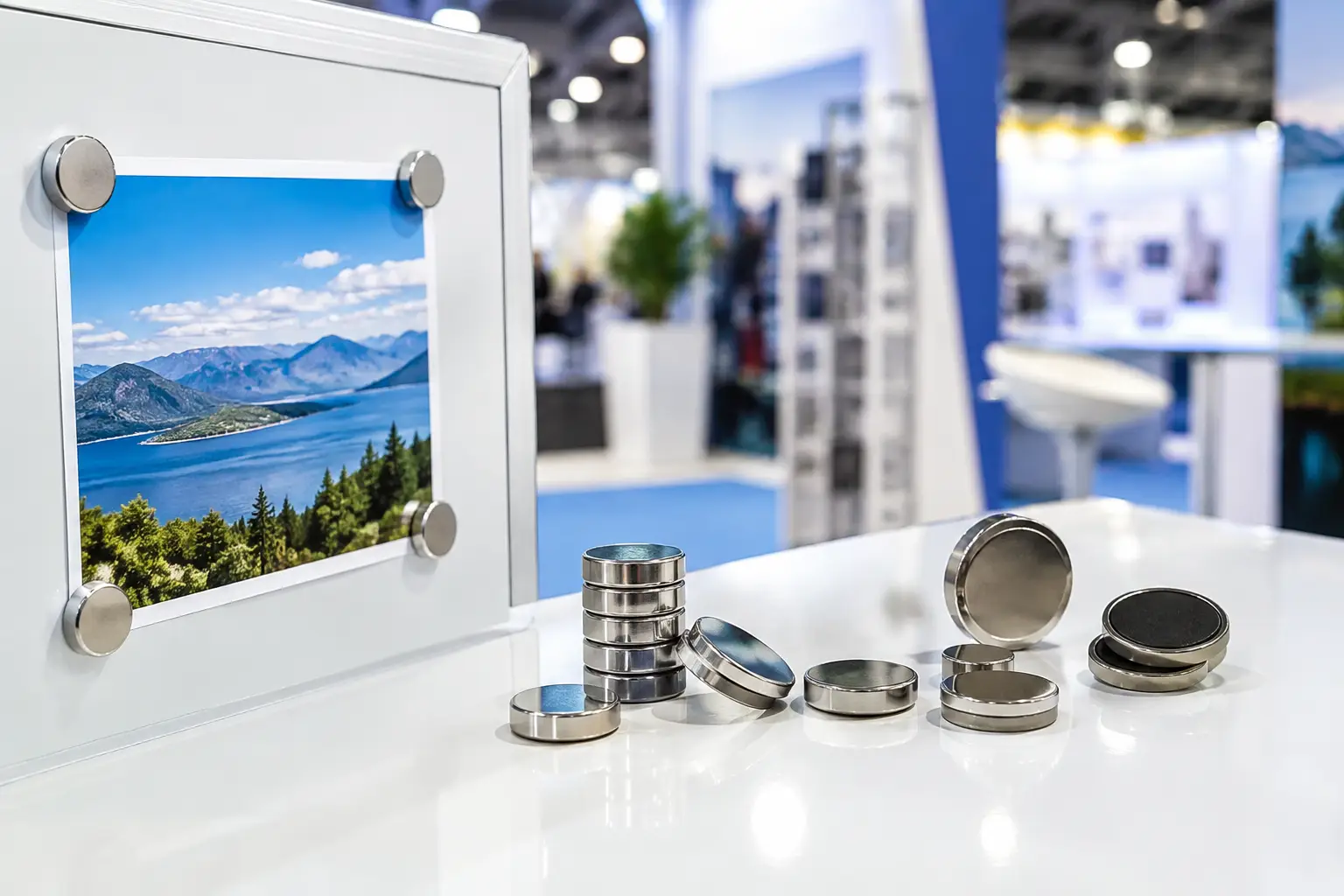
Neodymium disc magnets are a strong all-round option for lightweight printed panels, removable fascia boards, price signage and graphic overlays. Their circular shape makes them easy to recess into timber, MDF or display plinths, leaving a flat and discreet fixing point.
For a panel that must sit close to a steel frame, discs offer a tidy result with excellent holding force. They are also well suited to repeated use, provided the panel is aligned carefully rather than snapped into place from a distance. A thin layer of vinyl, laminate or paint between the surfaces reduces the real-world hold, so allow for that when selecting the size.
Disc magnets are usually the best starting point where appearance matters most and the component is relatively light. For wider panels, use several magnets across the fixing area rather than relying on one oversized magnet in the centre. This helps prevent corners from lifting and spreads the load evenly.
Block magnets for frames and heavier components
Block magnets provide a larger contact area and are often better for timber-framed panels, shelf fronts, small display boxes and structural trim pieces. Their flat faces sit neatly against steel strip or plates, while their rectangular shape can be easier to position along a straight edge.
They are a practical choice when a disc magnet would need to be excessively thick to achieve the required pull. A block magnet can also help control the orientation of a component, reducing the tendency for a panel to rotate around a single fixing point.
For exhibition work, avoid assuming that a large block magnet is automatically safer. Powerful magnets can pinch fingers, chip if they strike together and become difficult to separate during breakdown. Use the smallest format that holds the load with a sensible margin, and keep the magnet recessed or guarded where visitors could reach it.
Countersunk magnets for screw-fixed reliability
Countersunk neodymium magnets are often the best option for stand components that need a permanent, dependable installation. The countersunk hole allows the magnet to be secured with a screw, keeping its face level with the mounting surface. This is particularly useful in plywood, MDF, cabinetry and reusable exhibition furniture.
Adhesive can work for light graphics, but it depends heavily on surface preparation, curing time and transport conditions. A screw-fixed countersunk magnet is usually the stronger long-term choice for access panels, removable doors and display features that will travel from show to show.
Use screws with heads that fit the countersink correctly. An incorrect screw head can sit proud, reduce contact with the steel surface and risk cracking the magnet when tightened. Do not overtighten. Neodymium magnets are powerful but brittle, so they need firm support from a flat mounting surface.
Magnetic catches for doors and storage areas
Many exhibition stands include lockable-looking cupboards, leaflet storage, under-counter spaces and service hatches. Where a simple closure is needed, magnetic catches offer a practical alternative to complicated latches. They keep lightweight doors shut during use while allowing staff quick access to stock, cables or personal items.
A magnetic catch is designed for this specific job, with a magnet and strike plate arranged for repeatable closure. It is generally a better choice than an exposed loose magnet on a cupboard door. Select the catch strength according to the door size, hinge type and expected movement during transport. A very strong catch may make a thin door awkward to open, while a weak one can release if the stand is knocked.
How to choose the right pull strength
Published pull strength is measured in ideal conditions: direct contact with clean, thick steel and a straight pulling force. Exhibition installations rarely match that test. A laminate, air gap, paint layer or slight misalignment can reduce holding performance significantly.
Start by considering the weight of the item, then add a margin for movement, vibration and people brushing past the stand. A rigid panel supported by several magnets needs less pull strength at each point than a flexible sign hanging from one edge. If a panel is vertical, the magnets must resist sliding as well as pulling away from the surface.
For heavier or valuable components, combine magnetic holding with a secondary restraint. A hidden locating pin, lower support rail, safety cable or mechanical stop can carry the weight while magnets keep the face aligned. This approach is especially sensible for overhead elements, glass, monitors and anything positioned where a failure could injure someone or damage the display.
Installation details that make the fixing work
A magnetic stand fitting is only as good as its mounting surface. Recess magnets flush wherever possible so the panel sits flat. Check that the steel target is wide enough to receive the magnet and firmly fixed to the frame, rather than relying on a thin, loose washer.
Before committing to a full run of panels, build one test section using the finished materials. Test it upright, not just on a workbench. Lift and refit the panel several times, assess whether it slides under its own weight, and check whether the magnets remain secure after a short journey in the vehicle.
Keep magnets away from sensitive electronics, magnetic stripe cards and loose metal items. Strong neodymium magnets should also be handled with care during assembly. Larger formats can attract each other suddenly and cause painful pinches or chip on impact. Store them with spacers between units and keep them under control during transport.
A cleaner finish without compromising hold
The strongest exhibition stands make fitting look effortless because the fixing has been planned before graphics are printed and joinery is finished. Position magnetic points behind solid areas of the design, use steel backing where the frame is not magnetic, and allow enough clearance for panels to be removed without damaging edges.
For UK fit-out teams, cabinet makers and DIY exhibitors, a focused range of N52 disc, block and countersunk magnets covers most concealed fixing jobs. Magman supplies powerful and versatile options for projects where tidy presentation and dependable hold need to work together.
Choose the magnet around the load, the material and the way the stand will be handled – then test the finished assembly before show day. That small check is what keeps a polished display looking properly fitted from opening time to pack-down.