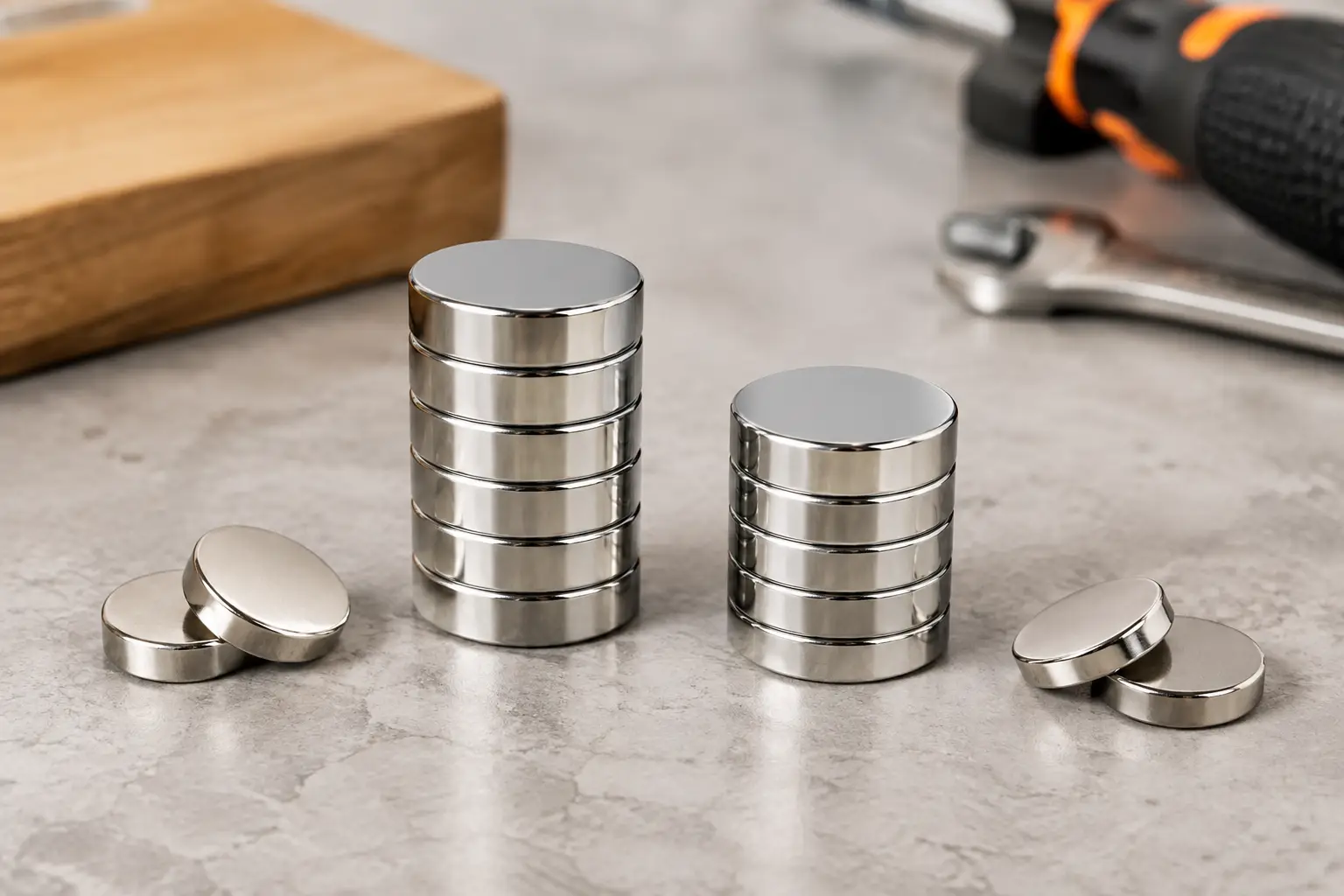
Compare N52 and N42 Magnets for Your Project
A 20 mm disc magnet can look identical whether it is N42 or N52, yet the difference can decide whether a cabinet door closes cleanly, a display panel stays put or a fixing needs a larger magnet than planned. When you compare N52 and N42 magnets, the key question is not simply which grade is stronger. It is whether the extra magnetic performance of N52 gives your particular job a worthwhile advantage.
Both are neodymium magnets, the strongest widely available type of permanent magnet. Both are compact, nickel-coated and capable of surprising pull force for their size. The grade tells you about the magnetic material itself, but the finished magnet’s real-world holding power still depends on its dimensions, shape, contact surface and the steel it is attached to.
Compare N52 and N42 magnets: the core difference
N42 and N52 refer to the maximum energy product of the neodymium material. In straightforward terms, N52 is a higher-grade neodymium magnet and produces a stronger magnetic field than N42 when the magnets are the same size and shape.
An N52 magnet has a typical maximum energy product of around 52 MGOe, while N42 is around 42 MGOe. That does not mean an N52 magnet will hold exactly 24 per cent more weight in every setup. Pull force tests are affected by the thickness of the steel, the flatness of the contact, air gaps, paint, coatings and the direction in which force is applied. Still, for like-for-like magnets, N52 offers a clear increase in pull performance.
That extra strength is useful when space is limited. If you need a small disc hidden in a timber door, a compact block fitted behind a panel or a discreet catch in a retail display, N52 can deliver superior holding force without increasing the magnet’s footprint.
Why magnet size still matters more than the grade alone
It is easy to focus on N52 versus N42 and overlook the larger factor: volume. A larger N42 magnet can be considerably stronger than a small N52 magnet. Diameter, thickness and shape all influence the usable pull force.
Thickness is particularly relevant. A thin disc may have a high surface field but limited holding power because there is less magnetic material behind the face. Increasing thickness can improve performance substantially, especially when the magnet is working against a flat steel plate. Similarly, a wide block may provide more contact area than a narrow disc, making it a better choice for a larger door, panel or removable fixture.
For practical purchasing, start with the space available and the job the magnet must do. Then choose the strongest grade and most suitable format within those limits. A correctly sized N42 magnet is better than an undersized N52 magnet that only just works.
Pull force is not the same as working load
Quoted pull force is normally measured by pulling a magnet directly away from a thick, clean, flat steel test plate. This is the magnet’s best-case arrangement. A cabinet catch, sign fixing or workshop holder rarely works under those ideal conditions.
A magnet holding a vertical load can slide before it pulls away. A painted steel surface, a slight gap from veneer or laminate, a thin strike plate and repeated impacts when closing a door will all reduce effective performance. Build in a sensible margin rather than choosing a magnet at its stated maximum pull force.
For closures, the result should feel positive without becoming difficult to open. For mounting or retention work, use enough strength to account for vibration, handling and imperfect surfaces. In either case, a larger contact plate can often improve reliability as much as moving from N42 to N52.
When N52 is the better choice
N52 is the practical option where maximum strength from minimum space matters. It is especially well suited to compact magnetic catches, concealed furniture closures, removable access panels, slim retail displays and small fabricated parts where there is no room to increase the magnet size.
It is also a strong choice when you need a confident hold through a small non-magnetic material, such as a thin timber face, plastic cover or acrylic panel. Every air gap weakens magnetic attraction quickly, so starting with a higher-grade magnet can help preserve useful holding force.
For cabinet makers and installers, N52 countersunk magnets can be particularly effective where a screw-fixed magnet needs to sit flush. The countersunk format gives a tidy installation, while the high grade helps maintain a strong closure with a compact fitting. Care is needed during installation, however. Neodymium magnets are brittle and can crack if over-tightened or struck by a screw head.
Magman focuses on N52 neodymium magnets because they offer powerful, versatile performance in compact disc, block and countersunk formats. For buyers who are replacing weak catches or trying to keep a fixing discreet, the higher grade often makes selection simpler.
When N42 may be enough
N42 is not a poor-quality option. It remains a powerful neodymium grade that performs well in many general applications. If you have room for a larger or thicker magnet, need only moderate retention, or are working with a generous steel contact area, N42 can be entirely suitable.
For example, a larger magnetic tool holder, a broad removable panel with multiple fixing points or a basic cupboard closure may not require N52’s maximum strength. The design can compensate with magnet size, a better steel strike plate or an additional magnet.
Cost can also matter on repeat builds. Where a project uses many magnets and the required holding force is already comfortably achieved with N42, paying for the higher grade may add little value. The right decision is based on performance at the point of use, not the highest number on the specification.
Heat limits and working conditions
Standard N42 and standard N52 magnets are commonly rated for operating temperatures up to about 80°C. In normal indoor DIY, cabinetry, shopfitting and workshop use, that is usually more than adequate. Do not assume N52 is the better grade for hot environments simply because it is stronger at room temperature.
High temperatures can permanently reduce a neodymium magnet’s strength. If the fitting will sit close to an engine, heater, industrial process or other sustained heat source, check the temperature requirement first. Special high-temperature grades are available for demanding conditions, but standard N42 or N52 may not be appropriate.
Neodymium magnets also need protection from corrosion. Nickel plating is suitable for most dry indoor applications, but chipped coatings, damp conditions and outdoor exposure can cause problems over time. A recessed installation, protective cover or a magnet specified for the environment may be necessary.
Choosing the right grade for common jobs
For a compact cabinet door catch, N52 gives a strong, dependable closure in a small package. Pair it with a suitable steel strike plate and test the opening force before final fixing. If the door is heavy or likely to be pulled sideways, use more than one catch or increase the magnet size rather than relying on one tiny magnet.
For removable panels and access hatches, N52 is useful where the panel needs to sit flush and the magnets must remain hidden. Position magnets near the edges or points where the panel may flex. A steel target plate is often easier to align than opposing magnets and avoids polarity errors during fitting.
For signs, display boards and retail fixtures, the choice depends on the material thickness and how often items will be removed. N52 helps keep installations neat and low-profile. Where the display is larger or has several fixing points, multiple magnets spread across the panel generally provide a more stable result than one extremely strong magnet in the centre.
For general workshop use, either grade can work well. Choose the format first: discs for recesses and closures, blocks for broad contact areas, and countersunk magnets for direct screw fixing. Then select N52 if compact size and superior pull performance are priorities.
A practical buying check before you order
Before selecting N42 or N52, measure the available recess or mounting area, identify the thickness and type of the opposing steel, and consider whether the force will pull straight away or try to slide the item. Allow for paint, adhesive, timber, plastic and any other gap between the magnet and its target.
Also consider handling. Powerful N52 magnets can snap together unexpectedly, chip if they collide and pinch fingers. Keep them separated during fitting, especially with larger discs and blocks. Keep neodymium magnets away from children, sensitive electronics, magnetic cards and anyone with a pacemaker or other implanted medical device.
The best magnet is the one that holds securely, fits cleanly and remains practical to use every day. If space is tight or the job demands the most force from a compact component, choose N52. If the design has room to increase size and the required hold is modest, N42 can still be a sound, cost-conscious solution.