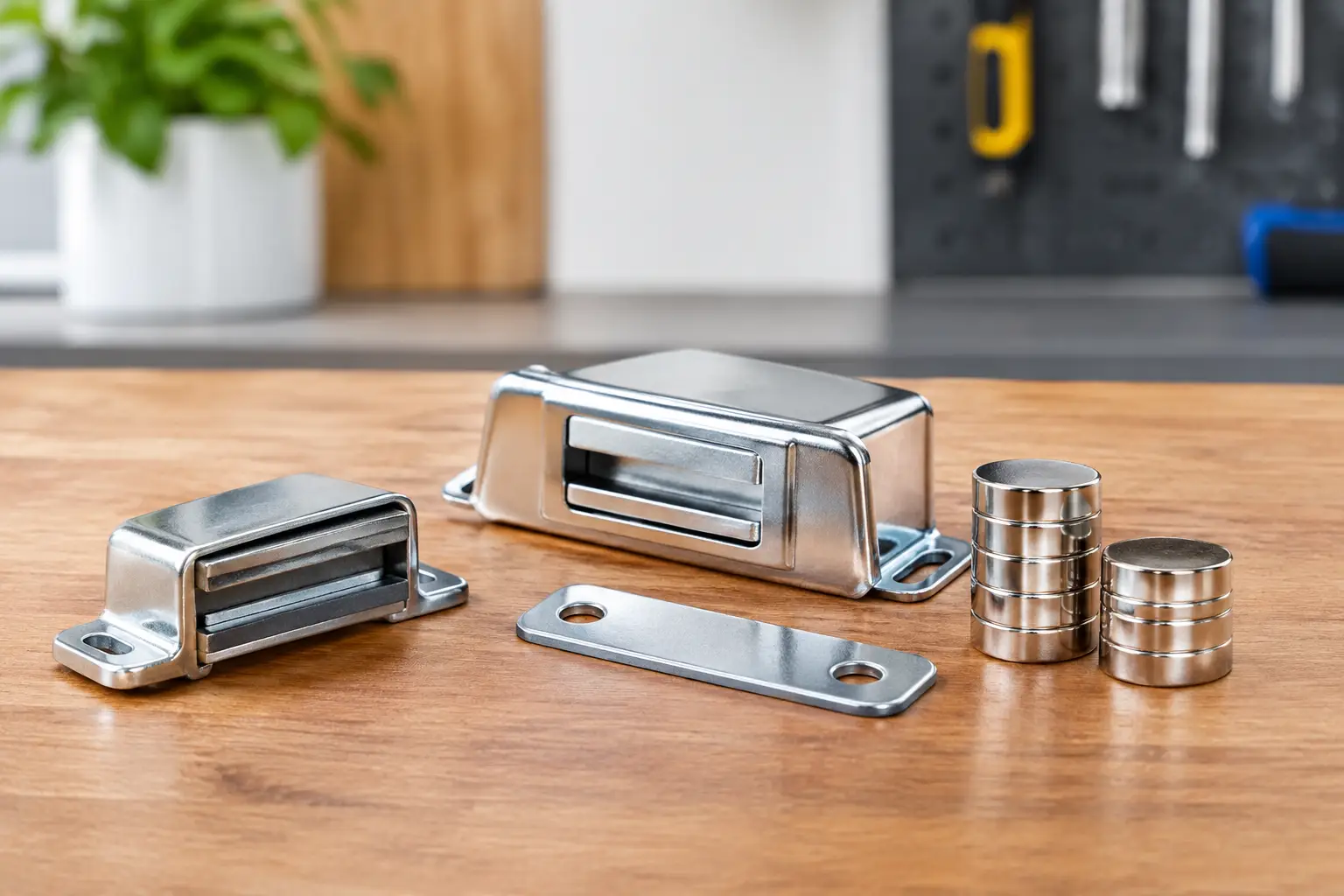
How to Choose a Heavy Duty Magnet Catch
A cupboard door that drifts open, a display panel that will not sit flush, or a workshop enclosure that rattles with every movement usually has the same problem: the closure is not strong enough for the job. A heavy duty magnet catch provides a compact, practical answer, using powerful magnetic force to hold doors, panels and access covers securely without the complication of a traditional latch.
For cabinet makers, fit-out teams and capable DIY users, the right catch is not simply the strongest one available. It needs to suit the weight of the door, the gap at closure, the fixing surface and the way the finished unit will be used. Get those details right and a magnetic catch gives a clean, reliable closure that stays out of sight.
What makes a heavy duty magnet catch different?
A standard magnetic catch can be suitable for a lightweight kitchen cupboard or small internal door. A heavy duty version is designed where greater holding force is needed: heavier timber doors, taller cabinet fronts, retail display units, workshop storage, service hatches and frequently used enclosures.
The difference comes down to magnet quality, magnet size and the design of the housing and strike plate. High-strength neodymium magnets deliver far more pull performance than conventional ferrite magnets for their size. That allows a well-specified catch to provide serious holding power while taking up very little space inside a cabinet or frame.
Holding force should not be treated as a fixed promise in every installation. Product pull ratings are commonly measured with the magnet and steel surface in direct, flat contact. In a real cabinet, even a small air gap, painted surface, poor alignment or angled pull will reduce the effective hold. This is why choosing a catch with suitable headroom matters, particularly on heavier doors or units exposed to vibration.
Choosing the right heavy duty magnet catch
Start with the door or panel rather than the catch. Consider its weight, width and how far it sits from the hinge or pivot point. A wide door creates more leverage, so it may need a stronger catch than a narrower door of the same weight. Tall doors can also flex slightly when pulled, making accurate contact with the strike plate more difficult.
Think about the purpose of the closure too. A catch for a domestic cupboard only needs to keep the door shut during normal use. A catch used on a mobile display, vehicle storage box or workshop cabinet may need significantly more grip to resist movement, knocks and repeated opening.
The key factors are straightforward:
- Required holding force – Match the pull strength to the door weight and working conditions, allowing extra capacity for imperfect alignment and regular use.
- Available mounting space – Check the depth inside the frame and behind the door before choosing a bulky housing or a long strike plate.
- Door material – Timber, MDF, steel and aluminium assemblies each require different fixing methods and can affect how easily the catch can be positioned.
- Closing gap – Magnetic force falls away quickly as distance increases. The magnet and strike plate should meet closely when the door is shut.
- Opening method – A strong catch is ideal for a door with a handle, finger pull or push point. A handleless door may become frustrating if the magnetic hold is excessive.
For larger cabinet doors, fitting two catches can be more effective than relying on one extremely strong unit. Place them near the upper corners where they help control twisting and keep the reveal even. On a tall door, this also reduces the chance of the lower edge sitting proud after closing.
Pull strength is only part of the decision
A powerful magnet can hold exceptionally well, but it cannot correct a badly fitted door. If hinges allow the door to drop or the cabinet carcass is out of square, the strike plate may meet only partially. That reduces holding force and can leave the door looking uneven.
Before selecting a stronger catch, check the basics: hinge adjustment, door clearance, frame stiffness and the condition of the strike plate. A correctly aligned medium-strength catch often performs better than an oversized unit fitted to an uneven door.
Catch formats and where they work best
Surface-mounted catches are often the quickest option for new builds and retrofits. The body screws to the cabinet frame, while the matching steel plate fixes to the door. They are easy to position, easy to replace and particularly useful where the inside of the unit will not be on show.
Recessed or flush-fitting catches offer a tidier finish. They sit within a drilled or routed opening, making them a good choice for quality cabinetry, fitted furniture and display work where visible hardware needs to be kept to a minimum. They require more accurate preparation, so measure the housing carefully before cutting.
Countersunk magnetic components are useful where a catch is being designed into a bespoke closure rather than installed as a separate plastic or metal assembly. Their screw-fixing profile helps the magnet sit flat against the mounting surface. This format gives fabricators flexibility, although the magnet and steel target must still be selected as a working pair.
For steel doors or frames, the arrangement may differ. A neodymium magnet can hold directly to clean steel, but the thickness, coating and flatness of that steel affect performance. A dedicated strike plate is generally the more predictable choice when consistent closing action is required.
Fitting a magnetic catch for dependable closure
Installation accuracy has more effect on day-to-day performance than most people expect. Mount the catch where the door naturally closes against the frame, rather than using the magnet to pull a misaligned door into place. The catch should hold the final position, not fight the hinges.
Fit the magnetic body first, then mark the strike plate position with the door closed. If possible, use a small piece of masking tape or transfer mark to confirm the contact point before drilling final holes. The aim is full, flat contact across the working face of the plate.
Use screws that suit the material and are short enough to avoid breaking through the finished face of the door. On MDF and chipboard, pilot holes reduce splitting and help prevent fixings from wandering. For thin panels, consider whether a backing block, machine screw and nut, or a different catch location will give a stronger fixing.
Do not assume a magnetic catch should be tightened until every component is immovable. Some designs benefit from a small amount of adjustment while you fine-tune the door position. Once the contact is correct and the door closes cleanly, secure all fixings fully.
Avoid common performance problems
Paint overspray, sawdust, adhesive residue and uneven coatings can create a gap between the magnet and strike plate. Clean both faces before testing. If a catch seems weak, check for a gap first rather than immediately replacing it with a stronger model.
Keep magnets away from sensitive electronics, magnetic stripe cards and pacemakers where relevant. Neodymium magnets can snap together with surprising force, and their hard material can chip if allowed to collide. Handle larger or more powerful magnetic hardware carefully during fitting, especially when fingers are close to the closing surfaces.
Practical uses beyond cupboard doors
A heavy duty magnetic catch earns its place wherever a mechanical closure would be awkward, visible or unnecessary. In retail fit-outs, it can secure display plinths, hidden storage sections and removable signage panels. In workshops, it works well on tool cabinets, access doors and dust-extraction covers that need quick opening without a protruding latch.
For home projects, magnetic catches are useful on understairs storage, media-unit panels, utility cupboards and fitted wardrobes. Small manufacturers can build them into enclosures, inspection covers and compact cases. The common benefit is a strong, repeatable hold with minimal visual clutter.
The best result comes from treating the catch as part of the whole closure system. Door weight, hinge quality, mounting material and alignment all matter as much as the magnet itself. Choose for the real working conditions, fit it accurately and a powerful magnetic catch will give your project the clean, confident closure it needs.