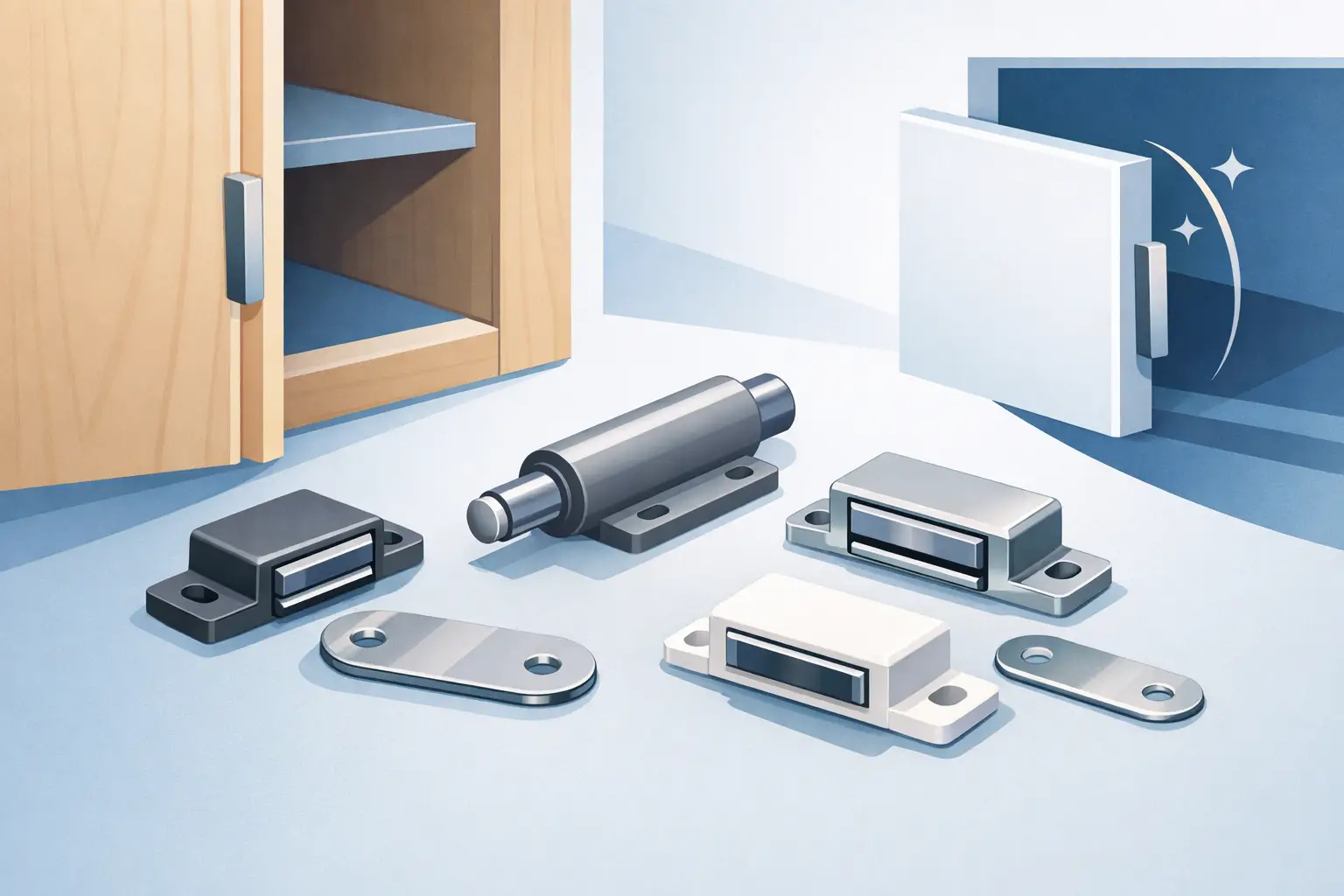
Best Magnets for Cabinet Doors
A cabinet door that will not stay shut is a small problem that quickly turns into an annoying one. In workshops, kitchens, retail units and utility spaces, the best magnets for cabinet doors are the ones that close cleanly, hold reliably and suit the weight and style of the door – not just the strongest magnet you can find.
That distinction matters. Too little holding force and the door drifts open. Too much and it becomes awkward to use, especially on lightweight cupboards or furniture doors. The right choice comes down to door size, hinge tension, mounting space and how tidy you need the finish to look.
What makes the best magnets for cabinet doors?
For most cabinet applications, four things matter more than anything else: holding strength, mounting format, durability and alignment tolerance. A magnet that looks powerful on paper can still be the wrong fit if it is difficult to install or needs near-perfect positioning every time the door closes.
Neodymium magnets are usually the strongest option for their size, which is why they are popular for cabinet catches where space is limited. They give you strong holding power in a compact format, making them useful for modern cabinetry, hidden closures and custom builds. Ferrite options can work for lighter jobs, but when buyers want dependable pull performance in a small footprint, neodymium is normally the better choice.
The catch itself also matters. Some cabinet doors work best with a purpose-made magnetic catch housing, while others suit separate magnets and steel strike plates. If you are fitting a standard kitchen cupboard, a compact magnetic catch is often the easiest route. If you are building bespoke joinery or a retail display unit, countersunk or block neodymium magnets may give you a cleaner and more secure result.
The main types of cabinet door magnets
Magnetic catches for everyday cupboard doors
A magnetic catch is the familiar, straightforward option. It combines a magnet inside a plastic or metal housing with a strike plate on the door. For light to medium cabinet doors, this is often the most practical choice because installation is simple and the unit is designed specifically for repeated opening and closing.
This style suits kitchens, utility cupboards, wardrobes and general furniture where you want a dependable closure without overthinking the hardware. It is also more forgiving if the door alignment is slightly off. That makes it a sensible choice for quick replacements or general DIY work.
The trade-off is strength and appearance. A standard catch can be visible when the door is open, and cheaper versions often lose performance because the magnet quality is poor. If you have heavier doors or want a more discreet finish, a stronger neodymium-based solution is usually the better investment.
Countersunk neodymium magnets for a secure fixing
Countersunk magnets are one of the best options when you need a firm hold and a neat installation. Because they can be screwed into place, they stay put far better than adhesive-only alternatives. For cabinet doors, they are especially useful on heavier timber doors, workshop cupboards, under-stairs storage and custom cabinetry where reliability matters more than a basic plastic catch.
Their biggest advantage is mechanical fixing. A screw-mounted magnet is less likely to shift over time, which helps maintain alignment and holding force. Pair it with a steel disc or strike plate and you get a compact but powerful closure that stands up well to repeated use.
You do need to get the positioning right. Unlike some housed catches, countersunk magnets are less forgiving if the mating surface is badly misaligned. They are best for projects where you can measure carefully and fit them square.
Disc magnets for hidden cabinet closures
Disc magnets are a good choice when you want the magnet concealed or recessed into the cabinet frame or door edge. They are small, strong and versatile, which makes them popular in furniture making and clean-looking cabinet builds.
For lighter doors, a pair of neodymium disc magnets can create a tidy hidden catch with no bulky housing. They are also useful where there is limited mounting depth. If the cabinet design allows for drilling shallow recesses, they can deliver a very discreet finish.
The limitation is fixing method. Plain disc magnets usually need adhesive or a press-fit recess unless they are housed in another fitting. That can be perfectly suitable, but for doors that get frequent use or a bit of force, screw-fixed options tend to be more dependable long term.
Block magnets for larger contact area
Block magnets work well where you want more surface contact and a stable hold. On tall cupboard doors, wider utility cabinets or retail display doors, they can offer a more even closing action than a very small round magnet.
Their shape makes them practical for custom mounting, especially on flat timber surfaces. They are often chosen for bespoke work because they are easy to integrate into frames, panels and fabricated units. If a door has a tendency to twist slightly, the larger contact area can help.
As with disc magnets, the mounting method matters. A strong block magnet with a poor adhesive bond is still a weak solution overall. For higher-use doors, combining strong magnets with secure mechanical fixing is the safer route.
How to choose the right strength
One of the most common mistakes is assuming stronger is always better. It is not. A small bathroom cabinet door does not need the same pull as a heavy oak workshop cupboard.
If the holding force is too low, the magnet will not overcome hinge spring, warped timber or light vibration. If it is too high, the door can feel snatchy and awkward, and repeated pulling may stress screws, hinges or the cabinet carcass. The best result is a controlled close with enough resistance to stay shut, but not so much that daily use becomes irritating.
As a rough guide, lightweight interior cupboard doors usually suit compact magnetic catches or small neodymium discs. Medium doors often benefit from stronger catches or countersunk neodymium magnets with a strike plate. Heavier doors, especially solid timber or workshop storage doors, usually need a larger countersunk or block magnet setup with solid fixing points.
If the cabinet is used in a mobile environment, near vibration, or in a workshop where doors get knocked, it is worth sizing up slightly. In a quiet domestic setting, a more moderate hold is often enough.
Material, finish and environment
Cabinet door magnets do not work in isolation. The surrounding environment affects performance and lifespan. In kitchens, utility rooms and garages, moisture and temperature changes can expose weak coatings and cheap hardware quickly.
Neodymium magnets are known for strength, but they need proper protective coating and sensible use. A nickel-coated magnet is common and works well in many indoor settings, but if the magnet is likely to be exposed to damp conditions, the rest of the fitting matters too. Screws, strike plates and housings should be chosen with the same level of care.
This is also why product consistency matters. A magnet that performs well on day one but chips, shifts or weakens in normal use is not a saving. For buyers fitting multiple doors in a kitchen, workshop or retail unit, dependable quality is usually more valuable than the lowest unit price.
Installation matters as much as the magnet
Even the best magnets for cabinet doors will disappoint if they are fitted badly. Poor alignment reduces contact, weakens the hold and can make the door feel inconsistent. Before fixing anything permanently, it is worth testing the closing point and checking how the door sits on its hinges.
On bespoke jobs, a simple dry fit can save rework. Hold the magnet and strike plate in place, close the door carefully and confirm the contact point before drilling or bonding. This is especially useful with stronger neodymium magnets, which can feel less forgiving once installed.
Surface preparation matters too. If you are using adhesive for recessed discs or blocks, clean and dry surfaces are essential. If you are screw-fixing countersunk magnets, avoid over-tightening, particularly on brittle materials or thin carcass panels.
Which option is best for most buyers?
For general household cupboards, a good-quality magnetic catch is often the simplest and most cost-effective answer. It is easy to fit, widely suitable and does the job well when the door is not especially heavy.
For custom cabinetry, workshop storage and any project where stronger hold and cleaner fixing matter, countersunk neodymium magnets are often the best all-round choice. They combine superior pull performance with secure installation, which makes them reliable in real working conditions.
If appearance is the priority, recessed disc magnets can give a very tidy hidden closure, provided the door is not too heavy and the installation is accurate. For larger or more demanding builds, block magnets can offer the extra contact area needed for a stable hold.
At Magman, the focus is on powerful and versatile magnetic solutions built for practical use, which is exactly what cabinet door buyers need when weak catches are no longer good enough.
A cabinet door should close properly every time without drama. Choose for the weight of the door, the quality of the fixing and the conditions the cabinet will live in, and you will get a result that feels right from the first close.