How to Choose Strong Cupboard Magnets
A cupboard door that will not stay shut is rarely a big problem on its own. But in a kitchen, workshop, retail unit or fitted cabinet, one weak catch quickly turns into rattling doors, uneven closure and a finish that feels second-rate. Strong cupboard magnets solve that problem properly, provided you choose the right type for the job.
Why strong cupboard magnets make a difference
Not all magnetic catches perform the same way. The difference is not just about whether a door closes. It is about how positively it closes, how well it stays shut under repeated use, and how neatly it lines up with the rest of the unit.
A stronger magnetic catch gives you more holding force in a compact space. That matters when cupboard doors are slightly heavier, when the fit is not perfectly tight, or when the unit is used often throughout the day. In practical terms, a strong magnet helps prevent doors drifting open, reduces movement, and gives a firmer, more reliable close.
This is where neodymium magnets stand out. Compared with older ferrite-style options, neodymium delivers superior pull performance for its size. That means a smaller catch can often do a better job than a bulkier, weaker alternative.
What actually makes cupboard magnets strong
When buyers talk about strength, they usually mean one thing – will it hold the door shut? But real performance depends on a few factors working together.
The first is the magnet material itself. Neodymium is the go-to choice when you need a powerful and versatile magnetic solution. Higher grade magnets, including N52, offer very strong pull for compact installations where space is limited.
The second is contact. Even a super-strong magnet loses effectiveness if the strike plate does not meet it cleanly. A magnetic catch works best when the mating surfaces line up well and sit close together. A small gap can reduce holding force more than many people expect.
The third factor is the door and its use. A lightweight cupboard in a utility room needs less pull than a heavier shaker door in a busy kitchen or a retail display cabinet opened all day. Stronger is often better, but only if the catch still suits the layout and does not make opening awkward.
Choosing strong cupboard magnets by application
The right choice depends on what the cupboard is doing, not just its dimensions.
Kitchen and utility cupboards
For everyday domestic cupboards, reliability matters more than headline strength. You want a catch that closes neatly, holds consistently and keeps working after thousands of open-close cycles. A compact neodymium magnetic catch is usually a strong option here because it provides firm holding power without needing oversized hardware.
If doors are painted timber, solid MDF or slightly heavier than standard, stepping up to a stronger catch can make sense. It gives a more positive shut and helps prevent doors easing open over time.
Workshop and garage storage
Workshop cupboards often take more abuse. Doors may be opened with gloved hands, units may be slightly out of square, and vibration from tools or movement can affect closure. In these situations, strong cupboard magnets are less about refinement and more about dependable hold.
A higher pull magnetic catch or a solid countersunk magnet arrangement can be a practical choice if the fitting method allows it. Durability and secure fixing become just as important as pull strength.
Retail displays and commercial fit-outs
In retail units, the magnet needs to do two jobs at once. It must hold doors or panels securely, but it also needs to keep the finished look clean and professional. Compact, high-strength magnets work well because they stay discreet while delivering strong closure performance.
This is also where consistency matters. If one door feels firm and the next feels weak, the whole installation feels poorer. Using quality magnets with reliable pull performance helps avoid that problem.
Magnetic catches, disc magnets or countersunk magnets?
There is no single best format for every cupboard.
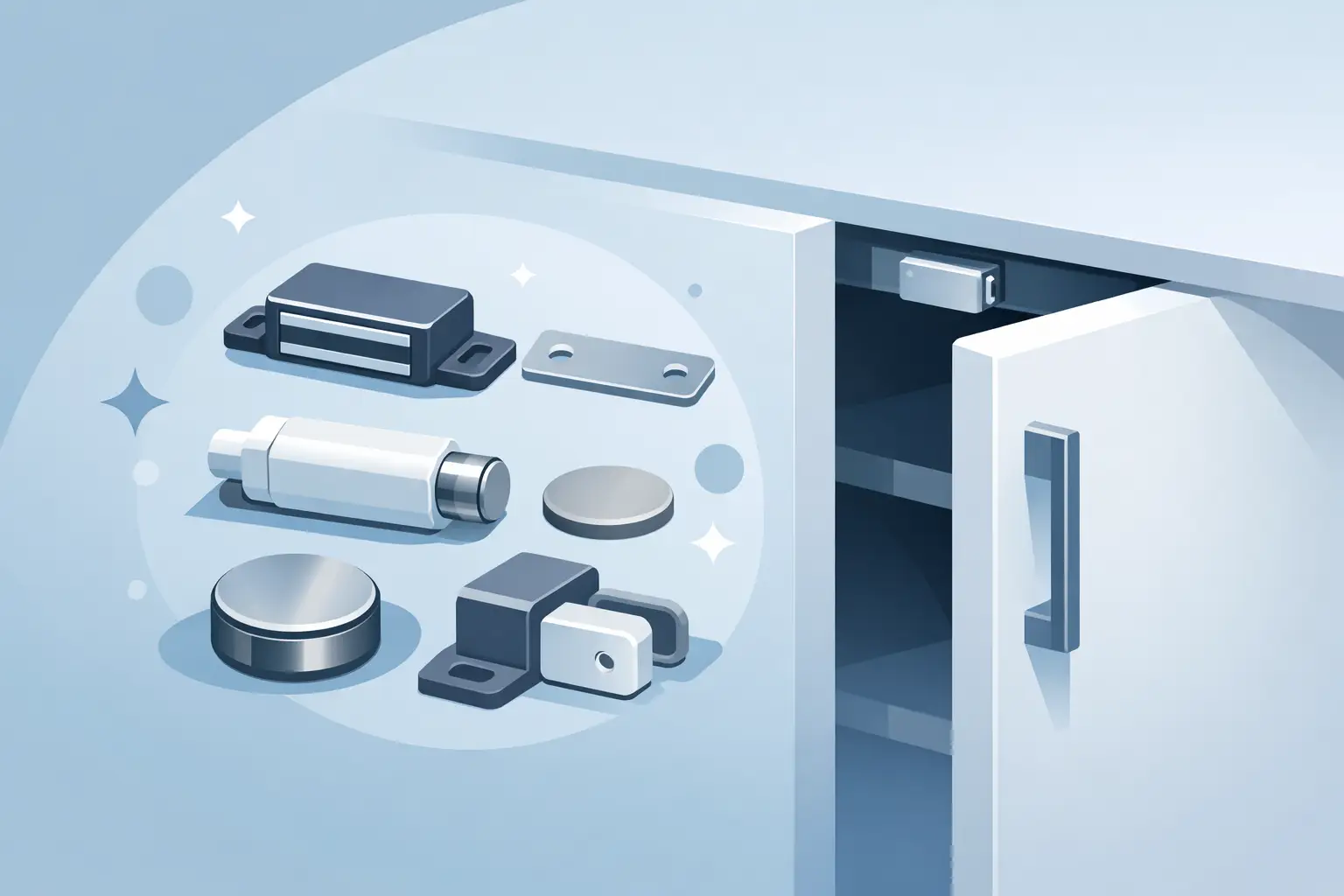
A standard magnetic catch is the simplest route for many cabinet doors. It is designed for closure applications, usually easy to fit, and gives a straightforward solution for common cupboard builds. For many customers, this is the quickest way to fix a weak or unreliable shut.
Disc magnets can be useful when you are creating a custom catch arrangement or integrating magnets into a bespoke build. They are compact, very strong for their size, and suitable where you want more freedom over placement. The trade-off is that they usually require more planning around housing, adhesive or a suitable recess.
Countersunk magnets are often the best option when you want a more secure mechanical fixing. Because they can be screwed into place, they are well suited to cupboards, panels and workshop furniture where vibration, repeated use or heavier components rule out a simple stick-on approach.
It depends on the build. If you want an easy replacement for a tired cupboard catch, use a purpose-made magnetic catch. If you are fabricating something custom, separate neodymium magnets may give you more control.
Common mistakes when buying strong cupboard magnets
The most common mistake is buying on size alone. A larger catch is not automatically better if the magnet quality is poor or the fitting is wrong. Small neodymium magnets often outperform larger low-strength options.
Another issue is ignoring alignment. Customers sometimes replace an old catch with a stronger one, then wonder why the door still does not shut well. If the plate sits too far away or meets the magnet unevenly, holding force drops.
There is also the temptation to over-specify. Very strong cupboard magnets can be excellent, but if the door is light and the handle small, too much pull can make opening feel abrupt. You want enough force to hold the door shut confidently, not so much that daily use becomes irritating.
Fixing method matters too. Adhesive-only fitting may be fine in some clean, light-duty applications, but for heavier doors or frequent use, a screwed fixing is usually the safer long-term choice.
What to look for before you buy
Start with the door itself. Consider its weight, material and how often it is opened. Then think about the environment. A hallway cupboard used once a day needs less from its catch than a retail storage unit opened constantly.
Next, look at available space. Some cupboards allow for a traditional surface-mounted catch, while others need a low-profile or concealed solution. This is where compact neodymium magnets have a real advantage. You can achieve strong hold without sacrificing too much room inside the cabinet.
Then consider installation. If you need the fastest, simplest replacement, choose a magnetic catch designed for cupboards. If you are building from scratch or fitting out bespoke furniture, discs or countersunk magnets may give a cleaner result.
Finally, buy for consistency, not just strength on paper. Reliable quality matters. A magnet that performs the same way every time is worth more than a cheaper option with uncertain pull or finish.
Why neodymium is often the best choice
For cupboard closures, neodymium offers the combination most buyers actually need – high strength, compact size and practical versatility. That is why it is widely used in cabinet work, displays, workshop storage and fabricated fittings.
A strong neodymium magnet can provide excellent holding force without bulky hardware. That helps when aesthetics matter, when fitting space is limited, or when you want a cleaner installation. It also gives more flexibility across different cupboard styles, from modern handleless units to simple utility cabinets.
Quality matters here. Poorly made magnets or weak catches may look similar at first glance, but the difference shows up quickly in everyday use. Better magnetic hardware feels firmer, lasts better and gives more confidence once fitted. That is exactly why buyers looking for dependable closure solutions often choose a specialist supplier such as Magman rather than a general hardware range.
Getting the best result after fitting
Even the best magnet will not perform well if the installation is off. Take time to position the magnet and strike plate accurately. Keep the contact clean, minimise gaps and check that the door sits square when closed.
If the cupboard door is warped, the hinges are loose or the carcass is out of line, replacing the magnet alone may not fully solve the problem. Strong cupboard magnets improve closure, but they cannot correct every issue in the cabinet itself. The best results come when the hardware and the joinery are working together.
For new builds, it is worth testing the pull before final fixing. A small adjustment in position can make a noticeable difference to how firmly and neatly the door closes.
When cupboard doors need to stay shut properly, stronger magnets are not a luxury. They are a simple upgrade that makes the whole unit feel better built, better fitted and more dependable every day.