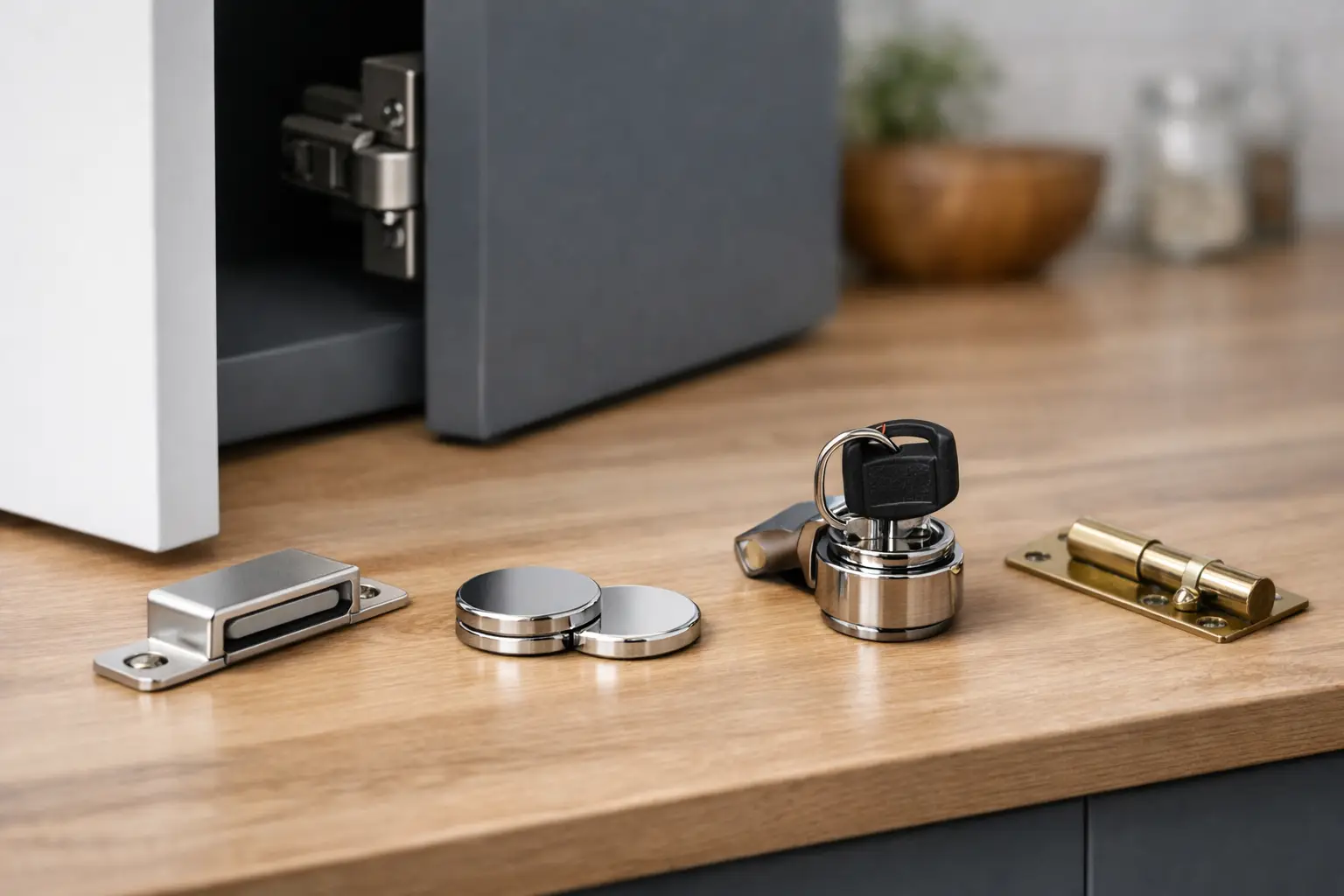
Cabinet Closure Options for a Secure Finish
A cupboard door that springs open, rattles in use or sits visibly proud can make an otherwise well-built unit feel unfinished. The right cabinet closure options solve that small but frustrating problem, keeping doors aligned, secure and easy to open. For many cabinets, a compact magnetic catch provides the cleanest answer – but it is not the only choice.
The best closure depends on the door material, the weight and size of the panel, how often the unit will be opened, and the finish you want. A lightweight kitchen cabinet, a workshop enclosure and a retail display unit may all need different hardware. Start with the function, then choose a fixing method with enough holding power for the job.
The main cabinet closure options
Cabinet closures generally fall into four practical categories: magnetic catches, mechanical roller catches, touch-to-open fittings and conventional latches. Hinges control the door movement, but the closure hardware is what holds the door shut once it reaches the frame.
Magnetic catches
Magnetic catches use a magnet fixed inside the cabinet and a steel strike plate on the door, or the opposite arrangement. As the door closes, the magnet pulls the plate into position and holds it there. The result is quiet, tidy and simple to use.
They suit cupboard doors, utility units, media cabinets, shop displays, access panels and made-to-measure furniture. They are especially useful where a visible latch would spoil the finish or where a small handle is preferred over a protruding catch.
Neodymium magnetic catches offer superior pull performance in a very compact format. That matters where fitting space is limited or where a heavier door needs more hold than a standard ferrite magnet can provide. A stronger catch can also reduce the chance of a door opening through vibration, light knocks or a slightly uneven cabinet installation.
Strength still needs to be proportionate. An overly powerful catch on a small, lightweight door can make the door feel abrupt to open or pull a poorly fixed strike plate out of position. Choose enough holding force to keep the door reliably closed, rather than simply selecting the strongest magnet available.
Roller catches
Roller catches use spring-loaded rollers that grip a strike plate as the door closes. They are a familiar mechanical option and can work well on traditional furniture, inset doors and cupboards where a positive physical grip is wanted.
Their main advantage is that they do not rely on magnetic attraction, so the hold is less affected by a small air gap. However, rollers can wear, become noisy or require adjustment over time. They also need accurate positioning for a consistent close. For cabinets used frequently, magnetic catches are often the quieter and lower-maintenance alternative.
Push-to-open mechanisms
Push-to-open fittings release the door when its front is pressed. They are popular on handleless cabinetry and contemporary display furniture because the front remains completely uncluttered.
This approach works best with well-fitted doors and good-quality hinges. The mechanism needs enough room to operate and can be less forgiving where cabinet fronts are warped, heavily used or exposed to knocks. It may also be unsuitable for a door that needs firm retention, such as a mobile unit or a cabinet in a busy workshop.
Turn catches and latches
Turn buttons, cam catches, sash locks and other mechanical latches provide a more deliberate closure. They are useful for cabinets holding tools, equipment or stock where a simple magnetic hold is not sufficient. Some can be locked, while others provide clear visual confirmation that the door is secured.
The trade-off is visibility and extra operation. A latch changes the look of the cabinet and adds a step every time it is opened. For a clean domestic cupboard or retail plinth, that may be unnecessary. For an access door carrying weight, exposed to movement or needing restricted access, it is often the sensible choice.
Choosing magnetic cabinet closure options
A magnetic catch is only as reliable as its specification and installation. Before selecting one, consider the door first. A thin MDF door with a small timber frame needs far less pull than a large solid-wood cabinet door. Glass-fronted display units also need care: the magnet may be compact, but the force of closure should not be enough to create a sharp impact against the frame.
Door position matters too. A vertical cupboard door is usually straightforward because the catch only needs to resist normal opening force. A downward-opening flap, upward-opening door or panel affected by vibration may need a stronger catch, more than one catch, or a mechanical backup.
The gap between magnet and strike plate is equally important. Magnetic force drops quickly as the distance increases. A catch that feels super-strong in your hand may perform poorly if the plate sits several millimetres away because of thick paint, misalignment or recessed fitting. Aim for a close, flat meeting between the magnet and steel plate when the door is shut.
Use the fixing material as part of the decision. Screw-fixed magnetic catches are practical for timber, plywood and MDF. Countersunk neodymium magnets can create a more discreet closure when set flush into a door and frame, provided the material is thick enough and the holes are drilled accurately. Adhesive fitting can be useful for light-duty work, but screws are normally the more dependable choice for regular use or heavier doors.
Installation details that make a difference
Good alignment is the difference between a catch that feels precise and one that causes constant irritation. Fit the hinges first, then check the door gaps before marking the catch position. If the door is not sitting correctly, closure hardware will not correct the underlying hinge or cabinet issue.
Position a single catch near the opening edge of a normal door, usually towards the top or centre depending on the cabinet design. For tall, wide or bowed doors, use two catches – one near the top and one near the bottom. This prevents the free corner from standing away from the cabinet and gives a more even close.
Hold the catch in place and close the door carefully to mark the strike plate location. Check that the plate meets the magnet squarely rather than at an angle. Then test the action several times before fully tightening the screws. Small adjustments can make a substantial difference to holding strength and opening feel.
Avoid fitting a magnetic catch where it will clash with shelves, drawer runners or hinge arms. On face-frame cabinets, a small mounting block may be needed to bring the magnet and plate into the same plane. For frameless cabinets, a surface-mounted catch often provides the simplest installation.
When a magnetic catch is not enough
Magnetic closures are powerful and versatile, but they are not a substitute for a safety latch or lock. Do not rely on magnets alone for cabinets containing hazardous materials, heavy equipment, valuable stock or items that must be kept away from children. Use purpose-designed locking hardware where security or controlled access is required.
They are also not ideal where the door is under continuous outward pressure. A cupboard packed tightly enough to push against its door can overcome a catch or leave the front looking strained. In that situation, reorganising the storage, adjusting the hinges or using a positive latch will produce a better result.
For outdoor cabinets, damp utility spaces or installations exposed to dirt, check that the catch housing, screws and strike plate are suitable for the environment. Neodymium magnets are extremely strong for their size, but their protective coating and the surrounding hardware still need sensible protection from corrosion and wear.
A practical choice for a better finish
Most cabinet projects do not need complicated hardware. They need a closure that matches the door weight, fits the available space and keeps performing after hundreds of openings. A properly sized magnetic catch delivers a quiet close, a clean appearance and dependable holding force without adding bulk to the cabinet front.
Magman supplies powerful N52 neodymium magnets and magnetic catches for practical closure applications, helping DIY users and trade professionals build cabinets that close as well as they look. Measure carefully, fit the components squarely and choose strength for the real demands of the door – that is what turns a good cabinet into a reliable one.