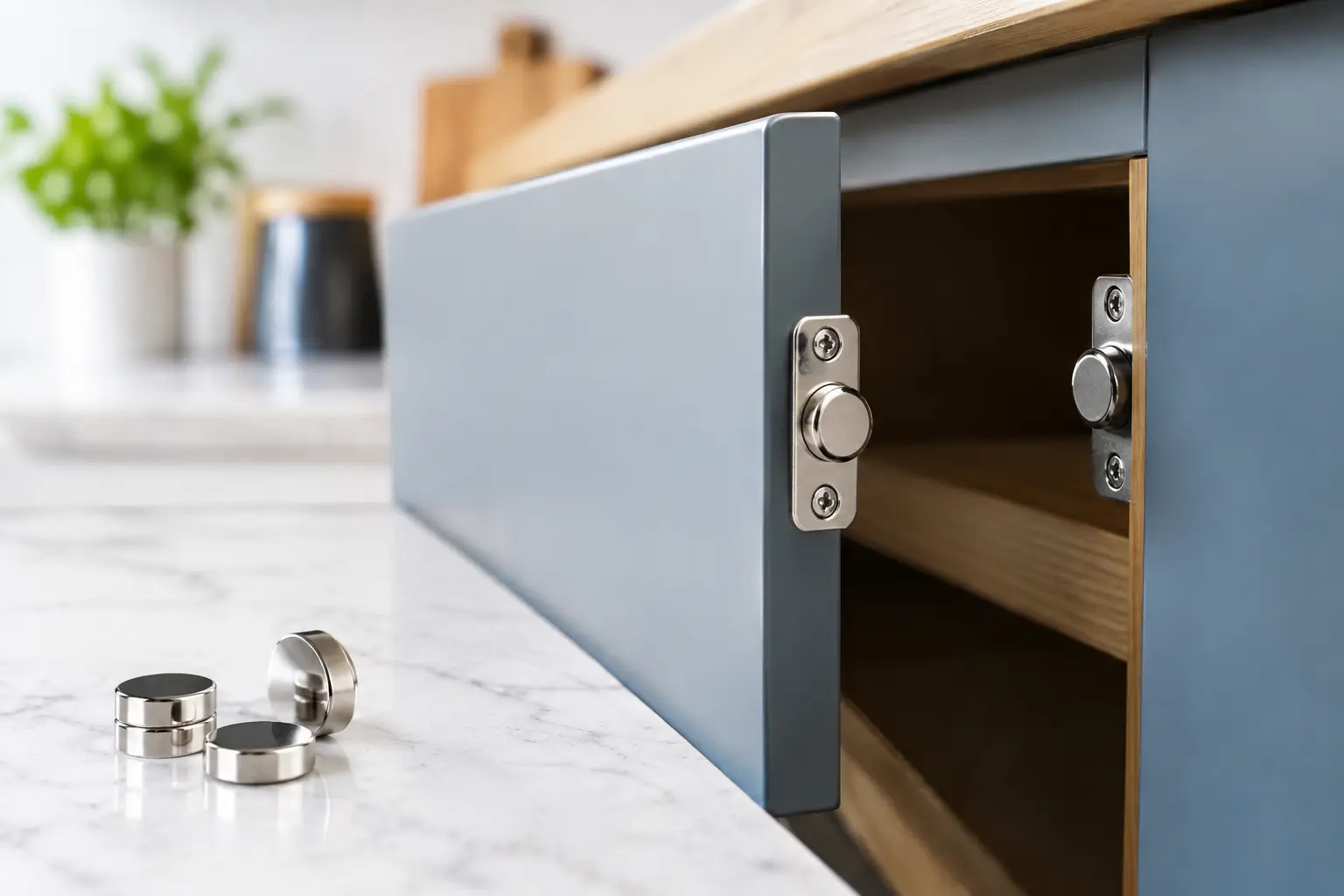
Magnetic Catch Alignment for Reliable Closures
A magnetic catch can have excellent pull strength and still give a poor result if the two parts do not meet correctly. Magnetic catch alignment is what turns a powerful magnet into a clean, reliable closure – whether you are fitting a kitchen cabinet, workshop storage, a retail display unit or a custom joinery project.
The aim is simple: the magnet and strike plate should meet squarely, consistently and with enough contact area to hold the door or panel closed. Small errors in position, depth or angle can reduce holding force, cause rubbing, or leave a visible gap that makes an otherwise well-made installation feel unfinished.
Why magnetic catch alignment affects holding strength
Magnetic catches work best when the magnet sits directly opposite a flat ferrous strike plate. When the surfaces meet face-to-face, the magnetic field has the shortest and most efficient path. Even a small air gap reduces the effective pull force, particularly with compact, high-strength neodymium magnets.
This is why a catch may seem strong when tested in your hand but feel weak once fitted. A door that closes at an angle, a recessed plate, a warped panel or an over-proud screw head can stop the parts from making proper contact. The magnet is still powerful, but the installation is working against it.
Alignment also affects the action of the closure. A correctly positioned catch draws the door into its final position without a hard impact. If the strike plate meets the edge of the magnet housing instead, the door can shift sideways before closing. Over time, this can loosen fixings, mark painted surfaces and make the catch less dependable.
Start with the door in its finished position
Fit hinges, runners or pivots before setting the catch. This sounds obvious, but catches are sometimes used to compensate for a door that is not correctly hung. They should hold a properly fitted door shut, not pull a poorly aligned door into place.
First, check the reveal around the door or drawer front. Open and close it several times, looking for movement caused by loose hinges, uneven frames or panels catching on an adjacent surface. If the door settles lower when closed, adjust that issue before marking the catch position.
For cabinets, the usual position is near the opening edge, away from the hinges. On tall or wide doors, a catch at the top often prevents the door from dropping or flexing. Larger, heavier doors may need two catches, fitted near the top and bottom, to avoid a corner lifting away from the cabinet.
Mark both parts from the same reference point
The most reliable fitting method is to mark the magnet and strike plate with the door closed in its correct final position. Avoid measuring each part separately from different edges where possible. A few millimetres of variation between a face frame and a door edge can be enough to create an offset.
Hold the catch body against the cabinet carcass or frame and lightly mark its centre line. Then transfer that position to the rear of the door. If access allows, a small piece of masking tape on each surface makes marks easier to see and remove.
A practical option is to fit the magnet body first, then use a light dab of chalk, pencil graphite or removable marker on its face. Close the door gently against it to leave a contact mark for the strike plate. Do this with care: a strong magnet can snap the door shut and shift the mark if you let it close too quickly.
Before drilling pilot holes, place the plate on the mark and close the door by hand. You are checking three things: that the plate reaches the magnet face, that it sits centrally, and that the door remains flush with the cabinet or frame.
Centre the strike plate, but allow for adjustment
A strike plate does not always need to be perfectly centred to look neat. It does need enough overlap with the magnet to provide reliable holding force. Where a door naturally closes slightly off-centre, position the plate to suit the real closing path rather than forcing a textbook measurement.
If the fixing holes allow movement, tighten the screws only part way at first. Test the closure, make small adjustments, then fully tighten the fixings once the action feels right. This is especially useful on timber doors, where seasonal movement can alter the fit slightly over time.
Set the correct depth and contact gap
The magnet face and strike plate should meet with little or no gap. A painted finish, laminate, veneer or thin protective pad is usually not a problem, but a recessed plate or deeply mounted catch can noticeably reduce the hold.
When fitting a surface-mounted magnetic catch, make sure the magnet housing is not set back behind a frame lip. The strike plate must be able to reach it without the door edge or surrounding timber making contact first. On inset doors, this may mean packing the catch forward slightly or selecting a format designed for the available clearance.
Countersunk magnetic components can give a particularly clean finish, but depth matters even more. The magnet should sit flush, not buried below the surface. If it is too deep, the non-magnetic material between magnet and plate becomes an air gap in practical terms, reducing pull performance.
Do not assume a stronger magnet will solve a large gap. A super-strong N52 neodymium magnet offers superior pull performance for its size, but it will still perform best when fitted close to its steel contact surface. Good preparation is more effective than simply fitting a larger magnet.
Keep the surfaces square
A flat strike plate against a flat magnet is ideal. If either part is tilted, only one edge may touch. The door can still appear closed, but the effective grip will be lower and the catch may release more easily when the unit is knocked or moved.
Check the mounting surface before fitting. Painted timber can have drips, self-adhesive pads can add thickness, and uneven screw heads can force the plate out of flat. Use countersunk screws where the plate is designed for them, and make sure each screw is fully seated without distorting the plate.
On curved, flexible or uneven panels, a standard rigid strike plate may not be the best answer. It may be necessary to add a small flat mounting block, use a larger contact plate, or select a different catch position where both faces can meet squarely.
Choosing the right catch arrangement
The best layout depends on the weight, size and use of the door. A small cupboard holding lightweight items may only need one compact magnetic catch. A tall utility cabinet, retail display panel or frequently used workshop door needs more security and benefits from stronger hardware or two fixing points.
Consider the force applied when opening the door as well as the force needed to hold it closed. A very powerful catch on a lightweight door can make opening feel abrupt and may strain small hinges. Conversely, a catch that is too light for a door subject to vibration or regular movement can allow it to creep open.
For outdoor-adjacent spaces, garages and utility rooms, also consider moisture and surface condition. Dirt, paint build-up and corrosion on the strike plate all increase separation and can weaken the closure. Clean, flat contact faces are part of ongoing performance, not just the original installation.
Common magnetic catch alignment problems
If a catch will not hold properly, start by looking for an air gap. Close the door slowly and inspect where the plate touches. Often the solution is a minor adjustment rather than a replacement.
A door that springs open usually has one of several causes:
- The strike plate is offset and only catching the magnet edge.
- The magnet or plate is mounted too far back from the closing surface.
- The door is being held under tension by hinges, seals or a rubbing edge.
- The strike plate is bent, loose or lifted by unsuitable screw heads.
If the door closes with a sharp sideways pull, move the plate slightly towards the centre of the magnet face. If it requires a heavy push before the magnet takes over, check that the plate is not reaching the catch at an angle. Small adjustments matter because magnetic force rises quickly as the gap closes.
Test the installation as it will be used
Once fitted, open and close the door at normal speed several times. Then test it with a light pull at the opening edge and with a gentle knock to the cabinet. The catch should hold without rattling, but the door should still be comfortable to open.
For a professional finish, check the closure from the front and side. A reliable catch should not leave the door proud, pull it out of line or create an uneven reveal. If it does, correct the mechanical fit first and use the magnetic hardware as the final holding point it is designed to be.
A few careful minutes spent setting the magnet square, central and close to its strike plate will deliver the result buyers expect from quality magnetic hardware: a firm closure, clean appearance and dependable everyday use.