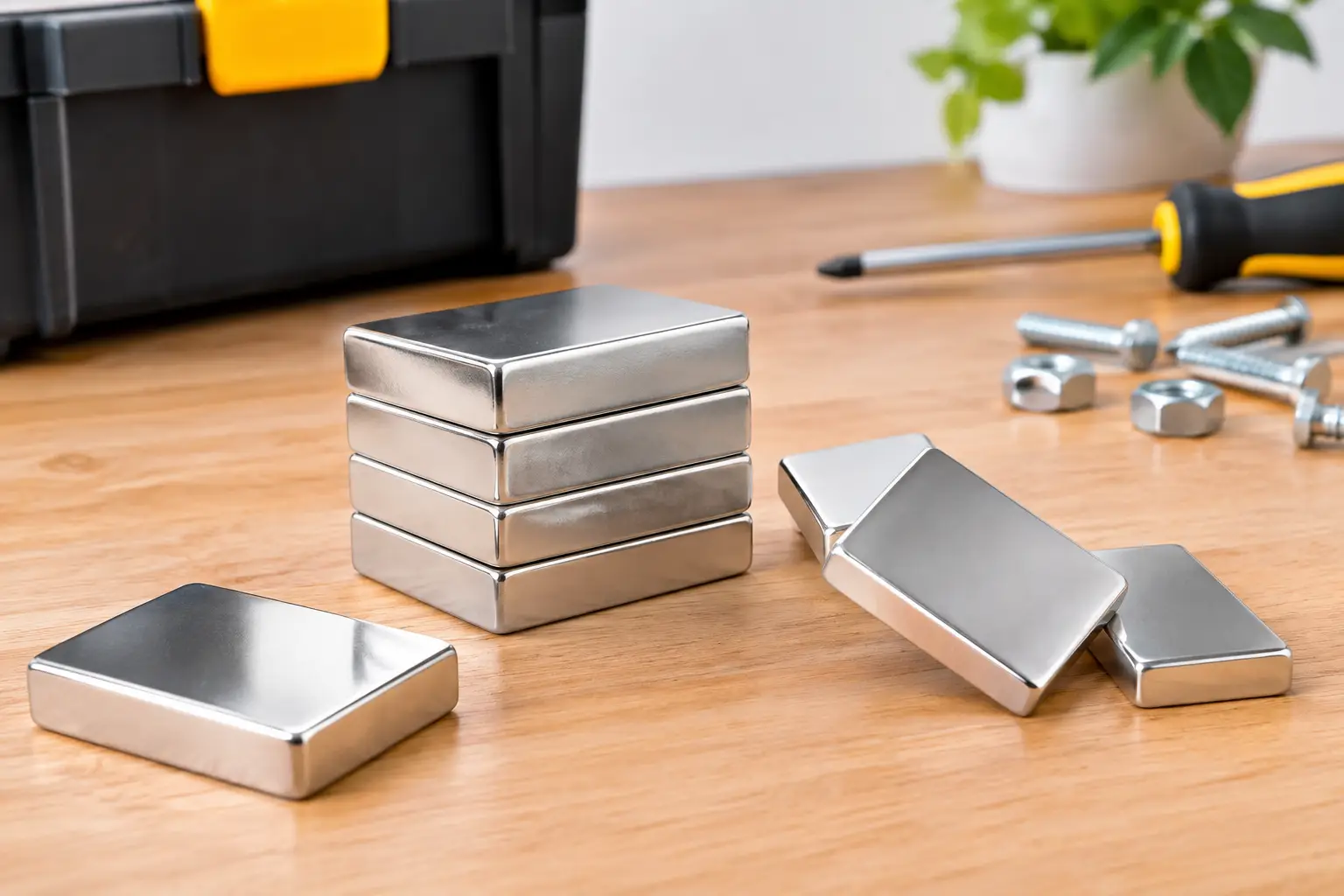
Block Magnets for Strong, Compact Fixing Jobs
A small magnet that slips neatly into a recess can hold far more securely than bulky mechanical hardware – provided it is the right size, grade and fit for the job. Block magnets are a practical choice where you need powerful holding force in a flat, rectangular form, from cupboard doors and display panels to workshop jigs and custom-built fixtures.
Their straight edges make them easy to position, glue into timber, mount behind panels or pair with a steel plate. When high-grade neodymium is used, the result is a compact fixing solution with serious pull performance. The key is selecting for the real application rather than simply choosing the largest magnet available.
Why Choose Block Magnets?
Block magnets offer a useful combination of surface area, low profile and directional strength. A disc magnet is often ideal for drilled holes and circular recesses, but a rectangular magnet makes better use of narrow channels, square housings and flat contact areas. This can make installation cleaner and more secure, particularly in cabinetry, retail fittings and fabricated units.
The broad face of a block magnet also helps spread its holding force across a steel target plate or a matching magnet. That matters when a door, panel or removable cover needs to close firmly without needing a prominent latch. For a concealed magnetic catch, for example, the aim is not maximum force at all costs. It is enough controlled pull to keep the door shut, while still allowing it to be opened comfortably.
High-strength N52 neodymium block magnets are popular because they provide superior pull performance for their size. This lets you build a compact closure or mount where space is limited. Yet grade is only one part of the result. Dimensions, magnet orientation, material thickness and the quality of the contact surface all affect how strongly the finished assembly performs.
Match the Magnet to the Job
Start with the object being held and how it will be used. A lightweight cupboard door requires a different solution from a removable machine guard, a retail sign or a workshop fixture that sees repeated loading. Consider the weight of the item, the gap between the magnet and steel, the direction of force and how often the connection will be released.
A magnet is strongest when its face is in direct contact with clean, flat, plain steel. A painted surface, timber veneer, air gap or misaligned plate reduces the available pull. Even a small gap can make a noticeable difference with neodymium magnets. If the magnet will sit behind a panel, allow for that panel thickness when choosing the size and strength.
The direction of load matters just as much. Pull force describes resistance to being pulled straight away from the surface. Many everyday fittings, however, place the magnet under shear load, where the held item tries to slide down. In that situation, friction, a locating lip, pins or a mechanical stop can do much of the work. Use the magnet to hold the parts together rather than asking it to support the full weight alone.
Cabinet Doors and Furniture Closures
For cabinets, wardrobes and access panels, block magnets create tidy closures with no visible catch on the face of the furniture. A magnet paired with a steel strike plate is usually the simplest arrangement. The magnet is fixed inside the carcass or door frame, with the plate mounted opposite.
Allow enough adjustment during fitting to achieve a consistent meeting point. A door that closes slightly out of square may only touch one corner of the plate, reducing holding force and creating an unreliable catch. If the magnet is very strong, test the opening action before permanently fixing it. A closure should feel positive, not frustrating to use.
For heavier doors or taller panels, two smaller magnets positioned apart can be more effective than one oversized magnet. This helps prevent twisting and keeps the door evenly seated. It also offers a more controlled release when the door is opened.
Displays, Signage and Retail Units
Magnetic mounts are useful for panels, price displays, removable graphics and access sections that need a clean finish. Block magnets fit neatly behind straight-edged components and can be arranged to suit the shape of the panel.
For a display panel, use several magnets to distribute the load and keep the panel aligned. Avoid relying on one central magnet for a large board, as the corners can lift or rotate. If regular removal is expected, build in a discreet finger gap, pull tab or edge detail so the panel can be released without putting excessive strain on the fitting.
Consider the surface material too. Steel gives the best response, while aluminium, brass, copper and most stainless steels may not be magnetic. When the receiving surface is not suitable, a steel plate provides a reliable target and keeps the system straightforward.
Jigs, Fixtures and Workshop Builds
In a workshop, block magnets can hold guides, templates, guards and components in position while you measure, mark or assemble. Their flat sides sit naturally in routed pockets and straight rebates, which helps achieve repeatable placement.
For jigs, avoid placing magnets where sawdust, swarf or steel filings will quickly collect around the working face. Fine ferrous debris is strongly attracted to neodymium and can affect fit, scratch surfaces or become awkward to clear away. Recessing the magnet slightly or covering it with a thin non-magnetic layer can help, although any added gap reduces holding force.
Where accuracy is critical, use the magnet as a clamping aid alongside positive location features. A pair of dowels, a shoulder or a machined edge will stop lateral movement, while the magnet supplies quick holding pressure. This is a more dependable arrangement than using magnetic pull alone to set a precise position.
Choosing the Right Size and Strength
Bigger is not automatically better. A larger block magnet may give more pull, but it can be harder to separate, more demanding to install and unsuitable for thin materials. It may also make a cupboard door feel abrupt when it closes. The most effective choice is the smallest magnet that delivers dependable performance with a sensible margin for real-world conditions.
Measure the available recess carefully, including the depth. A flush-mounted magnet gives a tidy result, but it must not weaken a narrow timber edge or break through a thin panel. If the magnet will be bonded in place, leave enough surrounding material for a secure adhesive bed.
Neodymium magnets are commonly coated to help protect against corrosion, but coatings can be damaged by impact. In damp, outdoor or corrosive environments, standard neodymium magnets may not be the best long-term option unless they are properly enclosed. Think about temperature as well. High heat can permanently reduce magnetic strength, so keep standard magnets away from applications with sustained elevated temperatures.
Fitting Block Magnets Securely
For a clean installation, mark both parts before drilling or routing. Dry-fit the magnet and its target plate, then check alignment with the door or panel closed. This simple step prevents the common problem of a magnet sitting a few millimetres off centre and delivering much less pull than expected.
Adhesive fixing works well when the recess is accurate and surfaces are clean, dry and free from dust. Choose an adhesive suited to the materials involved and allow full cure time before loading the magnet. For demanding trade applications, a mechanical housing, screw-fixed magnetic catch or purpose-made pocket can provide more dependable retention than adhesive alone.
Take care when handling strong magnets. Larger neodymium block magnets can snap together suddenly, chip on impact or trap skin between them. Keep them apart until you are ready to fit them, protect brittle edges during handling and keep powerful magnets away from devices or items affected by magnetic fields. They should also be kept away from young children.
When a Block Magnet Is Not the Best Option
A block magnet is not always the most convenient format. If you need a fixing point with a screw hole, a countersunk magnet may offer a faster, more serviceable installation. If the magnet needs to sit in a standard drilled hole, a disc format is often easier to fit. For door closures where adjustment and repeatable operation matter most, a complete magnetic catch may be the better answer.
The right format comes down to the space available, the method of fixing and the experience you want from the finished job. Magman focuses on powerful, versatile magnetic hardware so DIY users and trade customers can choose a practical solution without compromising on strength.
Before ordering, measure the recess, identify the receiving surface and allow for the real gap between the parts. Those few checks turn a powerful block magnet from a promising component into a fixing that performs exactly as it should.