What Affects Magnet Coating Durability Most?
A neodymium magnet can have exceptional pull strength and still fail early if its surface protection is wrong for the job. Magnet coating durability matters because the neodymium alloy beneath the finish is highly susceptible to corrosion. Once a coating is chipped, cracked or worn through, moisture can reach the magnet and its performance may deteriorate far sooner than expected.
For a cabinet catch in a dry home, a standard plated magnet may provide years of dependable service. For a workshop jig, a retail display handled all day, or a fitting exposed to damp air, the choice deserves more thought. The strongest option is not always the longest-lasting one if it is installed or used in the wrong environment.
Why neodymium magnets need a protective coating
Neodymium magnets are made from an alloy containing neodymium, iron and boron. This material produces superior pull performance for its size, but the iron content makes it vulnerable to oxidation. A coating forms the barrier between the magnet and the conditions around it.
That barrier also affects appearance and handling. A bright nickel finish looks clean and professional in visible fixings. A dark epoxy coating can offer better protection where moisture is a concern. Neither finish makes a magnet indestructible. The coating must suit the environment, the fixing method and the way the magnet will meet its mating surface.
The key point is simple: coatings protect the magnet, but they cannot compensate for repeated impact, excessive heat or permanent exposure to water.
Common coatings and where they work best
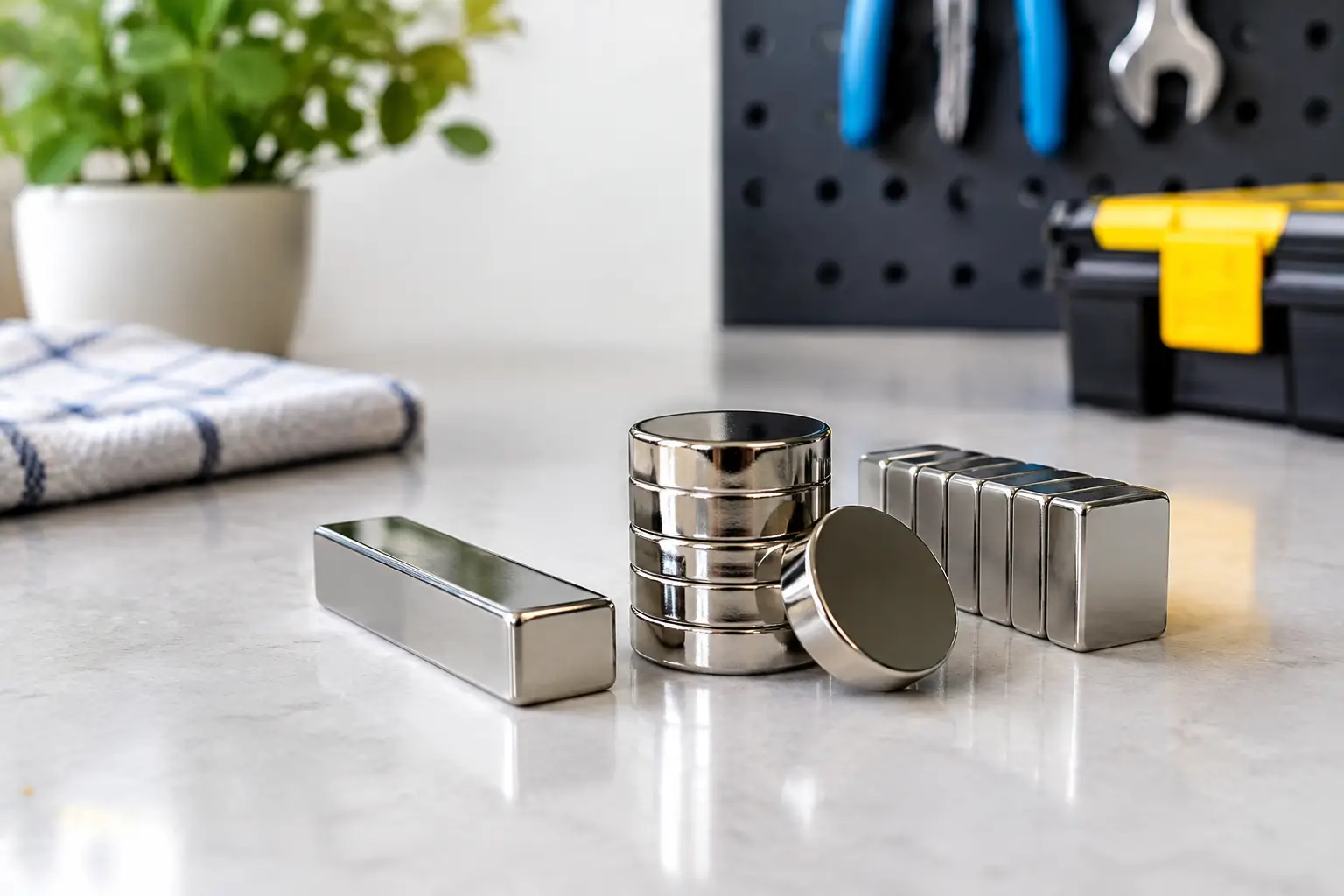
Nickel-copper-nickel plating is widely used on high-strength neodymium magnets. It gives the familiar silver finish seen on many discs, blocks and countersunk magnets. It is hard, smooth and well suited to indoor applications such as cupboard closures, display fittings, packaging, jigs and general DIY work.
Its limitation is that nickel plating is not a waterproof shell. A deep scratch, chipped edge or damaged countersunk hole can become an entry point for moisture. In dry, ordinary indoor conditions this is rarely a concern. In a bathroom, unheated shed, boat, outdoor installation or regularly washed area, it is a risk worth addressing before fitting.
Epoxy-coated magnets are often chosen where extra resistance to moisture and salt-laden air is needed. The coating is usually thicker than standard plating and can provide a more effective barrier when it remains intact. It is useful for damp environments, protective housings and some outdoor projects, but it is not automatically the best choice for every high-wear application. A thick coated surface can be scratched or cut by rough metal edges, and repeated sliding contact will eventually take its toll.
Zinc and other metallic finishes may also be used for particular product types. Their suitability depends on the coating system, thickness and the conditions of use. The finish alone should never be the only selection criterion. Magnet size, grade, mounting position and contact force all affect service life.
What reduces magnet coating durability?
The most common cause of coating damage is not weather. It is magnet-to-magnet impact. Neodymium magnets attract with considerable force, especially N52 magnets. When two are allowed to snap together, the collision can chip the plated edges even if the faces appear undamaged at first glance.
This is especially relevant with small disc magnets, where the pull feels manageable until two pieces close the final few millimetres. Larger blocks and countersunk magnets can cause more serious chipping, as well as pinched fingers or broken magnets. Neodymium material is hard but brittle. The coating follows the surface beneath it, so a fractured magnet is also a compromised protective surface.
Abrasion is another regular culprit. A magnet used as a sliding latch, a removable sign fixing or a moving jig may rub against painted steel, bare metal or grit. Over time, that movement wears the contact area. For applications involving regular opening and closing, consider whether the magnet can meet a steel strike plate rather than another magnet. This usually reduces impact and makes alignment easier.
Moisture and condensation are more damaging than a brief splash. A fitting in a garage, garden building or external enclosure may look dry while going through daily temperature changes that create condensation. Salt air, cleaning chemicals and damp timber can add to the problem. If a magnet is installed where it cannot dry properly, even a small coating defect can become significant.
Heat is a separate issue. Coating durability and magnetic performance are related, but not the same. A coating may look fine while excessive temperature weakens the magnet itself. Standard neodymium grades have operating-temperature limits, and high heat can permanently reduce pull strength. Do not assume a protective finish makes a magnet suitable for an engine bay, radiator surround or other hot installation.
Choosing a durable magnet for the job
Start with the environment. A dry indoor cabinet, retail unit or workshop fixture calls for a different choice from a gate catch or a marine storage solution. If the fitting will be visible, appearance may point towards nickel plating. If it will be enclosed but exposed to damp, corrosion resistance should take priority.
Then consider how the magnet is loaded. A magnet used purely for holding, with little movement after installation, places minimal stress on its coating. A magnet used as a catch, locator or removable mounting point experiences repeated contact. In these applications, a slightly larger magnet can be the better long-term choice. It achieves the required hold with less need for hard impact and less chance of being pulled out of alignment.
Countersunk magnets need particular care. Their central hole makes mechanical fixing straightforward, but overtightening a screw can crack the magnet or damage the coating around the countersink. Use a correctly sized, flat-head screw and tighten only until secure. The screw should hold the magnet in place, not force it into a warped surface.
For glued magnets, a clean, flat mating surface is essential. Remove dust, oil and loose paint before applying adhesive. A poor bond often leads to movement, and movement is what turns a fixed magnet into an abrasive component. Choose an adhesive suited to both the magnet coating and the substrate, then allow it to cure fully before applying load.
Installation habits that protect the finish
Careful handling before installation has as much value as the coating itself. Keep magnets separated with card, plastic spacers or their supplied packaging until they are ready to fit. Do not drop them into a box of screws, steel brackets or other magnets.
When testing position, bring the magnet in slowly and keep fingers clear. If you need to separate two strong magnets, slide them apart across a firm edge rather than pulling directly against the full attraction force. This reduces the chance of sudden release and edge damage.
Avoid drilling, grinding or cutting a neodymium magnet. Apart from damaging the coating, machining can expose raw material and create combustible magnetic dust. Buy the correct format from the outset: a disc for a flush fixing, a block for a larger contact area, or a countersunk magnet for screw mounting.
Where a magnet contacts steel repeatedly, check that the opposing surface is smooth and free from burrs. A small sharp edge can score a finish surprisingly quickly. If the application allows it, a thin non-magnetic protective layer or a designed-in stopping gap can prevent the magnets from slamming together while retaining a reliable hold.
Inspecting and maintaining coated magnets
A quick visual check is usually enough. Look for chips at the edges, cracks around a countersunk hole, lifting coating or brown staining. Surface marks are not always urgent, but visible corrosion suggests the protective barrier has been breached.
Keep magnets clean and dry, particularly in workshop and outdoor settings. Wipe away metal swarf, damp dust and chemical residue with a soft dry cloth. Do not leave magnets soaking in cleaning solution or rely on a decorative finish to withstand regular harsh cleaning.
If a magnet is already corroding, replacement is generally more reliable than trying to repair it. Covering a damaged magnet after the fact may slow further exposure, but it cannot restore material that has begun to degrade or guarantee the original holding performance.
The best approach is to treat coating choice as part of the specification, not an afterthought. Match the finish and mounting method to the job, prevent impacts during fitting, and a compact super-strong magnet can stay clean, secure and dependable for far longer.