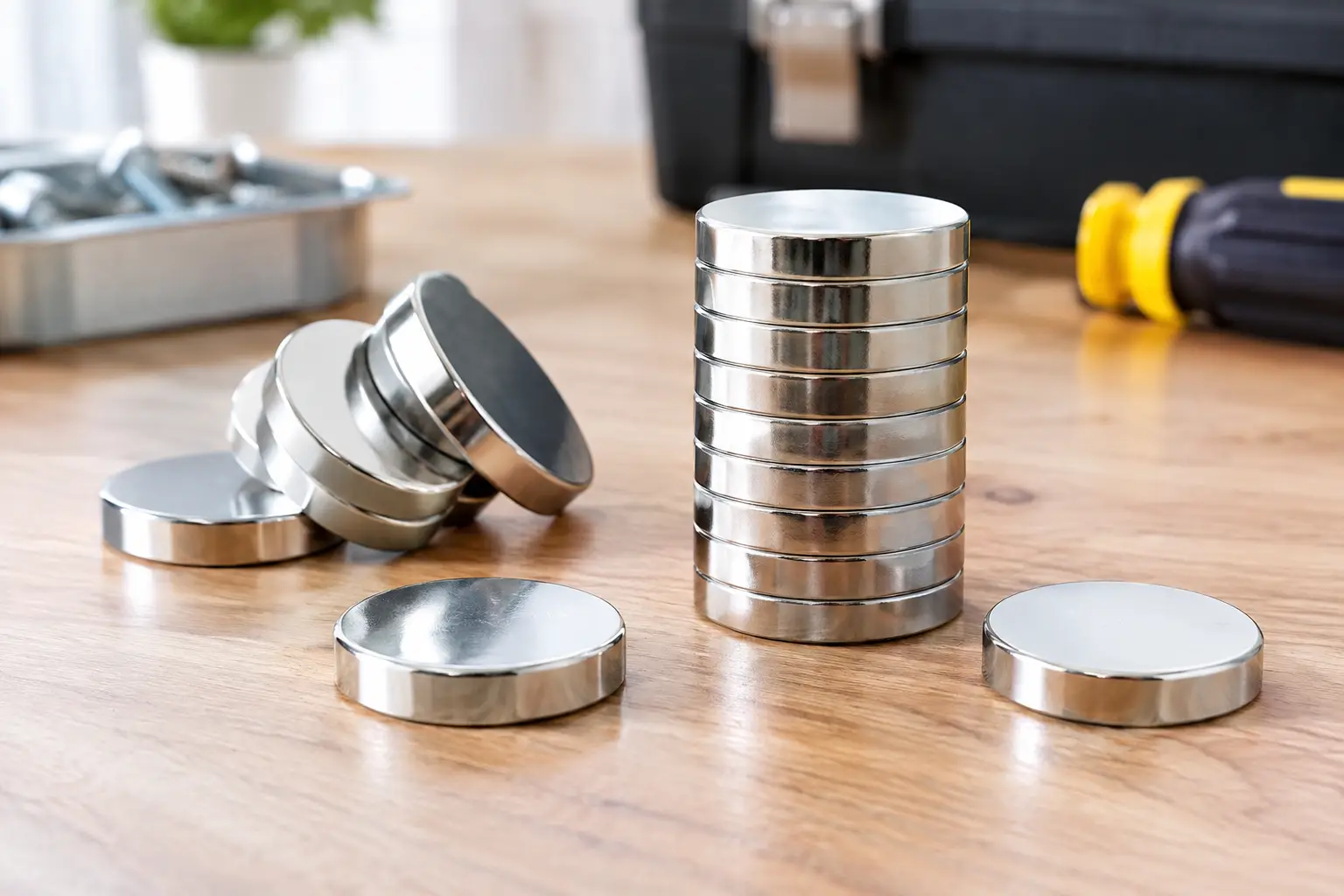
N52 Neodymium Disc Magnets for Serious Holding
A shallow disc can hold far more than its size suggests. That is the practical advantage of N52 neodymium disc magnets: they deliver serious magnetic force where a bulky fixing, catch or mechanical fastener would spoil the job. For cabinet doors, removable panels, retail displays and workshop builds, they provide a clean, compact answer to a straightforward question – how do you hold two parts together securely without adding unnecessary hardware?
N52 is the highest commonly available grade of neodymium magnet. Combined with the familiar disc shape, it gives DIY users and trade professionals a powerful, versatile component for applications where space is limited but holding performance matters.
What makes N52 neodymium disc magnets so strong?
Neodymium magnets are made from a rare-earth alloy that produces much stronger magnetic fields than traditional ferrite magnets. N52 refers to the magnet grade. In simple terms, a higher grade means a magnet can produce greater magnetic energy for its size, and N52 sits at the top end of the standard range.
That does not mean every N52 disc will suit every task. Diameter and thickness still make a major difference. A wider disc generally gives a larger contact area, while a thicker disc provides more magnetic material and can improve performance across a small air gap. The best choice depends on the material you are holding, the gap between surfaces and the way force is applied.
Pull strength figures are useful for comparing products, but they are not a promise that a magnet will hold the same load in every installation. Published pull is normally measured when a magnet is pulled directly away from a thick, clean piece of mild steel. A painted surface, thin steel, an uneven contact point or a sideways load will reduce real-world holding force.
This is why a small disc that feels exceptionally strong in the hand may perform differently on a powder-coated cabinet door or a thin metal display panel. Good selection starts with the application, not just the largest pull-strength number.
Where N52 neodymium disc magnets work best
Disc magnets are particularly useful when the magnet needs to sit inside a drilled recess, behind a surface or within a slim assembly. Their round profile is easy to position and suits many common fittings.
Cabinet doors and discreet closures
For cupboards, wardrobes, display units and access panels, an N52 disc magnet can create a tidy closure that is almost invisible once fitted. One magnet is often paired with a steel strike plate, or with a second magnet where alignment and polarity are carefully controlled.
The aim is not always maximum strength. A heavy door or panel may need a stronger hold, but a small lightweight door can become awkward to open if the magnet is oversized. Consider how often the door will be used, whether it has a handle and whether the closure must resist vibration or accidental knocks.
Removable panels and inspection covers
Magnetic fixing is a practical alternative to screws where regular access is needed. Equipment covers, service panels, speaker grilles, display fascias and boxed-in utilities can be held neatly in place while remaining easy to remove for maintenance.
For these jobs, use enough magnets to spread the load and prevent the panel from twisting. Four correctly positioned discs will usually give a more stable result than one very strong magnet in the centre. Keep their positions consistent so the panel locates cleanly each time.
Retail displays, signage and exhibition work
A strong disc magnet makes it easier to create interchangeable labels, lightweight signs and modular display elements without visible fixings. It is especially effective when parts need to be refreshed regularly or transported flat between events.
Here, shear force matters. A sign hanging vertically places a sliding load on the magnetic joint, which is much less favourable than a direct pull. Add a small ledge, locating pin or physical stop where possible. The magnet then holds the display in position rather than carrying the entire downward load.
Workshop jigs and practical DIY builds
N52 discs are useful in jigs, tool holders, removable guards, storage solutions and custom-made fixtures. They can hold ferrous components while adhesive cures, secure a cover over an opening or create a repeatable locating point in a project.
They are not a substitute for a rated lifting device, structural fixing or safety-critical fastener. If failure could cause injury, damage or loss of control, use a purpose-designed mechanical solution alongside the magnetic element.
Choosing the right disc size for the job
The key decision is usually the balance between diameter, thickness and required holding force. There is no single best size. A compact magnet suits a narrow frame or slim cabinet edge, while a larger diameter may be better where there is room for it and a broader grip is needed.
Start by looking at the available recess depth and the size of the steel contact area. A magnet should sit flat against its mating surface whenever possible. Even a small gap caused by timber veneer, paint, tape or poor alignment can noticeably reduce performance.
Then consider the direction of force. A magnetic catch that is pulled apart squarely can use its pull strength effectively. A panel that is pushed sideways, flexed or levered from one corner puts more demanding forces on the joint. In that case, increase the number of magnets, improve the mechanical location of the part, or choose a different fixing method.
For timber work, disc magnets can be set into a drilled hole and secured with a suitable adhesive. The recess should be accurate: a proud magnet can chip, snag or prevent a door from closing flush, while a magnet set too deeply introduces an air gap. Dry-fit the parts first and check the attraction before committing to adhesive.
Getting installation details right
Strong magnets reward careful preparation. Mark every position before drilling, especially when multiple discs must line up across a door, panel or frame. A simple alignment mistake can create uneven holding, rattle or a closure that only works when pushed into place.
Polarity matters when magnets face magnets. One face must attract the other. Before fitting, stack and mark the faces that will be bonded into each component. Do this one magnet at a time. Once powerful discs are loose on a bench, they can snap together unexpectedly and make accurate work harder.
Where a disc magnet is being bonded into wood, plastic or a non-magnetic surface, choose an adhesive suited to both materials and allow it to cure fully. Avoid relying on a thin smear of glue with no mechanical support in high-use applications. A close-fitting recess gives the adhesive a better chance of resisting twisting and pull-out forces.
If you are pairing a magnet with steel, use clean, flat ferrous steel for the strongest result. Stainless steel is not always magnetic, and aluminium, brass and most plastics will not provide magnetic attraction. Test unfamiliar materials before planning the whole installation around them.
Handle powerful disc magnets safely
Their compact size makes N52 discs easy to underestimate. Larger or thicker magnets can pinch skin when they jump together, and brittle neodymium material can chip if magnets collide. Keep fingers clear as magnets approach steel or another magnet, and separate them with a sliding motion rather than trying to pull them directly apart.
Keep magnets away from young children. Small magnets are a serious swallowing hazard, particularly if more than one is swallowed. They should also be kept clear of sensitive electronic devices, magnetic cards and people with implanted medical devices where strong magnetic fields may be a concern.
Neodymium magnets are commonly nickel-coated for a clean finish and corrosion resistance, but the coating can be damaged by impact or harsh conditions. If the installation will face persistent moisture, outdoor exposure or abrasion, protect the magnet within the assembly or assess whether a different magnetic solution is more appropriate.
Stronger is useful only when it is controlled
The value of an N52 disc is not simply that it grips hard. It is that it lets you place strong holding force exactly where a project needs it – concealed in a cabinet edge, behind a display face or inside a removable panel. Magman focuses on these practical, high-strength magnetic solutions because the right format makes installation cleaner and the finished result more dependable.
Measure the space, account for the real load and test the connection on the actual materials before final fitting. A properly selected disc magnet will feel less like a compromise and more like the detail that makes the whole job work.