10 Best Magnetic Catches for Cupboards
Cupboard doors that drift open by a few millimetres can make good joinery look unfinished. Choosing the best magnetic catches for cupboards is usually less about finding a single “best” product and more about matching pull strength, mounting style and door weight to the job.
A weak catch feels cheap from day one. An overly strong one can make a lightweight door awkward to open and put stress on hinges over time. The right option gives a clean close, reliable hold and a finish that still feels easy to use every day.
What makes the best magnetic catches for cupboards?
For most cupboard applications, the best magnetic catches balance four things – holding power, compact size, easy fixing and repeatable performance. That matters whether you are fitting a new kitchen unit, updating a utility cupboard, building workshop storage or finishing a retail display cabinet.
The magnet itself is only part of the equation. The strike plate, the alignment, the gap between door and frame, and the material you are fixing into all affect how well the catch performs. A strong neodymium magnet paired with poor alignment will still underperform. Likewise, a basic catch can feel better than expected if the door is light and the install is accurate.
If you are buying for practical results, it helps to think in terms of application rather than appearance alone. A painted timber cupboard in a hallway does not need the same closure force as a tall MDF workshop cabinet storing tools.
The main types of cupboard magnetic catch
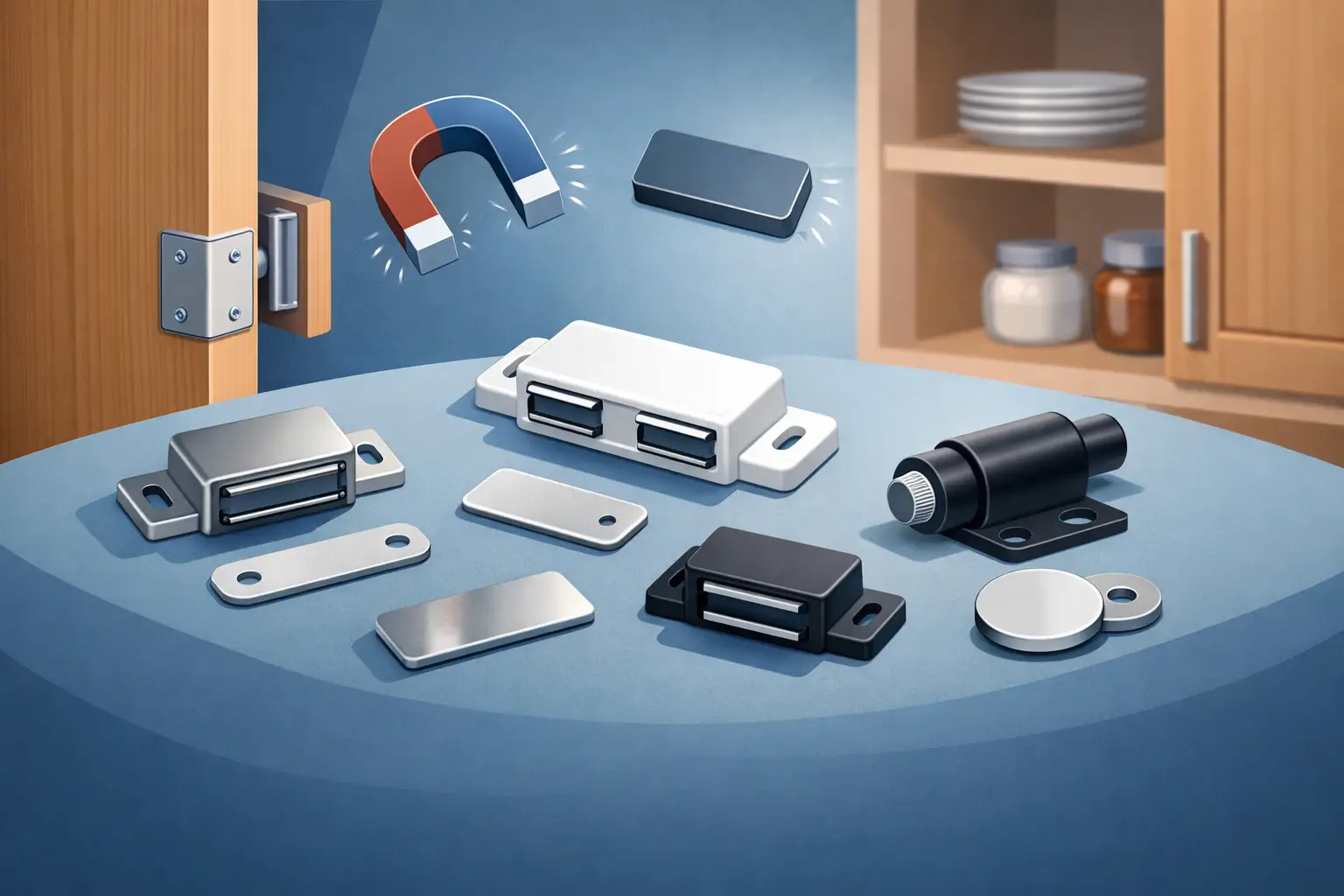
Surface-mounted plastic magnetic catches
These are the familiar cabinet catches used in many domestic cupboards. They are usually a plastic housing with one or two magnets inside, fixed to the inside of the carcass with screws, with a metal plate on the door.
They are a sensible choice for standard lightweight doors and general household use. They are affordable, easy to replace and forgiving to fit. If the cupboard is opened several times a day but does not carry much door weight, this style often does the job well.
The trade-off is strength and lifespan. Lower-grade versions can lose their snap, crack around the screw holes or feel inconsistent if quality is poor.
Metal-bodied magnetic catches
A metal housing gives a more durable catch and often a more secure fixing. These suit harder-working cupboards, utility rooms, workshops and commercial interiors where doors are used frequently.
They also tend to feel more solid in operation. If you want something a step up from the basic domestic catch, this is often where the better options sit.
Neodymium magnetic catches
If strength matters, neodymium is where magnetic catches become much more useful. Neodymium magnets offer superior pull performance for their size, which makes them ideal where space is tight but a reliable hold is essential.
For cupboard doors, that means you can use a compact catch and still get a firm closure. This is especially useful on heavier timber doors, bespoke cabinetry, garage storage, shopfitting and custom-built units where standard ferrite catches can feel underpowered.
The main caution is not to over-specify. A super-strong catch on a very light door can feel harsh in use. Better is not always stronger. Better is correctly matched.
Countersunk magnetic catches and magnet-to-plate fixings
For a cleaner, more custom install, countersunk magnets fixed directly into the cabinet or door can work extremely well. This approach is popular in made-to-measure joinery and higher-end builds where you want a discreet closure without bulky hardware.
A countersunk magnetic catch setup can look neater and offer excellent holding power, especially when paired with a steel strike plate. It does, however, require more thought during fitting. Accurate drilling, alignment and flush mounting matter more here than with a basic surface catch.
How to choose the right strength
The biggest mistake is choosing by size alone. A small catch can be surprisingly powerful if it uses neodymium, while a larger low-grade catch may still struggle.
For light cupboard doors, such as bathroom cabinets or small kitchen wall units, a moderate hold is normally enough. You want the door to stay shut without needing a tug every time you open it. For medium doors, such as pantry cupboards or full-height utility units, stepping up to a stronger catch makes sense, especially if the hinges are not self-closing.
Heavy doors need more than just magnet strength. The hinges must be properly set, the door must sit square, and the catch needs enough contact area with the strike plate. If the door is warped or misaligned, a stronger magnet may hide the issue for a while, but it will not fix it.
As a rule, use the lightest catch that still closes the door with confidence. That gives a better day-to-day feel and reduces strain on the fixings.
Size, fit and fixing style matter just as much
A magnetic catch that is technically strong enough can still be the wrong choice if it is awkward to install. Cupboard interiors often leave limited room near shelves, hinge plates or internal framing, so the body size of the catch matters.
Surface-mounted catches are quicker to fit and easier to adjust. They suit retrofit jobs and straightforward replacements. Flush or countersunk options are better when appearance matters or where you want the magnet less visible.
Fixing style also affects durability. Screw-fixed catches are generally the better long-term option for cupboards, especially on frequently used doors. Adhesive-backed magnetic components can be useful in lighter applications, but for a dependable cupboard closure, mechanical fixing is usually the safer choice.
Best magnetic catches for cupboards by application
The best choice depends on where the cupboard is and how it is used.
For kitchen cupboards, compact catches with a clean closing action usually work best. You do not want excessive pull, especially on smaller doors used constantly throughout the day. Consistency matters more than brute force.
For utility rooms and workshops, stronger metal-bodied or neodymium-based catches are often the better option. These spaces tend to involve heavier doors, more wear and less tolerance for catches that fail after a few months.
For bespoke furniture and fitted cabinetry, countersunk magnets can give a more refined result. They keep the hardware discreet and can deliver powerful holding force in a very compact format.
For retail display cupboards or commercial fit-outs, reliability is the priority. A catch that performs well on day one but weakens with repeated use is a false economy. In those cases, better-grade magnetic hardware is usually worth the extra spend.
Common problems and what they usually mean
If a cupboard door will not stay shut, the catch may be too weak, but that is not the only possibility. The strike plate may be sitting too far from the magnet, the door may be twisted, or the hinges may be pulling the door out of line.
If the catch feels too aggressive, the magnet may simply be stronger than the application needs. This is common when upgrading from a standard ferrite catch to a compact neodymium option without accounting for the difference in pull.
If the door closes but rattles, the issue is often poor contact or movement in the mounting. A firmer fixing or better plate alignment usually solves it.
These are the kinds of details that separate a catch that just about works from one that feels properly fitted.
When premium magnetic catches are worth it
Not every cupboard needs the strongest hardware available. But if you are fitting out multiple cabinets, building custom storage or working on a trade project where callbacks cost time, quality matters.
Better magnetic catches tend to offer more reliable pull performance, stronger housings and more predictable fixing. That means less adjustment, fewer failures and a better finish once the job is complete. For buyers who want compact but powerful and versatile magnetic hardware, specialist options are often a better investment than generic catches bought on convenience alone.
This is where focused suppliers stand out. A specialist range built around high-strength magnetic products makes it easier to choose by application rather than guesswork, especially if you are comparing neodymium formats, countersunk options and stronger cupboard catches for more demanding installations.
Final thought on choosing cupboard catches
The best magnetic catch is the one that matches the door, the fixing method and the way the cupboard is actually used. If you prioritise strength, fit and dependable build quality in that order, you will end up with a cupboard that closes cleanly and stays shut for the long term.