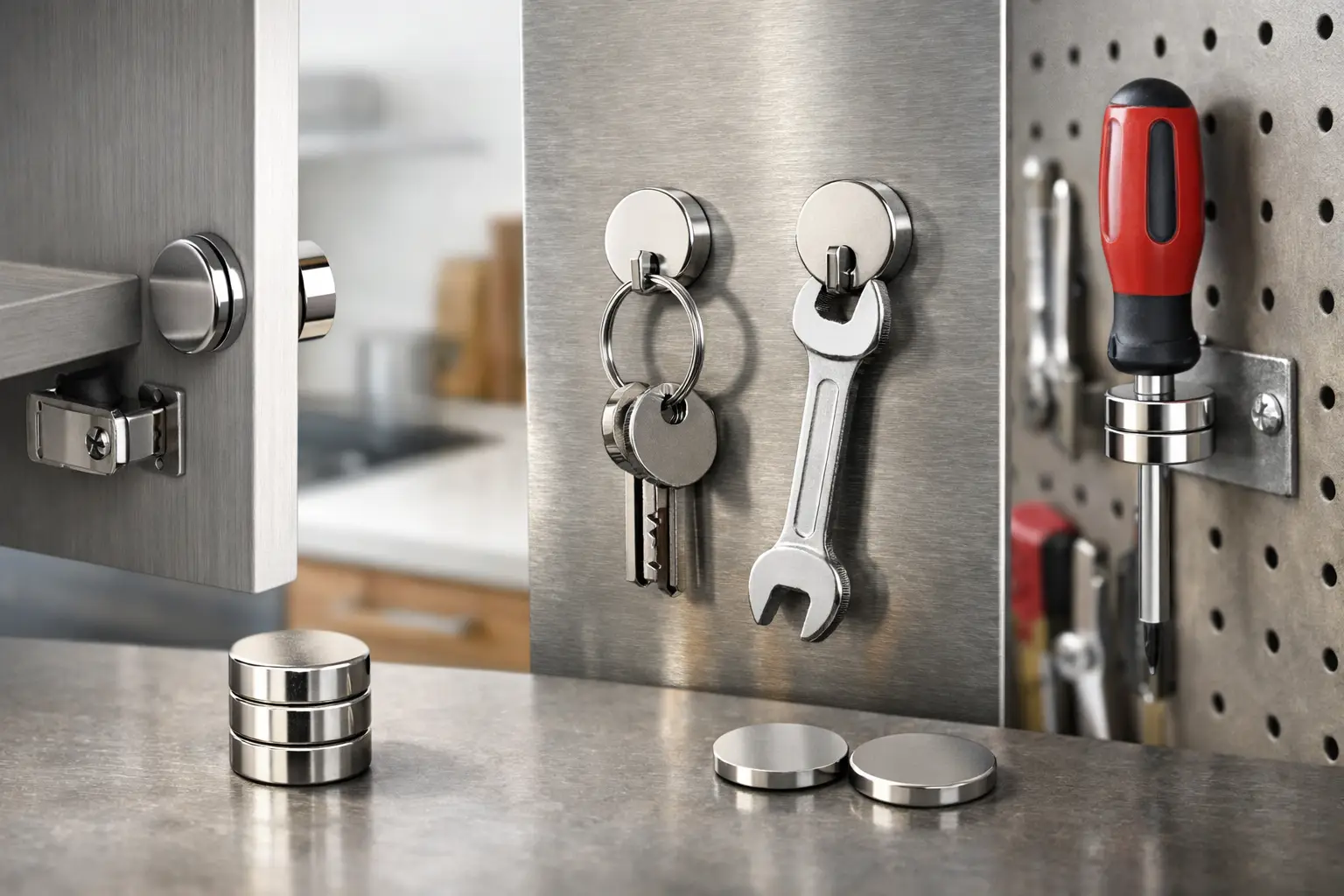
Strong Magnets for Fixing, Closures and Displays
A magnet that slips, rattles or fails to hold is more than an annoyance – it can spoil an otherwise well-made job. Strong magnets offer serious holding power in a compact size, making them a practical choice for clean, hidden and repeatable fixing across DIY, joinery, retail displays and workshop builds.
Neodymium magnets are the go-to option where ordinary ferrite magnets are not enough. Their high magnetic strength means a small disc, block or countersunk magnet can provide the secure hold needed for doors, panels, signs and removable fittings, without bulky catches or visible hardware.
What makes strong magnets different?
High-strength neodymium magnets are made from a neodymium alloy and are graded according to their magnetic performance. N52 is among the strongest commonly available grades, delivering superior pull performance for its size.
That does not mean the biggest pull rating is always the right answer. A magnet’s stated pull force is usually measured in ideal conditions: direct contact with a thick, flat steel plate. In a real installation, paint, timber, an air gap, an uneven surface or an angled pull can reduce holding force considerably.
For this reason, choose a magnet with enough spare strength for the job rather than selecting one that only just meets the expected load. A cupboard door that receives daily use, for example, needs a firm but practical closure. A removable tool holder or steel display panel may need a much stronger grip.
Choose the right magnet format
The shape of the magnet affects both how it fits and how it performs. Selecting the format first is often the quickest way to narrow down the right product.
Disc magnets for compact holding power
Disc magnets are a versatile choice for projects where space is tight. They are well suited to flush-fitting into timber, attaching lightweight panels, creating removable signs and making discreet catches. Larger diameters generally provide more surface contact, while thicker discs can offer increased pull strength.
For a neat fitted result, a drilled recess can allow the disc to sit below or level with the material surface. Take care when fitting, as brittle neodymium magnets can chip if snapped together or struck against steel.
Block magnets for broad contact
Block magnets are useful where a longer or wider contact area is needed. They work particularly well in cabinetry, jigs, workshop fixtures, display construction and custom closures. Their flat faces make positioning straightforward, and their rectangular form can sit neatly within routed channels or behind panels.
A block magnet is often the better option where a disc magnet would concentrate force in too small an area. For a long cabinet door, a wide panel or a purpose-built holding jig, the extra contact area can make the fixing feel more secure.
Countersunk magnets for screw fixing
Countersunk magnets are designed for projects that need a positive mechanical fixing. Their recessed hole allows a screw head to sit flush, helping to keep the surface tidy and avoiding a raised point that could interfere with contact.
They are a reliable choice for cabinet catches, removable access panels, retail fixtures and timber installations. The key detail is polarity: when using two magnets as a pair, check that the faces attract before fixing them in place. Fitting one the wrong way round turns a catch into a repeller.
Match pull strength to the application
Start with what the magnet must hold, then consider how it will be used. Lightweight cupboard doors and small access panels need controlled closure rather than maximum force. For heavier doors, larger panels or frequently handled fixtures, increase the magnet size or use more than one fixing point.
The receiving material matters just as much. A magnet achieves its best hold against clean, bare mild steel. Stainless steel is not always magnetic, aluminium is non-magnetic, and thin steel can limit the available pull. If you are fixing magnets to timber, plastic or another non-magnetic material, use a steel strike plate or a second magnet as the mating surface.
Keep the gap as small as possible. Even a few millimetres of separation can make a noticeable difference with high-strength magnets. This is especially relevant when magnets are fitted behind thick cabinet fronts or display panels.
Practical fitting advice for neodymium magnets
Plan the position before committing to adhesive or screws. Neodymium magnets are difficult to separate once brought together, and their force can cause damage to fingers, finishes and the magnets themselves if handled carelessly.
For bonded installations, use an adhesive suited to both the magnet coating and the material being fixed. Ensure surfaces are clean, dry and flat, then allow the adhesive to cure fully before applying load. Where a component will be pulled repeatedly, such as a cabinet door or removable panel, countersunk screw-fixed magnets are often the more dependable long-term choice.
Protect plated magnets from prolonged moisture and avoid using damaged or chipped magnets in exposed locations. Their protective coating helps resist corrosion, but it is not a substitute for a suitable installation environment.
A stronger, cleaner way to fix and close
The best magnetic solution is rarely the physically largest magnet. It is the one with the right format, enough reserve pull strength and a fitting method that suits the material and use case. Magman’s focused range of N52 disc, block and countersunk magnets makes it easier to specify a powerful, versatile fixing that performs properly once it is installed.
Before ordering, measure the available space, identify the mating surface and allow for any gap between components. Those three checks will help you choose strong magnets that hold securely and keep the finished job looking clean.