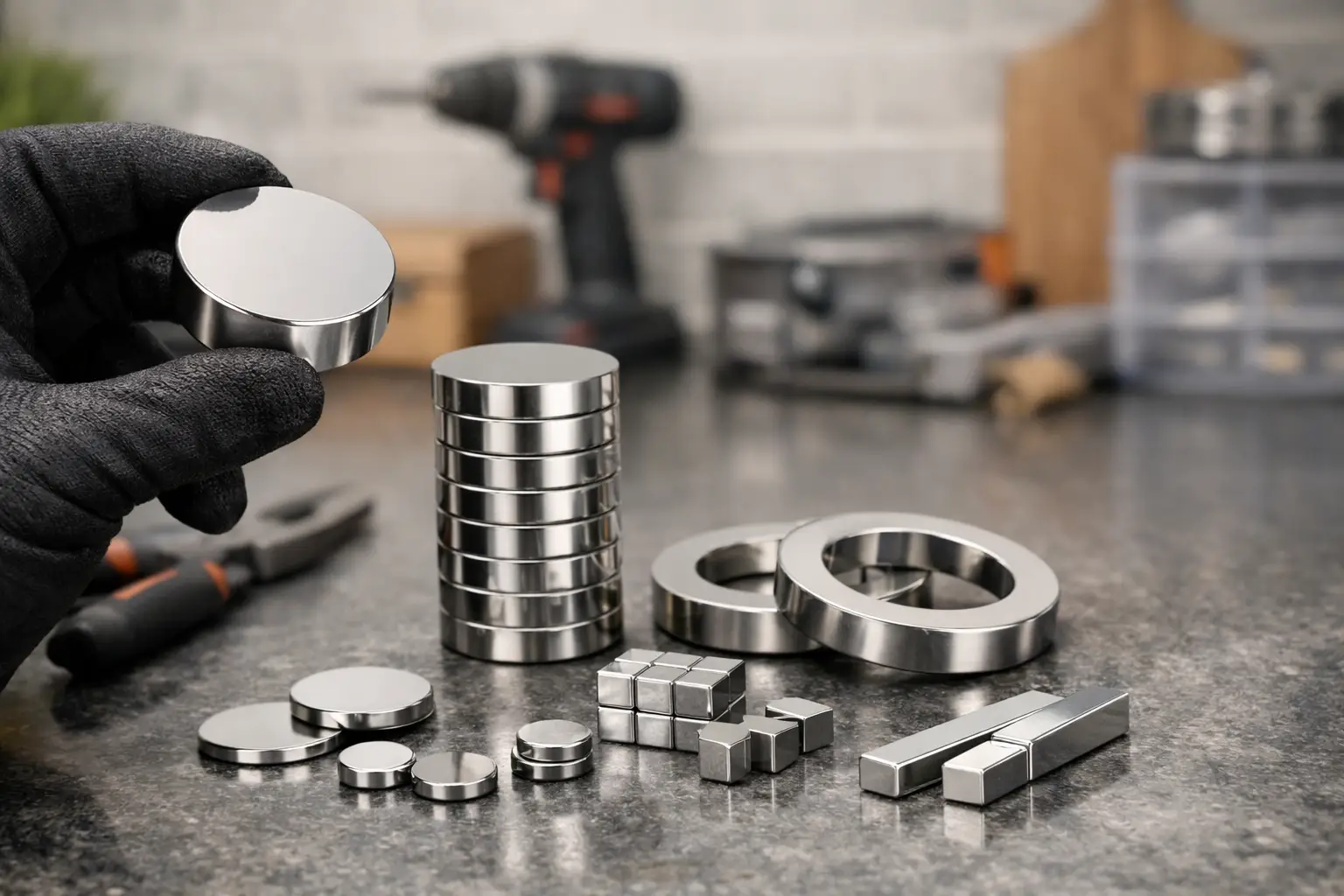
Magnet Handling for Powerful Neodymium Magnets
A small N52 magnet can close a cabinet, hold a display panel or secure a fitting with impressive force. That same strength means magnet handling deserves proper attention before the packaging is opened. Neodymium magnets are powerful and versatile components, but they are not ordinary fridge magnets. Poor handling can lead to trapped fingers, chipped magnet edges, damaged surfaces and a frustrating installation.
For DIY users, cabinet makers and tradespeople, the aim is simple: keep the magnet under control from bench to finished job. A little preparation protects the component, improves the quality of the fitting and makes superior pull performance work in your favour.
Why magnet handling changes with strength
The stronger the magnet, the less warning you get before it moves. A neodymium magnet can jump towards another magnet or a steel tool from farther away than expected. Once it starts moving, it accelerates quickly. That is why a magnet that seems easy to hold on its own can become difficult to manage when a second magnet, a steel vice or a metal workbench is nearby.
Size and shape matter as much as grade. Thin discs are often easier to separate than large blocks, yet can still snap together hard enough to crack. Larger block magnets create more leverage and can pinch skin severely. Countersunk magnets need additional care because the hole and thinner material around it can be vulnerable to impact or over-tightening.
Neodymium magnets are usually coated to help resist corrosion, but the magnetic material itself is brittle. They are not designed to be knocked together, dropped on concrete or used as a striking tool. Treat them as a precise fixing component rather than a piece of general hardware.
Prepare the work area first
The best magnet handling starts before the magnets are removed from their spacers. Clear a section of bench and move steel hand tools, loose screws, drill bits, blades and swarf away from the immediate area. A clean timber, plastic or cardboard-covered surface gives you more control than a metal bench.
Keep one magnet in hand or on the work surface at a time where possible. If your project uses a matched pair, leave the second magnet separated until the first one is fixed in position. This reduces the chance of an unexpected attraction across the bench.
It is also worth considering what sits around the work area. Keep strong magnets away from phones, bank cards, access cards, watches and electronic equipment. Anyone with a pacemaker, implanted defibrillator or other medical device should follow the device manufacturer’s guidance and keep a safe distance from powerful magnets. Do not leave magnets where children or pets can reach them. Swallowed magnets are a medical emergency, particularly if more than one has been swallowed.
Separating magnets without damage
Magnets supplied in stacks are often held apart with cardboard or plastic spacers. Keep these spacers. They make storage safer and prevent direct contact between magnets.
Avoid pulling two strong magnets directly apart by force. This gives poor control and can cause them to slip suddenly, snapping back together or into nearby steel. Instead, slide one magnet sideways from the stack, using the edge of a bench if necessary while keeping fingers clear of the closing gap. For larger magnets, work slowly and use a non-magnetic spacer to maintain separation as soon as one piece moves free.
Do not twist a thin disc magnet aggressively in an attempt to break the attraction. It can crack, and a chipped edge can reduce its appearance and leave a sharp surface. If the magnets are too difficult to separate safely by hand, the answer is not more force. Use a more controlled method, a larger non-magnetic lever or ask for assistance.
Keep fingers out of the pinch zone
Most magnet injuries happen at the final few millimetres, when two magnets or a magnet and a steel surface pull together. Never place fingers between them to line up the fit. Hold the magnet from its sides, use a timber or plastic positioning block, and let the component approach the surface under control.
For cabinet doors and catches, fit the magnetic catch body and strike plate separately. Test the alignment with the door nearly closed rather than allowing the parts to collide at full force. This is particularly useful when working with powerful catches, where a slight alignment error can still produce a strong hold but create an awkward opening action.
If you need to position a magnet in a recess, use a non-magnetic tool such as a wooden dowel, plastic scraper or suitably sized card jig. Steel screwdrivers and pliers are likely to be pulled off line at the worst moment. A simple jig is often quicker than trying to fight the magnetic field by hand.
Fitting countersunk magnets correctly
Countersunk neodymium magnets are a practical choice where a flush finish matters. They are well suited to cabinet doors, access panels, display units and removable covers. Their performance depends on accurate installation.
Pre-drill the fixing hole in the timber or substrate before bringing the magnet to the job. Use the correct screw head profile so it seats cleanly in the countersink. An unsuitable screw can sit proud, interfere with the mating surface or concentrate pressure around the hole.
Tighten by hand with care. Neodymium magnets can crack if a screw is driven too hard, especially if the mounting surface is uneven. The goal is a firm, flat fixing, not maximum torque. If the magnet rocks in its recess, correct the recess or use an appropriate non-magnetic packing material rather than forcing the screw tighter.
Check polarity before committing to the second magnet. Mark the outward-facing side of the first component with a pencil or a small piece of tape, then test the second magnet before drilling. This simple step prevents the costly mistake of installing two magnets so that they repel each other.
Store magnets so they stay usable
Good storage is part of safe magnet handling, especially in a workshop where magnets may be needed repeatedly. Keep them in their original packaging where practical, with spacers in place. A labelled plastic container or sturdy cardboard box is preferable to a metal tin, which can turn every retrieval into a battle with the container.
Store different sizes and shapes separately. A mixed box of discs, blocks and countersunk magnets is more likely to result in chips, lost spacers and accidental attachments. It also makes product selection slower when you are in the middle of a build.
Moisture deserves attention too. Although plated neodymium magnets are suitable for many indoor applications, damaged coating can expose the magnet material to corrosion. Store them dry, avoid leaving them in wet work areas and replace badly chipped magnets where appearance or long-term reliability matters.
Match the magnet to the job
Safe handling and reliable results both improve when the magnet is correctly specified. More pull strength is not always the best answer. A very strong magnet can make a lightweight cupboard door difficult to open, pull a thin panel out of alignment or demand more careful finger clearance. Conversely, a magnet that is too small may hold only under ideal conditions and disappoint once the fitting is used daily.
Consider the gap between the magnet and the steel target or matching magnet. Paint, laminate, fabric, air gaps and uneven surfaces all reduce effective holding force. The thickness of the steel target also matters. A substantial steel plate generally gives better performance than a thin strip, while stainless steel may offer little or no attraction depending on its grade.
Choose disc magnets where a compact round fitting suits the design, block magnets where more contact area is useful, and countersunk magnets where screw fixing and a flush face are required. Magman’s focused range makes it easier to select a super-strong format for practical fixing, fastening and closure work without searching through general-purpose hardware.
If a magnet chips or traps a finger
Stop work if a magnet cracks, chips or loses part of its coating. Separate the pieces carefully, keeping them away from other magnets and metal tools. Small fragments can be sharp and may still be strongly magnetic. Clear them with care and dispose of damaged components rather than fitting them into a job where they may fail or corrode.
For a minor pinch, separate the magnets or move the magnet away from the steel surface without pulling skin through the gap. Cool the area and assess the injury. Seek medical advice for severe pain, persistent numbness, significant swelling, broken skin or a suspected fracture. Strong magnets can cause more damage than the size of the component suggests.
Powerful magnets reward careful planning. Clear the bench, separate them with control, protect the pinch zone and test alignment before final fixing. That approach keeps your magnets looking better, working harder and delivering the dependable hold your project needs.