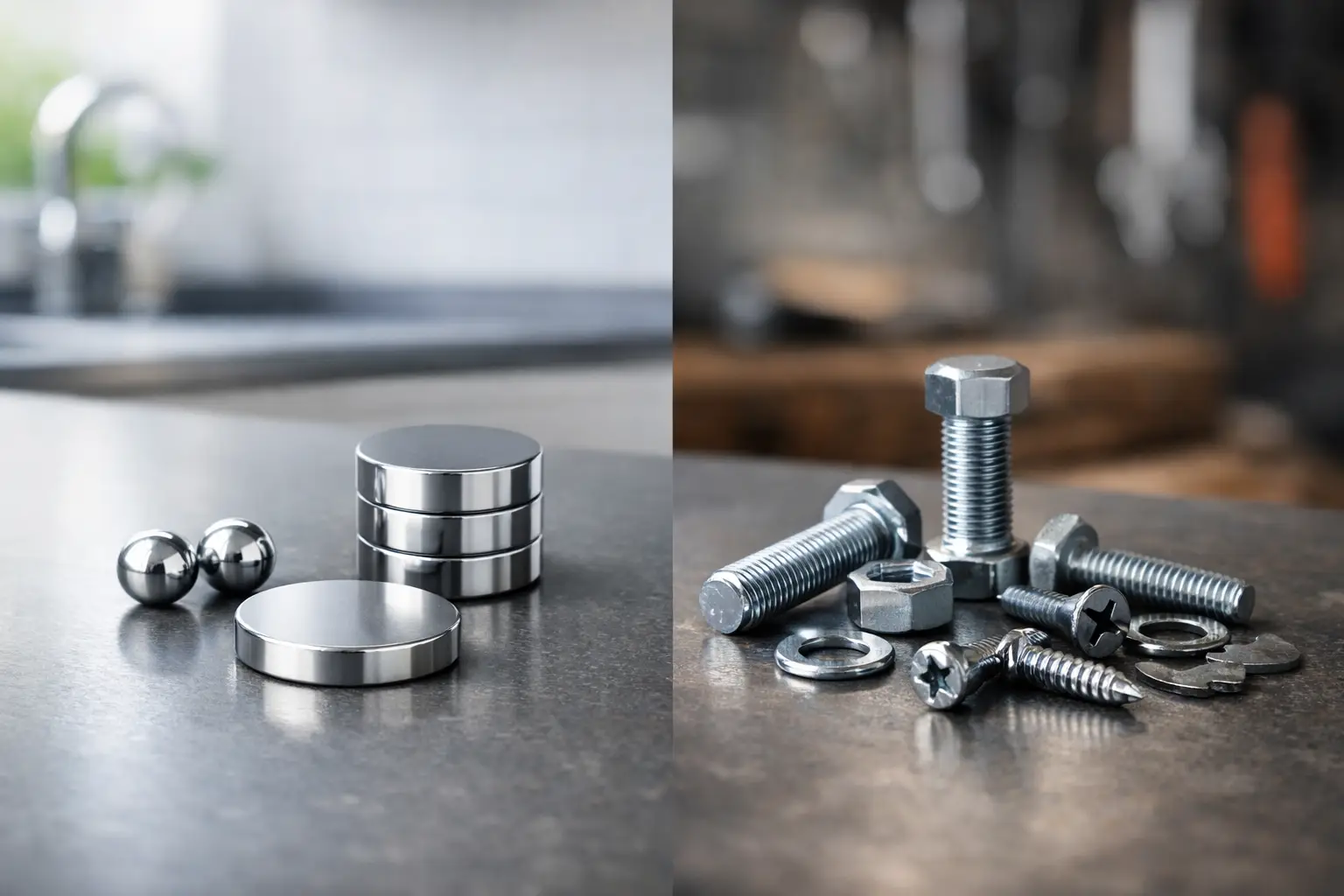
Magnetic Versus Mechanical Fasteners Compared
A cabinet door that must shut cleanly dozens of times a day needs a different fixing strategy from a bracket that carries weight permanently. That is the real question in magnetic versus mechanical fasteners: not which option is universally stronger, but which one delivers the right hold, access and finish for the job.
Mechanical fasteners such as screws, bolts, rivets and clips create a fixed physical connection. Magnets create a removable attraction between two components. Both have a place in workshops, joinery, retail displays and fabrication work, but treating them as interchangeable can lead to loose doors, marked surfaces or fittings that are far harder to service than they need to be.
Magnetic versus mechanical fasteners: the key difference
A mechanical fastener resists movement by clamping, gripping or locking materials together. A screw bites into timber or uses a thread in metal. A bolt clamps parts around a hole. A rivet forms a permanent head. Once fitted correctly, these fasteners can handle substantial tension, shear and vibration, particularly when the right material, size and fixing method are chosen.
A magnetic fastener holds by magnetic attraction. In a typical cabinet application, a magnet on the frame meets a steel strike plate on the door. The door stays closed without a visible latch and opens with a controlled pull. There is no need to align a hook, turn a catch or remove a screw every time access is required.
That simple difference changes the user experience. Mechanical fasteners are generally the better choice for permanent or load-bearing assemblies. Powerful neodymium magnets are particularly effective where a part must be held securely yet removed, opened or repositioned quickly.
Where magnetic fasteners earn their place
Magnetic fixing is often chosen because it keeps the finished item clean and easy to use. A magnetic catch can close a cupboard, access panel or display unit without an obtrusive handle or latch mechanism. Disc and block magnets can hold removable covers, signage, tools, jigs and retail graphics where repeat access matters.
For cabinet makers, magnetic catches provide a practical solution when a door needs a positive close but does not need a lock. They are compact, quiet and easy to conceal. For shopfitters, magnetic mounts can make seasonal graphics and removable panels faster to change without adding visible hardware to the face of the display.
The advantage becomes clearer when servicing is likely. A screwed panel may require several fixings to be removed and kept safe before access is possible. A magnetic panel can come away cleanly, provided it has a sensible pull point and the magnets have been selected for the panel weight and expected use.
High-strength N52 neodymium magnets are useful here because they offer superior pull performance from a compact size. This helps when space behind a panel or inside a cabinet is limited. It does not mean that the smallest magnet is always the right answer. Extra holding force is valuable only when users can still open the fitting safely and comfortably.
Where mechanical fasteners remain the better choice
If a connection supports weight, keeps components aligned under load or is safety-critical, use an appropriate mechanical fixing. Shelves, wall-mounted units, structural frames, machine guards and overhead fittings need a fastening method designed for the forces involved. Magnets should not be relied on as the sole means of support in these applications.
Mechanical fixings are also stronger when force acts sideways. Magnet pull ratings usually describe direct, straight-line separation from a thick, clean steel surface. In real installations, a panel may slide, twist or be knocked sideways. That is shear force, and it can overcome a magnetic hold more readily than a direct pull test suggests.
Vibration and movement matter too. A bolted joint, correctly tightened and specified, can resist continuous movement far better than a magnetic connection that is repeatedly nudged out of position. Where two parts must remain precisely located, screws, dowels, locating pins or a formed lip should do the alignment work.
Permanent security is another dividing line. A magnet can hold a door shut, but it is not a lock. If access must be restricted, use a lockable mechanical catch or another security measure rather than relying on holding force alone.
Holding force is not the whole specification
The most common mistake with magnets is choosing by pull strength alone. A quoted pull force is useful for comparison, but actual performance depends heavily on the application.
A magnet gives its best pull when it meets a flat, thick ferrous surface with no gap. Paint, laminate, veneer, powder coating, adhesive, air gaps and a thin steel strike plate all reduce the available attraction. Even a small gap can have a noticeable effect. If a cabinet door sits proud of the frame, or a sign has a protective layer between magnet and steel, allow for a meaningful loss of holding power.
The receiving material matters as much as the magnet. Aluminium, brass, copper and most grades of stainless steel are not suitable magnetic targets. A steel strike plate or compatible ferrous mounting surface is normally required. Thin steel may saturate and provide less hold than expected, so a larger or thicker strike plate can improve performance.
Orientation matters as well. A magnet holding a panel vertically is dealing mainly with shear. In that case, add a mechanical ledge, lip, pin or locating feature to carry the weight. The magnets can then keep the panel closed and rattle-free rather than carrying the entire load.
Choose the right format for the fitting
The best magnetic solution is often a hybrid one: mechanical hardware for position and load, magnets for closure and quick release. A removable timber panel, for example, can sit on a bottom rail or locating dowels while magnets hold its top edge against the frame. The result feels secure without making future access difficult.
Countersunk magnets are useful where a flush mounting face is required. A screw secures the magnet, while the magnetic face provides the removable hold. Take care during installation: neodymium magnets are hard but brittle, and overtightening a countersunk screw can crack them. Use a properly sized countersunk hole, tighten by hand with control, and avoid forcing the magnet onto an uneven surface.
Disc magnets suit compact, face-to-face holding applications and can be recessed into timber, plastic or fabricated components. Block magnets provide a broader contact area and are often useful in catches, jigs and rectangular housings. Purpose-made magnetic catches are usually the quickest route for cabinet doors and access panels because the magnet, housing and strike plate are designed to work together.
Adhesive mounting can be useful for light-duty applications or surfaces that cannot be drilled, but it requires realistic expectations. The adhesive bond must withstand the pull of the magnet as well as normal use, temperature changes and surface contamination. For demanding work, a screw-fixed or mechanically retained magnet is the more dependable choice.
A practical way to decide
Start with the function of the connection. If it must never release during normal use, carries significant weight or protects people or equipment, select a mechanical fastener designed for that duty. If it needs regular, tool-free access and a clean appearance, magnetic fastening is often the better option.
Then consider how it will fail. A cupboard door that opens too easily is inconvenient. A heavy panel that drops when knocked is unacceptable. Think about direct pull, sideways load, vibration, the number of opening cycles and whether children, customers or staff will be using the item.
Finally, test the assembly rather than the magnet in isolation. Fit the intended strike plate, surface finish, gap and mounting method. Open and close the door or panel repeatedly. Check that the hold feels positive, the release force is sensible, and the components cannot slide out of position. This small check prevents most disappointing installations.
Finish, maintenance and long-term use
Magnets have fewer moving parts than many latches, which can make them a tidy, low-maintenance closure option. However, they are not maintenance-free in every environment. Dust or metal swarf can gather on exposed magnetic faces, especially in workshops. Wipe them clean so the surfaces meet properly.
Neodymium magnets are commonly coated to help protect against corrosion, but damage to the coating and prolonged damp conditions can shorten service life. For exterior, wet-area or high-temperature applications, check that the magnet type, coating and mounting arrangement suit the environment. A standard indoor magnetic catch may not be the right component for a gate, outdoor sign or heated enclosure.
Magman focuses on powerful, versatile neodymium magnets and magnetic catches for practical UK projects, from compact cabinet closures to custom workshop and display fittings. Selecting the correct format and mounting it well is what turns that strength into dependable day-to-day performance.
The most effective fastening is often not magnetic or mechanical alone. Let mechanical features carry the load and control alignment, then use magnetic force where it adds speed, clean lines and convenient access. That approach produces fittings that feel purposeful every time they are used.