Trends in Retail Display Magnets for 2026
A shop display can lose value the moment it becomes difficult to change. The leading trends in retail display magnets are therefore less about novelty and more about giving retailers, fit-out teams and makers a faster, cleaner way to mount signs, panels, products and point-of-sale material. Powerful neodymium magnets are helping displays work harder while reducing visible fixings and the time spent resetting a space.
For anyone building a retail unit, the attraction is straightforward: a compact magnet can provide serious holding power without permanent drilling, bulky brackets or untidy adhesive residue. But the right solution depends on the display material, the load, the mounting surface and how often the layout needs to move.
Flexible layouts are driving retail display magnets
Retailers are under pressure to refresh ranges, promotions and seasonal messaging more often. A fixed display built around screws and adhesive can make those changes slow and expensive. Magnetic mounting supports a more adaptable approach, particularly for shelf-edge signs, removable graphic panels, lightweight product holders and display accessories.
This does not mean every element of a retail fixture should be removable. Core framework, heavy shelving and safety-critical installations still need suitable mechanical fixings. The opportunity lies in the parts of the display that change regularly. Magnetic fixings let teams replace those parts quickly, helping a unit stay current without creating unnecessary workshop or site work.
For small retailers and pop-up operators, that flexibility can be especially valuable. One well-designed magnetic display system can be reused across product launches, markets, concessions and short-term retail spaces. Instead of producing a new fixture for every campaign, the base structure remains in place while the visible merchandising changes.
Cleaner finishes with hidden magnetic fixing
Visible screws, clips and strips can distract from a carefully designed display. One of the strongest retail display magnet trends is the move towards concealed fixing, where the mechanism supports the display without competing with it visually.
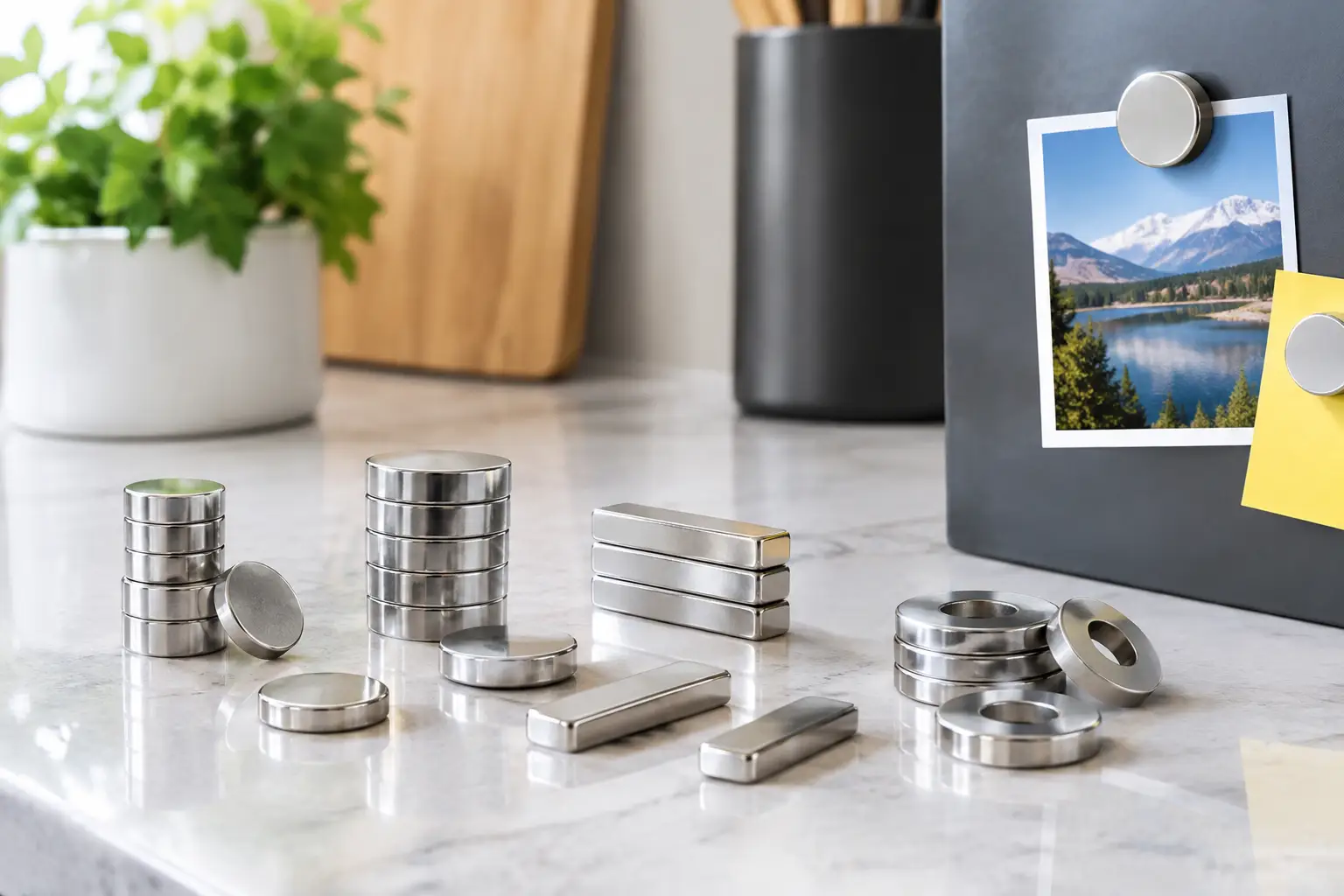
Neodymium disc and block magnets are useful here because they offer superior pull performance from a small footprint. They can sit behind acrylic, timber-faced panels, printed boards or fabric-covered display components, provided there is a suitable steel counterpart or opposing magnet. The result is a cleaner face with no obvious hardware around the product or message.
Countersunk magnets have a particular role where a secure, flush installation is required. A countersunk hole allows the magnet to be fixed with a screw while keeping the fixing head level with the magnet surface. This can be practical for timber display units, removable cabinet panels and retail furniture where positioning must remain consistent over repeated use.
The trade-off is planning. Concealed magnets need accurate placement before panels are cut or finished. A few millimetres out can leave graphics crooked, doors misaligned or the pull too weak to feel dependable. Templates, test pieces and careful polarity marking save time before a full installation is made.
Strength is useful only when it is controlled
More pull strength is not automatically better. A magnet that is too powerful for a small sign can make removal awkward and may risk damaging delicate print finishes, acrylic or paint during frequent changes. Conversely, a light-duty magnet may hold well in a static sample but slip when customers handle the display.
The working gap matters as much as the magnet grade. Paint, laminate, acrylic, double-sided tape and air gaps all reduce holding force. A thin steel plate directly against the magnet will hold far more securely than a steel surface sitting several millimetres behind a panel. Test the finished assembly, not just the magnet against bare steel.
Modular merchandising is replacing one-use fixtures
Retail displays increasingly need to accommodate changing product sizes, product stories and stock levels. Magnetic components make modularity more practical. A steel-backed board can accept repositionable product hooks, sign holders, shelf labels or small containers, allowing the display to evolve without new holes appearing each time the layout changes.
This is particularly effective for accessories, cosmetics, tools, gifts and samples where the product arrangement may need regular adjustment. It can also suit showroom environments, where customers benefit from seeing different finishes, options or configurations side by side.
A modular approach does require discipline. Every interchangeable component should have a defined position, enough contact area and a safe load limit. If the display is customer-facing, consider knocks, vibration and repeated handling rather than relying on a simple vertical pull test. Shear force can be a limiting factor when a magnet holds an item against a vertical steel surface, so a small locating lip, peg or ledge can make the whole system more secure.
Better materials are expanding where magnets can be used
Magnetic retail display systems depend on compatible surfaces, and this is shaping material choices. Mild steel remains a practical and cost-effective counterpart for many applications. It can be hidden behind decorative finishes or incorporated into frames, panels and display backboards.
Where steel is not available, a paired-magnet arrangement may work, but it needs careful alignment and consideration of polarity. Magnets will not adhere to aluminium, brass, most stainless steels, wood, glass or plastic on their own. This catches out plenty of otherwise sound display ideas.
Designers are also using magnets alongside familiar materials rather than replacing them. A timber plinth may use an embedded magnet to secure a removable acrylic riser. A painted metal display frame may accept changeable product cards. A cabinet unit may use magnetic catches to keep doors closed neatly without a visible latch. The strongest installations combine magnetic convenience with sensible physical support.
Reusable displays are becoming a practical sustainability choice
Retail sustainability is often discussed in terms of packaging and materials, but fixture reuse matters too. Permanent adhesive, drilled panels and single-campaign graphics can turn a usable display into waste after one promotion. Magnetic attachment makes it easier to retain the base fixture and replace only the message or product-specific element.
That does not make magnets a complete environmental answer. Neodymium magnets should be selected thoughtfully, protected from corrosion where needed and kept in service for as long as possible. Their value is in durability and repeat use, not in treating them as disposable components.
For fit-out teams, this can also reduce downtime. Panels can be removed for cleaning, repairs or rebranding, then refitted without filling holes, repainting surfaces or waiting for adhesive to cure. The commercial benefit is often as compelling as the material saving.
Faster installation needs dependable specification
The demand for quick-change displays has increased interest in pre-planned magnetic fixing kits. Rather than choosing a magnet by appearance, successful projects specify the format around the job: disc magnets for compact, direct contact; block magnets for larger contact areas or recessed channels; and countersunk magnets for screw-fixed positioning.
Before ordering, establish the real weight of the component and include a sensible safety margin. Consider whether the load hangs vertically, sits horizontally or will be pulled by customers. Check the thickness and type of the receiving material, then account for coatings and gaps. Finally, decide how the item will be removed. A small finger gap, pull tab or edge detail can turn a frustrating display change into a quick one.
High-strength N52 neodymium magnets can provide powerful, versatile performance in compact retail fittings, but they require care during handling. Keep magnets away from electronic devices, bank cards and pacemakers, and take particular care with larger magnets that can snap together unexpectedly. For public-facing displays, ensure magnets are fully enclosed or securely fixed so loose components cannot become a hazard.
What retail teams should prioritise next
The best magnetic display is rarely the one with the highest stated pull force. It is the one that looks clean, remains secure in normal use and can be changed without slowing the team down. That may mean a modest disc magnet for a graphic card, a countersunk option for a timber panel, or a larger block magnet combined with a mechanical locator for a heavier component.
Magman supplies focused, high-strength magnetic hardware for projects where holding performance matters. For retail makers, installers and shopfitters, choosing the right format early can prevent weak displays, damaged finishes and avoidable rework.
As retail environments continue to change more frequently, the most useful fixtures will be those designed to change with them. A properly specified magnetic fixing gives a display the strength to stay put and the flexibility to move when the next idea arrives.