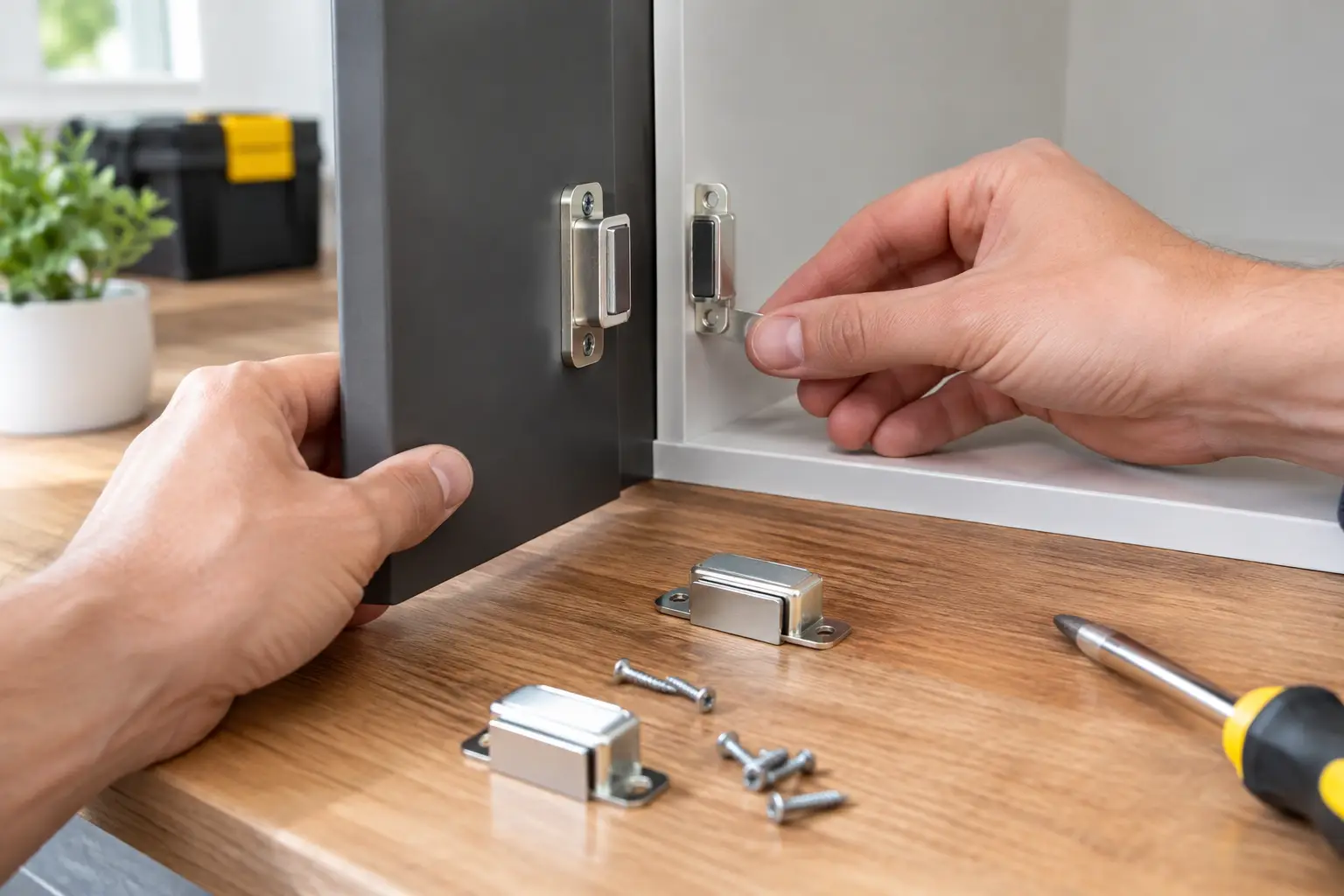
How to Align Magnetic Closures Accurately
A magnetic closure can be extremely strong and still perform badly if its two halves meet even a few millimetres out of position. Doors sit proud, catches only grip at one corner, and a carefully made cabinet ends up needing a push to stay shut. Knowing how to align magnetic closures properly is what turns powerful magnets into a dependable, clean-closing fitting.
The principle is simple: position the magnet and its mating plate or opposing magnet so they meet squarely, with the smallest practical gap. The method varies slightly between cupboard catches, box lids and flush-mounted neodymium magnets, but careful marking and a dry fit prevent most problems.
Start with the right closure and mounting position
Before fitting anything, decide what the closure needs to do. A light jewellery box lid needs a controlled hold that opens easily. A tall kitchen cabinet door, retail display panel or workshop enclosure may need a much stronger pull. More strength is not always better: an oversized magnet can make a lightweight door difficult to open or place unnecessary stress on hinges and fixings.
Magnetic catches are often the straightforward option for cabinets and doors. They combine a magnet in a housing with a steel strike plate, making them more tolerant of minor adjustment. For a discreet, flush finish, paired neodymium disc or block magnets can be set into timber, plastic or another non-magnetic material. Countersunk magnets are useful where a screw-fixed installation is preferable.
Place the closure where the door is naturally most stable. On a small box, this is usually the centre of the opening edge. On a cabinet door, it is commonly near the top or bottom corner opposite the hinges. Wide, warped or heavy doors may need two closures, fitted at matching positions to prevent one side from standing open.
How to align magnetic closures step by step
The most reliable approach is to fix one side first, then use it to mark the exact position of the other. Do not measure both positions independently unless you have a precise jig. Tiny differences in door gaps, hinge movement and material thickness can make accurate measurements misleading.
Fit the magnet side first
With a magnetic catch, mount the magnet housing inside the cabinet, keeping it level and far enough back that the door can close without striking the housing. Do not fully tighten slotted screw holes yet. A little adjustment is valuable until the final test.
For recessed neodymium magnets, drill or rout the first recess carefully. The magnet should sit flush or just below the surface, never proud. A magnet that protrudes can force the lid or door away from its mating surface and reduce holding force. Check the depth using an offcut of the same material before cutting into the finished piece.
If using countersunk magnets, make sure the screw head sits flush in the countersink. A proud screw head changes the closing gap and can stop the magnets meeting squarely.
Transfer the mating position, rather than guessing it
Close the door or lid with the first component in place, then transfer its position directly onto the mating surface. A small piece of masking tape, a dab of removable marking compound or a pencil mark on the edges of the strike plate can all work well.
For a magnetic catch, a practical method is to apply a small piece of double-sided tape to the back of the steel strike plate. Let the magnet hold the plate in its natural position, close the door gently, then open it. The plate remains stuck exactly where it needs to be. Mark the holes, remove the tape and screw the plate into position.
For two separate magnets, use the same idea but take extra care with polarity. Allow the second magnet to attach to the first before marking its recess or fixing point. This guarantees the faces will attract. Mark one face with a pen before separating the pair, especially if several identical magnets are on the bench.
Set the gap before final fixing
Magnetic pull falls quickly as the distance between the magnet and its target increases. Paint, laminate, veneer, felt pads and a door gap all add separation. Even a powerful N52 neodymium magnet will lose a noticeable amount of useful hold if it is set too far back.
Aim for the smallest gap that allows the door or lid to close freely. On a recessed installation, flush faces are usually best. On a surface-mounted catch, follow the fitting geometry of the housing and strike plate. If the closure is fitted behind a panel, test through the actual material thickness rather than relying on a nominal measurement.
A thin non-magnetic spacer can help where needed. For example, if a catch pulls a light cabinet door too aggressively, a small plastic packing piece behind the strike plate can soften the action. Do not use a steel washer as a spacer without testing it first, as it may alter the magnetic circuit and change the result.
Check alignment from every direction
A closure that works when pushed by hand may not work consistently when the door is used normally. Test it by closing the door from the handle, from the lower edge and with only gentle pressure. Watch for the door shifting sideways as the magnet takes hold. That movement usually means the two parts are not centred or are meeting at an angle.
The closure should pull the door into its final position, not drag it across the frame. If it pulls to one side, loosen the adjustable component and move it in very small increments. With strong neodymium magnets, one or two millimetres can be enough to change the feel completely.
Also check the reveal around the door. A magnetic closure cannot correct poor hinge adjustment or a twisted door. If the gap is uneven before the magnet engages, set the hinges first. The magnet should retain a correctly fitted door, not force a misaligned one into place.
Avoid the fitting mistakes that weaken a magnetic closure
The most common mistake is installing both halves based on a ruler alone. It can look accurate on paper but fail when real-world tolerances are involved. Transfer-marking the second component is quicker and usually more precise.
Another issue is fitting magnets with reversed polarity. This affects paired magnet installations, not magnetic catches with steel plates. Always test the faces before applying adhesive or drilling the second recess. If magnets snap together unexpectedly, keep fingers clear. Small neodymium magnets can pinch hard, while larger sizes can damage brittle materials if allowed to collide.
Adhesive-only fixing also needs care. Epoxy can provide a strong bond in a clean, correctly sized recess, but the magnet must not be under tension while the adhesive cures. Roughen smooth surfaces lightly where suitable, remove dust and oil, and hold the magnet at the right depth with a non-magnetic spacer. For frequently used doors, screw-fixed countersunk magnets or catches offer more confidence over time.
Finally, do not ignore the material around the closure. Thin MDF can split around screws, soft timber can compress, and a steel hinge or nearby metal bracket can influence the magnetic path. If pull strength seems inconsistent, inspect what sits behind and around each component before choosing a stronger magnet.
Choose strength for the finished job
A pull-force figure is useful for comparison, but it is measured under ideal conditions: direct contact with clean, thick steel and a straight pull. A cabinet closure rarely works in those conditions. Real performance depends on the air gap, mounting depth, angle of contact, surface material and how the door is opened.
For this reason, choose a closure with sensible headroom rather than relying on the published pull figure alone. Magman’s high-strength neodymium magnets provide compact, powerful options for custom closures, but the best result still comes from correct alignment and a close, square mating surface.
When the fitting is right, a magnetic closure should feel almost unremarkable: the door closes cleanly, stays shut and opens without a fight. Take the extra few minutes to transfer-mark the second half and test before final tightening. That small step is usually the difference between a closure that merely works and one that performs reliably for years.