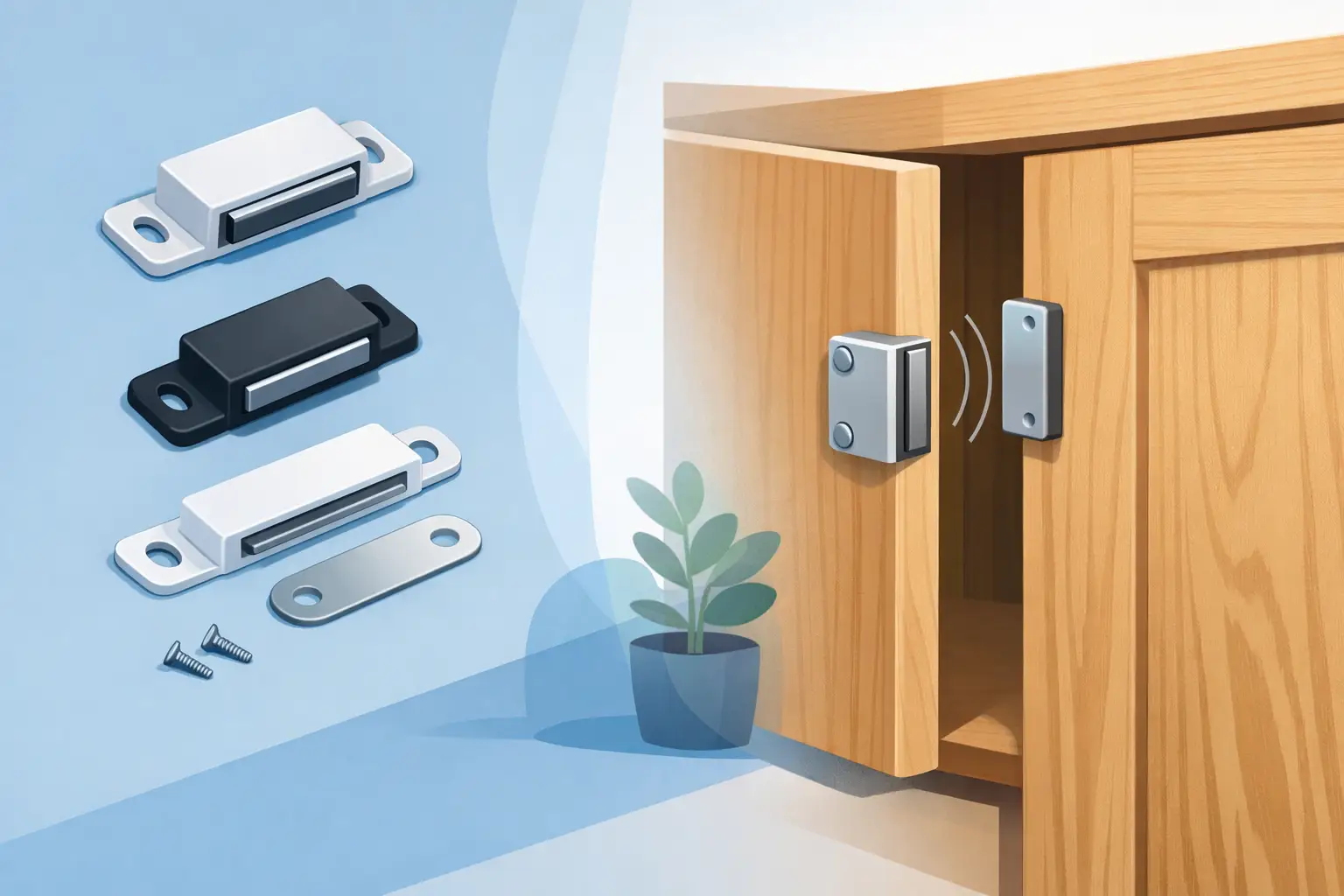
Choosing Replacement Magnetic Door Catches
A cupboard door that will not stay shut is rarely a big repair, but it is an annoying one. In most cases, the fix is simply choosing the right replacement magnetic door catches rather than forcing a worn latch to keep working. Get the size, pull strength and fixing style right, and the door closes cleanly, holds firmly and opens without fuss.
Why magnetic catches fail in the first place
Most failed catches are not dramatic. They gradually lose grip, shift out of alignment, crack around the fixing points or prove too weak for the door they were asked to hold. That is especially common on heavier cabinet doors, frequently used kitchen units, shop fittings and workshop storage where the catch is opened and closed all day.
Cheap catches also tend to cause repeat problems. A weak magnet might seem acceptable on day one, but if the strike plate is not meeting it squarely, or the door has a little movement in the hinges, holding power drops quickly in real use. That is why replacing like-for-like is not always the best move. Often, the better option is a stronger, better-made magnetic catch that matches the job properly.
What to check before buying replacement magnetic door catches
The quickest way to avoid ordering the wrong part is to look at the whole closing setup, not just the failed catch. Start with the door itself. A light bathroom cabinet door needs far less holding force than a solid wood cupboard, a wardrobe door or a retail display unit that gets constant use.
Next, check the mounting space. Some catches sit neatly behind a face frame or inside a cabinet side panel, while others need a little more depth or width than the original fitting. Measure the existing catch, note the screw hole spacing if you want a close replacement, and look at how the strike plate meets the magnet when the door closes.
Alignment matters as much as strength. If the hinges have dropped slightly, fitting a more powerful catch may mask the issue for a while, but it will not fully solve poor contact between the magnet and plate. The strongest catch in the world will not perform properly if the door closes off-centre.
Strength matters – but only when it is matched to the job
This is where many buyers either under-specify or overdo it. If the magnet is too weak, the door drifts open. If it is too strong for a small lightweight door, opening can feel jerky and unnecessary, and repeated force may stress the fixings over time.
For most domestic cupboards and light cabinet doors, a compact magnetic catch with dependable pull is enough. Heavier doors, larger panels, utility cupboards and commercial joinery usually benefit from a stronger magnetic unit with a more positive hold. In trade settings, where reliability matters more than shaving pennies off the part cost, superior pull performance is usually the right choice.
Neodymium magnetic catches are especially useful when space is limited but strong holding power is needed. They give a powerful hold from a compact format, which is ideal when you want a tidy fitting without moving up to a bulky latch.
Different fixing styles and where they work best
Not all replacement catches fit in the same way, and that affects both installation time and long-term reliability. Surface-mounted catches are common because they are straightforward to fit and easy to replace. They suit kitchen cabinets, wardrobes, utility units and general furniture repairs where access is simple.
Countersunk magnetic catches are often the neater option when you want a secure screw fit and a cleaner finish. They are particularly useful in cabinetry, shop displays and fabricated units where appearance matters almost as much as performance.
There is also the question of the strike plate. A flat, well-positioned plate gives the magnet the best chance of full contact. If the plate is bent, loose or too far from the magnet face, the catch may feel weak even when the magnet itself is perfectly sound. Replacing both parts together is often the smarter route.
When a standard catch is not enough
Some jobs need more than a simple cupboard catch. Workshop doors, access panels, retail units and bespoke furniture can put more demand on the closure than a standard plastic-bodied catch is designed to handle. That is where stronger magnetic hardware becomes the better fit.
If the door is prone to vibration, frequent opening, or slight misalignment from regular use, a stronger magnetic catch can give a more dependable result. The key is not just raw pull force, but consistency. A quality catch should close the same way on the hundredth use as it did on the first.
This is where specialist magnetic suppliers tend to offer a clearer advantage than general hardware ranges. Instead of choosing between several similar-looking catches with vague descriptions, you can select by strength, format and intended use. For buyers who need confidence in performance, that makes the process faster and more reliable.
How to fit replacement magnetic door catches properly
A magnetic catch is a small component, but fitting still deserves care. Start by removing the old catch and checking the mounting surface. If screw holes are worn, fill and re-fix where needed so the new catch sits firmly. A catch that can move even slightly will lose performance.
Before fully tightening anything, test the closed position. The magnet and strike plate should meet squarely, with no sideways drag. If the plate is landing too high or low, adjust it before final fixing. This is especially important on cupboard doors that have developed a slight sag over time.
For heavier doors, use suitable screws and avoid relying on tired chipboard fixings if they have already pulled loose once. A super-strong magnetic catch will only perform as well as the material holding it in place. In some cases, moving the catch to sound material a short distance from the original position gives a far better result than reusing damaged holes.
Choosing catches for kitchens, wardrobes and fitted furniture
Different furniture types place different demands on the catch. Kitchen cabinet doors are used constantly, often with one-handed opening and closing, so the catch needs to feel positive without becoming awkward. Wardrobes and fitted bedroom furniture usually benefit from a slightly firmer hold, especially on taller doors that can shift a little through normal use.
For utility rooms, workshops and understairs storage, practicality tends to matter more than a hidden finish. A durable, stronger catch is usually the smarter option than the cheapest replacement on the shelf. If the unit stores tools, cleaning products or heavier items, a secure closed door is simply more useful day to day.
Bespoke joinery and retail displays are a little different. Here, appearance, compact size and repeatable performance all matter. A small but powerful magnetic catch can keep the closure discreet while still giving a confident hold.
A note on material quality and durability
The magnet gets most of the attention, but the housing matters too. A strong magnet inside a flimsy body is still a weak product overall. Over time, lower-quality housings can crack, deform or allow movement around the fixing points, especially in busy environments.
Better catches combine powerful magnets with solid construction and dependable finishing. That gives you a more durable fitting, more consistent closing action and less chance of replacing the same part again a few months later. For trade buyers and serious DIY users, that is usually the difference between a quick fix and a proper one.
If you are comparing options, it is worth looking beyond basic dimensions. Think about how often the door is used, how heavy it is, and whether the catch is being fitted in a dry indoor cabinet or a more demanding working environment. The right choice depends on the application.
Replacement magnetic door catches for a stronger fix
The best replacement magnetic door catches do not just copy the old part. They improve the result. That might mean more holding force for a heavier door, a better fixing style for the cabinet construction, or a more compact neodymium option where space is tight but performance still matters.
For buyers who want straightforward, powerful and versatile magnetic hardware, a specialist range makes that choice easier. Magman focuses on strong, practical magnetic products built for real fixing and closure jobs, which is exactly what matters when a catch needs to work properly and keep working.
If your cabinet door is drifting open, rattling or refusing to line up cleanly, treat the replacement as a chance to fit something better rather than simply fitting the same weak part again.