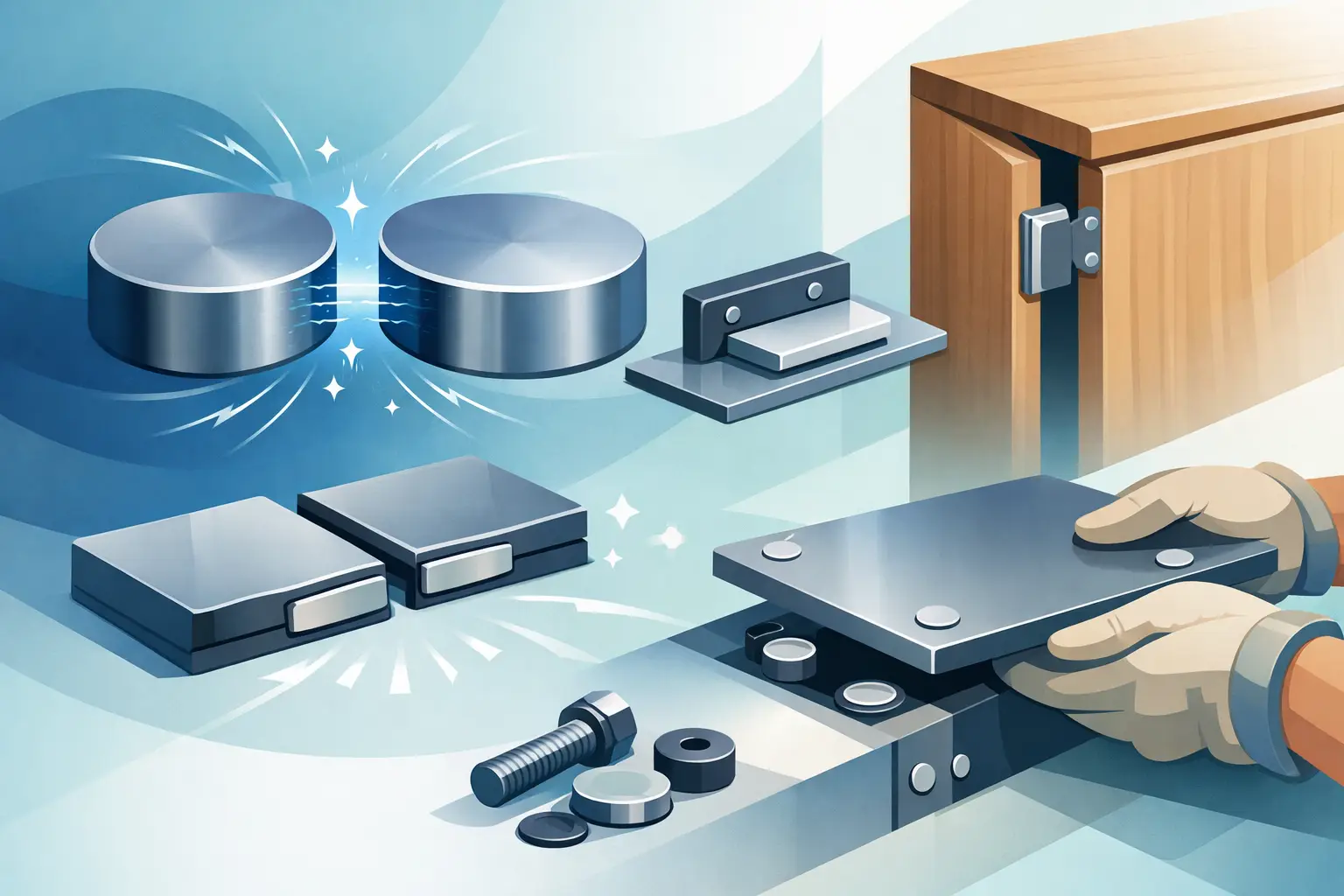
Strong Magnets for Fixing, Closures and Builds
A cupboard door that will not stay shut, a display panel that shifts under load, or a removable fitting that needs screws in all the wrong places – these are the jobs where strong magnets make a practical difference. A compact neodymium magnet can provide serious holding power without adding bulky latches, visible hardware or complicated mechanisms.
For DIY projects, joinery, retail fit-outs and workshop builds, the aim is not simply to buy the strongest magnet available. It is to choose the right shape, size and fixing method for a secure result that works every day.
Why neodymium magnets are so strong
Neodymium magnets are made from a rare-earth magnetic material with far greater magnetic strength than common ferrite magnets. That is why a small N52 neodymium magnet can hold far more effectively than a much larger standard magnet.
N52 refers to the magnet grade. It is a high-performance grade chosen where maximum strength from a compact component matters. This makes it particularly useful for slim cabinet doors, discreet catches, removable access panels, workshop jigs and display fittings where space is limited but reliable pull performance is essential.
Strength is only one part of the job, though. The pull force quoted for a magnet is generally measured in ideal conditions: direct contact with a thick, clean steel surface and a straight pulling force. Real installations introduce paint, timber, gaps, uneven surfaces and sideways movement. Each can reduce the holding power available in use.
That is why a well-selected magnet often performs better than an oversized one fitted without considering the contact surface or mounting arrangement.
Choosing strong magnets by shape
The most useful magnet format depends on how it will be fitted and how the force will be applied. Disc, block and countersunk magnets each solve different installation problems.
Disc magnets for compact holding power
Disc magnets are a straightforward option where a round recess can be drilled or where a magnet can be bonded into position. Their small footprint makes them popular for cabinet doors, presentation boxes, detachable signs, craft builds and concealed closures.
A wider disc normally offers a larger contact area, while a thicker disc can increase magnetic performance. The best balance depends on the available depth and the gap between the magnet and its steel counterpart. If a door has a timber face or a painted metal plate between the magnet and target, allow for the reduction in pull.
Disc magnets are also useful in pairs. Two magnets facing each other can create a neat closure, but a magnet-to-steel arrangement is often easier to align and can be more cost-effective. It also avoids the risk of accidentally fitting two matching poles together and creating repulsion rather than attraction.
Block magnets for edges and flat sections
Block magnets suit applications with straight edges, narrow channels or rectangular mounting areas. They are a practical choice for door catches, jig stops, tool holders, removable panels and fabricated assemblies.
Their flat sides make positioning simple, particularly when bonding into routed timber, fitting within a shallow recess or securing to a steel bracket. A block magnet can also spread its holding force across a longer contact area, which is helpful when a panel may twist or pull away unevenly.
For cabinet work, consider where the door is most likely to be pulled. A magnet near the opening edge provides better closure control than one placed too far inboard. On larger or heavier doors, two smaller magnets can be more dependable than one large magnet because they keep the door aligned across a wider area.
Countersunk magnets for screw-fixed installations
Countersunk magnets are designed for projects where a mechanical fixing is preferred. The recessed hole allows a suitable screw head to sit flush, helping the magnet fit neatly against the mounting surface.
This format is particularly useful for joinery, retail displays, access hatches and fixtures that may be opened repeatedly. A screw-fixed magnet is easier to replace or reposition than a bonded magnet, and it avoids relying on adhesive alone in high-use areas.
Take care not to overtighten the screw. Neodymium magnets are powerful but can be brittle, so excessive pressure or an uneven fixing surface may crack the magnet. Use an appropriate screw size, keep the surface flat and tighten only until secure.
What affects magnetic holding performance
The advertised pull force is a useful comparison, but it should not be treated as the exact load a magnet will hold in every project. Installation conditions matter as much as magnet grade.
A direct pull away from a steel plate gives the strongest result. A sliding force is weaker because the load is trying to shear the magnet sideways rather than pull it directly apart. If a vertical panel, sign or tool holder could slide, add a physical ledge, locating pin, lip or other support instead of asking the magnet to carry all the shear load.
Air gaps are another common cause of disappointing performance. Even a small gap from paint, laminate, fabric, tape, uneven timber or a recessed steel target can noticeably reduce the available holding power. Keep the magnet and steel strike plate as close and as flat as possible.
The target material also matters. Mild steel is generally an effective magnetic counterpart. Stainless steel is not always magnetic, while aluminium, brass, copper, timber and plastic will not provide a magnetic target. Where the surface is non-magnetic, fit a steel plate or use a second magnet with the correct pole orientation.
For outdoor, damp or workshop environments, consider the finish and protection of the surrounding installation. Neodymium magnets are commonly coated, but damaged coatings and prolonged moisture exposure can lead to corrosion. A recessed fitting, sealed housing or dry mounting location can help protect the component over time.
Matching the magnet to the application
For a light cupboard door or small box lid, a compact disc or countersunk magnet may be all that is needed. The goal is a positive close that feels controlled, not a pull so aggressive that opening the door becomes awkward.
For a heavier cabinet door, removable shelf front or access panel, use a larger contact area, two magnets, or a properly positioned magnetic catch. Magnetic catches combine the magnet and housing into a purpose-made closure solution, making alignment and installation more straightforward for repeated use.
For retail displays and removable signage, a strong magnet can create a clean, hardware-light finish. However, account for public use. If a panel can be knocked or pulled sideways, build in mechanical location points so the magnet holds the panel in place rather than acting as the only structural support.
In workshop use, strong magnets are useful for holding guards, positioning jigs, organising steel tools and creating temporary stops. They are not a substitute for clamps, bolts or rated lifting equipment where safety depends on a fixed load. The correct approach is to use magnetic force for retention and positioning, then add mechanical support when the consequences of movement are significant.
Installation details that prevent problems
Before drilling, bonding or ordering in quantity, test one setup with the actual materials. A magnet that feels extremely powerful in your hand may behave differently once it sits behind a 3 mm timber face or meets a painted steel plate.
Mark the pole orientation when using magnets in pairs. Neodymium magnets snap together with surprising force, and it is easy to fit one incorrectly during a multi-part installation. Keep magnets separated until they are ready to install, especially when working with small components in a confined space.
If bonding magnets, use an adhesive suited to both the magnet coating and the substrate. Clean and dry both surfaces, allow adequate cure time and avoid loading the joint before the adhesive has reached its stated strength. For demanding applications, a recessed pocket provides more security than a surface-bonded magnet alone.
Magman focuses on high-strength N52 neodymium magnets and practical magnetic hardware so buyers can select a format built for the job rather than settling for weak, general-purpose alternatives.
Safe handling of powerful magnets
Strong magnetic force deserves sensible handling. Keep fingers clear when bringing magnets together or placing them against steel, as they can snap together quickly and cause painful pinches. Larger magnets should be handled one at a time and kept apart with suitable spacers.
Keep neodymium magnets away from young children because small magnets can be dangerous if swallowed. They should also be kept clear of pacemakers and other implanted medical devices, as well as cards, hard drives and sensitive electronic equipment where magnetic fields may cause damage or disruption.
Store magnets in a dry, secure place and avoid dropping them. Their material is hard but brittle, so impact can chip or fracture the magnet. Eye protection is sensible when separating larger magnets or working where a damaged magnet could splinter.
The best magnetic fitting is usually the one that feels uncomplicated once installed: the door closes cleanly, the panel stays put, and the fixing remains out of sight. Start with the real load, surface and gap in your project, then choose the strong magnet that delivers the holding power you can rely on.