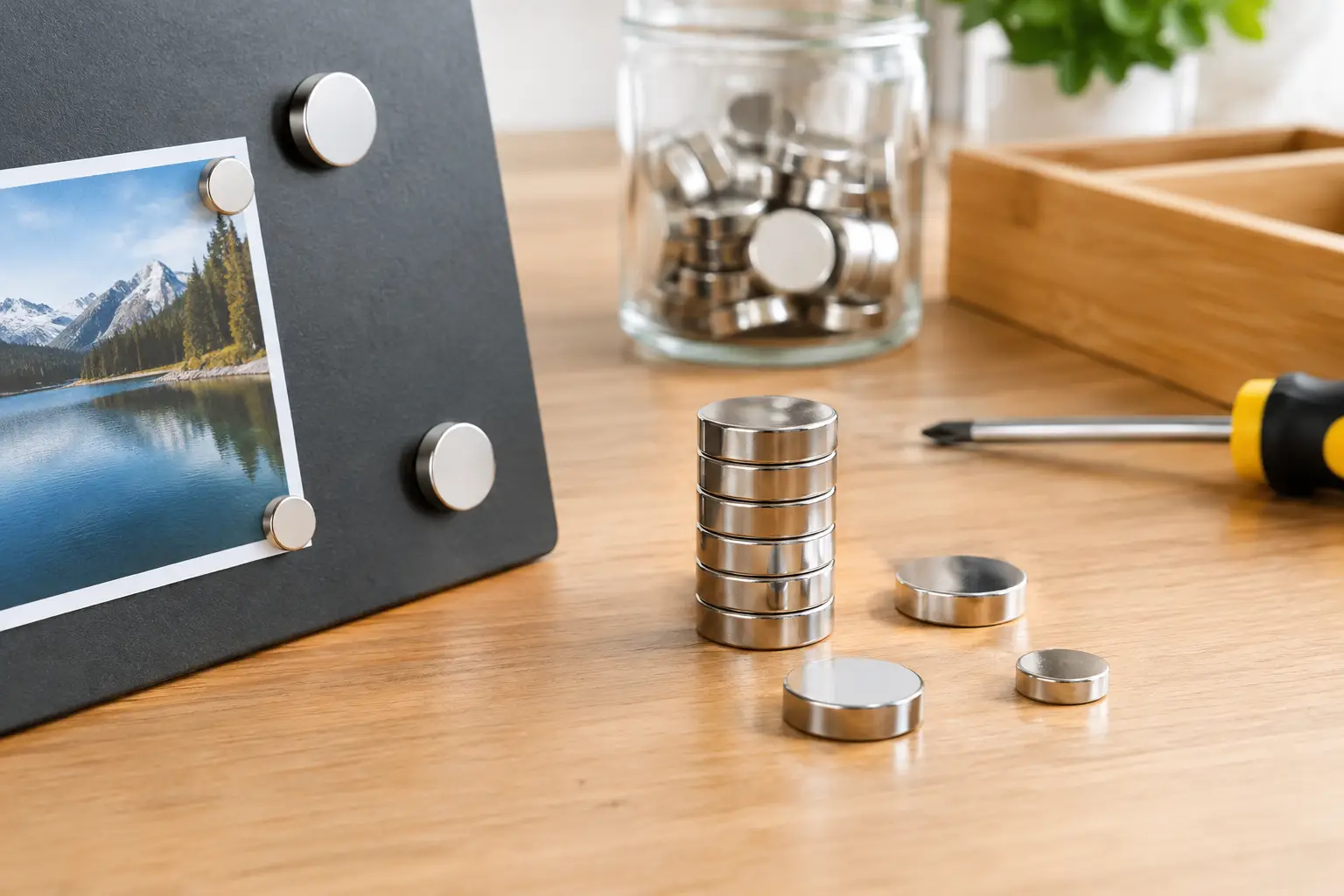
Top Uses for Disc Magnets in Work and DIY
A disc magnet can disappear neatly into a timber panel, sit behind an acrylic sign or hold a workshop jig in place – then deliver far more holding force than its size suggests. That is why the top uses for disc magnets tend to be practical jobs where a mechanical catch, screw fixing or bulky bracket would get in the way. High-strength neodymium disc magnets give DIY users, tradespeople and fabricators a compact answer to holding, closing, locating and displaying.
Their round, low-profile shape makes them particularly useful where a clean finish matters. The key is choosing the right diameter, thickness and pull strength for the material and the gap involved. A powerful magnet is not automatically the right magnet: a larger contact area may matter more than maximum strength, while a small air gap can reduce holding performance significantly.
Top uses for disc magnets in fitted furniture
Cabinet doors, cupboards and access panels
One of the most reliable uses for disc magnets is creating a discreet catch for cabinet doors, cupboard fronts and removable access panels. A magnet fitted into the door or panel pairs with a steel strike plate, or with a second magnet where alignment is controlled. The result is a positive close without visible hardware on the face of the furniture.
This works especially well for lightweight kitchen units, media cabinets, utility cupboards and bespoke joinery. For heavier doors, disc magnets are often best used as a retaining catch rather than the sole closing method. Hinges must still carry the door correctly, and a pull handle should not overpower the magnetic hold.
For a flush installation, drill a shallow, accurately sized recess and bond the magnet in place with a suitable adhesive. Take care with polarity if two magnets are facing each other. Test the position before gluing, because reversing one magnet turns a closing catch into a repelling one.
Removable panels and hidden fixings
Magnetic fixing is a strong option when a panel needs to come off occasionally but should look permanent when closed. Think inspection hatches, boxed-in plumbing, radiator covers, speaker grilles and access panels for electrical equipment. The panel can be removed without exposed screw heads, making the finished job cleaner and quicker to service.
The trade-off is that magnets need close contact to perform well. Thick paint, carpet, edging, uneven timber or a wide gap between panel and frame will reduce the effective pull. In these cases, use several magnets around the perimeter or choose a deeper, wider disc rather than relying on one small magnet.
Furniture positioning and modular builds
Disc magnets are also useful for keeping removable furniture elements in the right place. They can locate a detachable shelf lip, hold a table leaf steady, secure a removable plinth or keep modular display components aligned. Here, the magnet is doing two jobs: it gives repeatable positioning and enough hold to prevent accidental movement.
For alignment work, pair magnets with dowels, pins or a rebated edge where possible. Magnets resist pull directly away from a surface very effectively, but they are less effective against sideways sliding forces. Good mechanical location stops shear movement and lets the magnet provide the clean, tool-free connection.
Workshop jigs, tool storage and fabrication
In a busy workshop, small components need to stay put without slowing the job down. Neodymium disc magnets are ideal for temporary locating and holding, particularly on steel benches, machine stands, tool chests and fabrication tables.
A magnet embedded in a timber jig can hold a workpiece against a steel fence or keep a removable stop block in position. They are useful in welding set-ups too, but heat must be considered carefully. Standard neodymium magnets can lose magnetism when exposed to excessive temperatures, so keep them away from the hottest areas and use a purpose-made welding solution where heat and sparks are unavoidable.
For tool storage, recessed disc magnets can retain drill bits, driver bits, spanners and small hand tools on a rack or inside a drawer. This makes frequently used items easier to reach and helps prevent loose metal parts rolling off the bench. Do not rely on a magnetic holder for sharp or heavy tools above head height unless the magnet, mounting and safety margin have all been properly assessed.
Disc magnets can also help organise fixings during assembly. A shallow magnetic tray insert or a magnet fixed beneath a non-metallic work surface will keep screws, bolts and washers gathered in one area. It is a small improvement, but it saves time during installation work where dropped fixings are a constant frustration.
Retail displays, signs and removable graphics
Retail fit-outs often need a secure fixing that can be changed without damaging finished surfaces. Disc magnets offer a tidy solution for removable signs, price holders, printed panels, point-of-sale displays and sample boards. With the magnets hidden behind the graphic or inside the display frame, staff can update information quickly while the customer sees a clean presentation.
The material choice matters. A magnet will hold directly to steel, but aluminium, brass, most stainless steels and acrylic are not reliably magnetic. Where the display surface is non-magnetic, fit a steel washer or strike plate behind the panel. For a refined finish, make sure the steel component is fully concealed and sits flat.
Large display panels need more than sheer pull strength. Use magnets at sensible intervals to prevent corners lifting, especially near doors, air movement or public touchpoints. A greater number of smaller magnets may give a flatter, more controlled result than two very powerful magnets that are difficult to separate.
Closures for boxes, cases and product packaging
A premium box or presentation case feels more considered when the lid closes with a quiet magnetic pull rather than a plastic catch. Disc magnets are widely used in gift boxes, sample cases, wooden storage boxes and handmade products because they are compact and easy to conceal.
For light lids, small discs can provide a satisfying close with minimal effort. For heavier timber lids, increase the magnet size or use two pairs placed near the front corners. Fit them with the surfaces flush where possible. A magnet buried too deeply below the timber face may look neat, but the extra gap can make the closure disappointingly weak.
This is also a useful approach for removable covers on control boxes, display cases and custom enclosures. If a cover needs to withstand vibration or frequent handling, add a lip, overlap or locating tabs. Magnets should support the design, not be asked to compensate for a loose-fitting cover.
Creative builds and practical home fixes
Disc magnets suit a surprising number of smaller projects because they can be fitted into wood, plastic, resin and 3D-printed parts. They are effective for detachable photo frames, removable noticeboard accessories, light covers, craft storage and model-making. In the home, they can hold a loose cupboard catch closed, retain a detachable fly screen frame or keep a metal-backed item accessible inside a cupboard.
The strongest results come from designing the magnet into the item rather than adding it as an afterthought. Measure the recess, leave enough material around it to avoid splitting, and keep the mating surfaces as close and as level as possible. If the magnet will be visible or handled regularly, use an appropriate coating and avoid chipping its surface during installation.
Choosing the right disc magnet for the job
Start with the load and the way it will be applied. A magnet holding a panel flat against steel is working in its best orientation. A magnet stopping an item from sliding sideways, holding through a timber gap or resisting repeated pulling needs more capacity. Pull-force figures are useful for comparison, but they are normally measured in ideal direct-contact conditions on thick, clean steel.
Diameter affects the contact area, while thickness generally contributes to magnetic strength. A wider disc can be a better choice for a thin panel or broad steel strike plate. A thicker disc may be needed where more pull is required in a small footprint. N52 neodymium magnets offer superior pull performance for their size, which is valuable when space is limited, but that power also makes handling more demanding.
For dependable results, use a steel strike plate instead of assuming any metal surface will work. Keep faces clean, allow for the final finish thickness, and test the assembly before committing with adhesive. Magman’s focused range of high-strength disc magnets makes it easier to select a compact format without compromising on holding power.
Handling and fitting safely
Strong disc magnets can snap together quickly and chip, crack or pinch fingers in the process. Keep them separated until installation, slide them apart rather than pulling directly where practical, and keep them away from children. They should also be kept clear of pacemakers, magnetic cards, hard drives and sensitive electronic equipment.
When bonding magnets into timber or plastic, dry-fit first and mark the polarity clearly. Use a correctly sized hole and avoid hammering a brittle neodymium magnet into place. Press it in gently or bond it with an adhesive suited to both the magnet coating and the surrounding material.
The best disc magnet installation is usually the one nobody notices: a door that closes cleanly, a panel that lifts away when needed, or a display that stays exactly where it belongs. Build around close contact, sound alignment and an appropriate safety margin, and a small magnet can deliver a seriously useful result.