Practical Guide to Hidden Magnetic Fasteners
A good hidden closure should do its job without drawing attention to itself. This guide to hidden magnetic fasteners explains how to create clean, reliable closures for cabinet doors, access panels, display units and fitted furniture, using compact magnets with the holding power your build actually needs.
Magnetic fasteners are a practical answer when visible latches, handles and catches would spoil the finish. Fitted correctly, they hold a door or panel closed with a positive pull, release easily when opened, and leave the exterior uncluttered. The key is choosing the right magnet format, matching it to a suitable steel strike plate, and allowing for the realities of the installation.
What are hidden magnetic fasteners?
A hidden magnetic fastener is a closure system installed out of sight, usually on the inside edge of a door, drawer front or removable panel. One side contains a magnet or magnetic catch; the opposing side uses a steel plate, screw head or another compatible magnetic component. When the two meet, the magnetic force holds the parts together.
For furniture and joinery, the usual aim is not maximum force at all costs. It is controlled holding power: enough to prevent a door drifting open, rattling or being knocked ajar, but not so much that opening becomes awkward or puts stress on hinges and fixings.
Traditional magnetic catches place a magnet in a plastic or metal housing, with a matching strike plate. They are quick to fit and well suited to routine cabinet doors. Neodymium disc, block and countersunk magnets give more flexibility where space is tight, the catch needs to be fully concealed, or a stronger closure is required.
Where hidden magnetic fasteners work best
These fasteners are particularly useful where a clean face finish matters. Kitchen and utility cabinets, wardrobes, media units, understair storage, retail displays and inspection hatches are all common applications. They also suit bespoke projects where a push-to-open look is wanted without the extra depth and mechanism of a mechanical push latch.
They are especially effective on lightweight to medium-weight doors that sit accurately in their frame. A magnetic catch can compensate for a small amount of movement, but it cannot correct a warped door, poorly positioned hinges or a large uneven gap. Get the fit of the furniture right first, then use the magnet to provide the final closing action.
For high-use cabinetry, consider how the user will open the door. A finger pull, recessed edge, handle or push point may be needed. A concealed magnet holds a door closed; it does not provide a way to grip it.
Choosing the right hidden magnetic fastener
Start with the door, not the magnet
The size, weight and use of the door should lead the decision. A small cupboard door may only need a compact catch, while a tall wardrobe door, heavy timber panel or frequently used retail unit needs more holding force and secure mechanical fixing.
Think about whether the magnet is resisting a straightforward pull or helping hold against vibration, door bounce or a slight tendency to spring open. A door with tight hinges and a well-aligned frame needs less magnetic force than a door that is under tension.
It is tempting to choose the strongest magnet available. That can create a closure that feels unpleasantly aggressive, particularly on a small door. The ideal fastener closes decisively but opens without a sharp tug.
Choose a suitable magnet shape
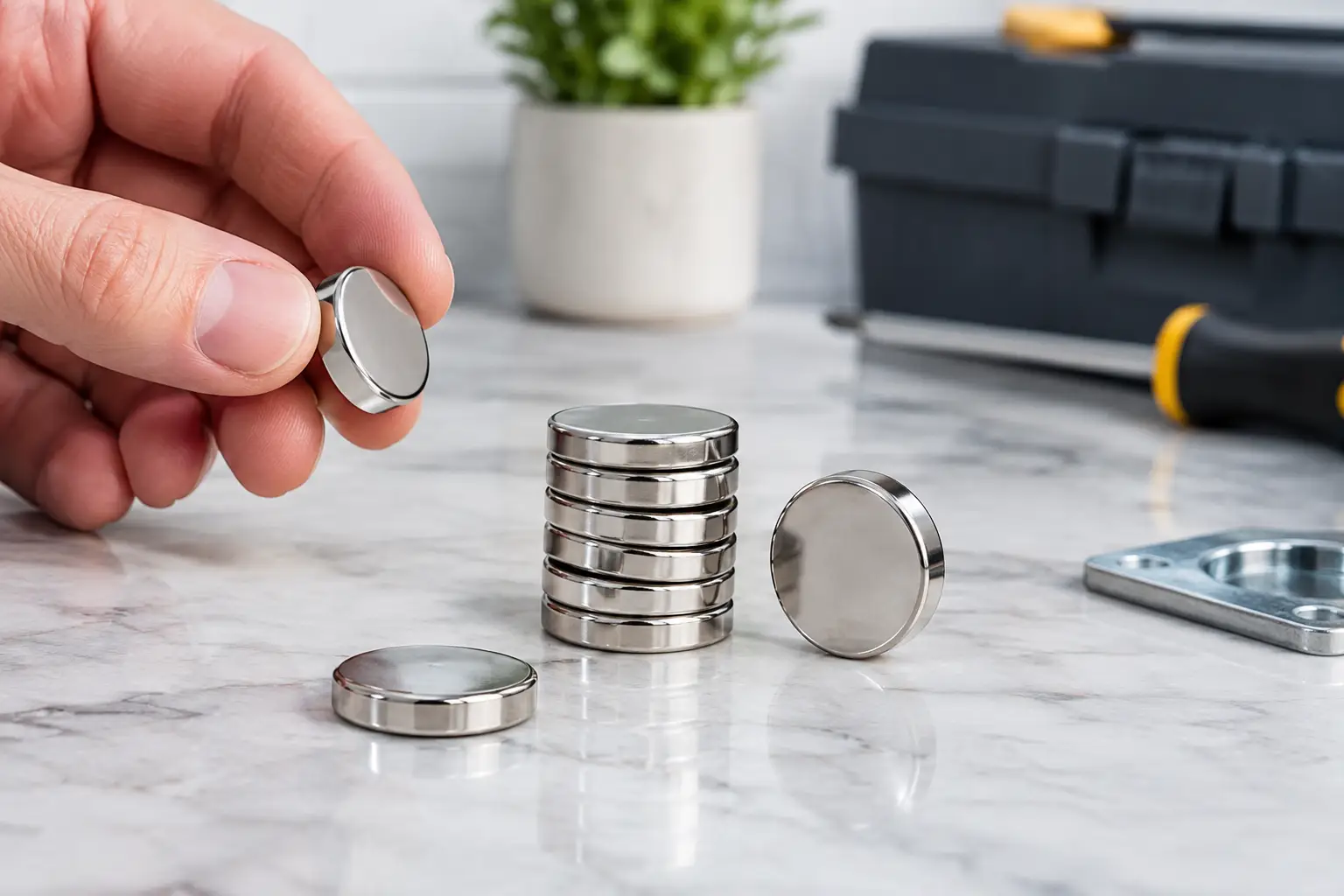
Disc magnets are often the easiest option for concealed installations. They can be drilled into a shallow recess in timber, MDF or plywood and covered with a timber plug, filler or a thin surface layer where appropriate. Their round shape makes alignment straightforward and they are useful when the magnet needs to sit close to the meeting edge.
Block magnets offer a larger contact area and can be useful along narrow rails, inside slim cabinet frames or in custom housings. They are a sensible choice where a disc would not give enough surface contact or where the available recess is rectangular.
Countersunk magnets are designed for screw fixing. The countersunk hole lets the screw head sit flush, helping the magnet remain stable and reducing the risk of it shifting under repeated use. This format is particularly useful when adhesive alone would be unreliable or when access for a recessed installation is limited.
Use steel as the opposing surface
A neodymium magnet does not need another magnet opposite it. In most hidden fastening jobs, a steel strike plate is the better option. It is simpler to position, easier to adjust and avoids the issue of installing two magnets with the wrong poles facing each other.
The steel needs to be magnetic. Stainless steel is not always suitable, as many grades have little or no magnetic response. A purpose-made steel strike plate is the dependable choice, although a suitable mild steel plate or steel screw head can work in a custom build.
Keep the strike plate flat and firmly fixed. Any movement, paint build-up or proud screw head can reduce the contact area and make the closure feel inconsistent.
Pull force is not the same as installed holding power
Published pull force figures are useful for comparison, but they are measured in favourable conditions: direct contact with clean, thick steel and a straight pull away from the magnet. Real furniture installations rarely match that test exactly.
A small air gap has a major effect on magnetic holding strength. Veneer, laminate, paint, a recessed plate, a misaligned door or even a fractionally proud fitting can reduce the force noticeably. A magnet that seems extremely strong in the hand may feel modest once installed behind a cabinet face.
Sideways force matters too. Magnets generally resist a direct pull better than sliding movement. If a panel is likely to be pulled sideways, vibrate or flex, provide a physical lip, rebate, locating pin or frame edge to carry the load. Let the magnet hold the panel shut rather than asking it to support the whole panel.
N52 neodymium magnets offer powerful pull performance for their size, which makes them useful where a compact, concealed fitting is needed. Even so, larger is not automatically better. Select the smallest practical size that delivers a reliable closure after allowing for the gap and the way the door will be used.
How to install hidden magnetic fasteners accurately
Positioning determines whether a magnetic closure feels precise or disappointing. Fit the magnet and strike plate close to the opening edge, where they can hold the door firmly against the frame. On taller doors, a second catch near the opposite end may be necessary to prevent bowing or rattling.
Mark the centre point with the door held in its final closed position. Avoid relying on measurements alone if the door has any variation in its fit. A light marking compound, masking tape or a test-fitted plate can help transfer the exact position from one side to the other.
For recessed disc or block magnets, drill or rout a flat-bottomed pocket so the magnet sits level. The magnet should not be installed so deeply that a thick layer of timber separates it from the strike plate. Conversely, do not leave it proud where it could catch, chip or prevent the door from closing flush.
Adhesive can be useful for bonded installations, but it needs a clean, dry, properly prepared surface. It is less forgiving on dusty MDF edges, oily metal, textured finishes or areas exposed to repeated shock. Where possible, choose a countersunk magnet or housing that can be screwed into place. Mechanical fixing gives a more dependable result on working furniture.
Before committing to final fixings, close and open the door repeatedly. Check that the plate meets the magnet squarely, the door sits flush, and opening pressure feels right. This test stage is where small adjustments save a great deal of rework.
Common problems and practical fixes
If the catch feels weak, first check the gap. Moving the strike plate closer, seating a magnet less deeply or using a thinner plate may solve the problem without changing magnet size. Also check that the plate is magnetic and that the magnet is meeting it face-on rather than only catching an edge.
If the door is hard to open, reduce the magnetic force, increase the separation slightly, or add a better finger pull. Do not rely on forcing the door open repeatedly, as this can loosen adhesive or strain lightweight hinges.
A door that clicks but will not stay shut may have a hinge or alignment problem rather than a magnet problem. Adjust the hinges, check for a twisted door, and make sure the frame is not pushing the door back out. Magnetic catches perform best when they finish an already accurate closure.
Rattling usually means the magnet is holding the door but not pulling it firmly to the frame. Reposition the catch closer to the opening edge or add a second catch to spread the hold across the door.
Safety and handling with neodymium magnets
High-strength neodymium magnets should be handled with care. They can snap together suddenly and chip, pinch skin or damage a finished surface. Keep them apart during fitting, and do not leave loose magnets where children could access them. Swallowing more than one magnet is a serious medical emergency.
Magnets can also affect pacemakers and other implanted medical devices. Keep them well away from anyone who may be affected, and take care around bank cards, hard drives and sensitive electronic equipment. Wear eye protection if there is a risk of magnets colliding and splintering.
A concealed closure is a small detail, but it has a big effect on how a cabinet, panel or display unit feels in use. Choose a powerful, well-mounted magnetic fastener, take time over alignment, and the result is a clean finish that closes with confidence every time.