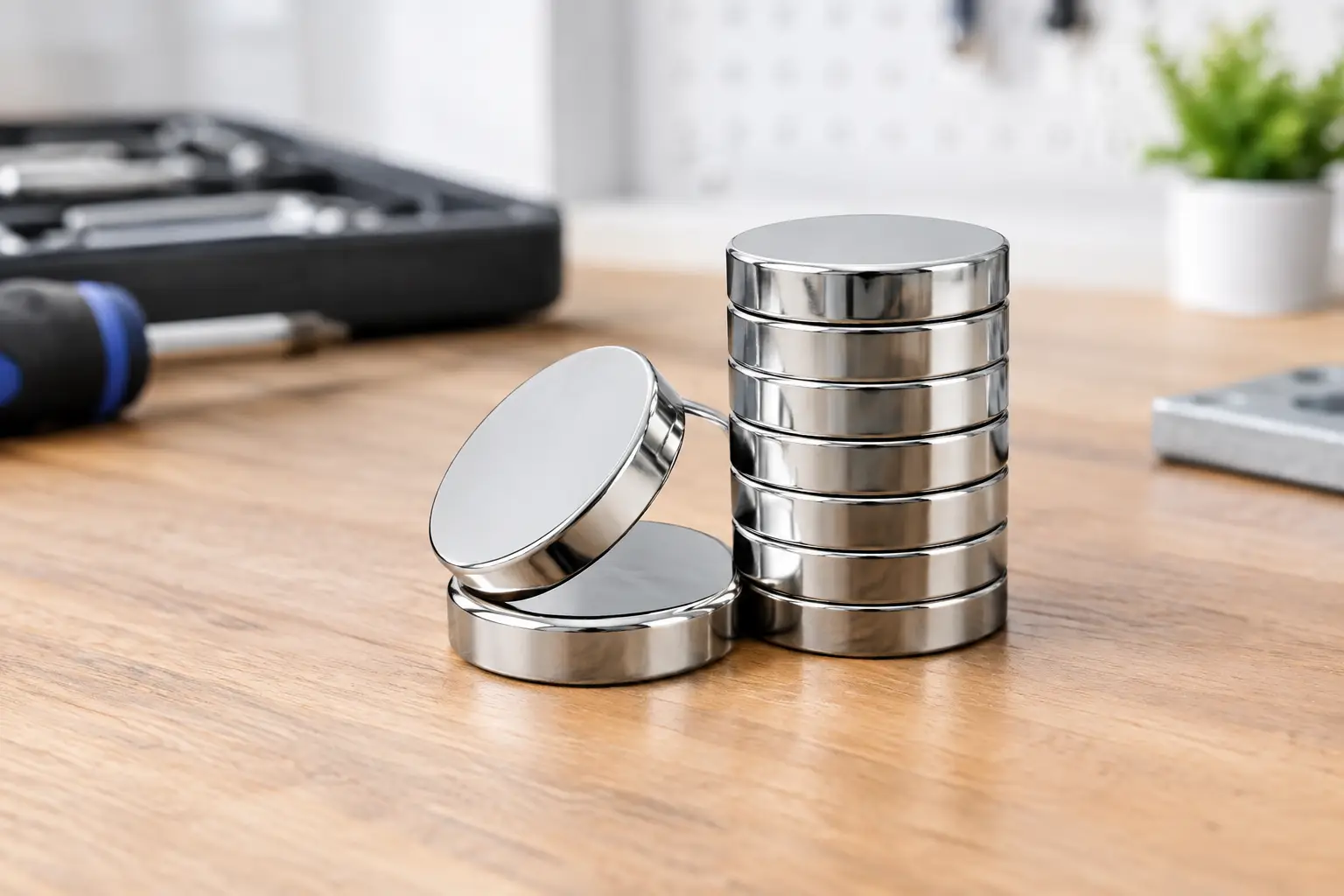
N52 Rare Earth Round Magnets for Strong Fixing
A small magnet that lets a cabinet door sit flush, holds a removable panel firmly in place, or keeps a workshop jig from shifting has to do more than simply stick. It needs consistent holding power in a compact format. That is where n52 rare earth round magnets stand apart. Their high-grade neodymium material provides serious magnetic force without demanding bulky hardware, making them a practical choice for trade work, fitting projects and capable DIY builds.
Round N52 magnets are often called disc magnets because of their flat, circular profile. They are simple to position, easy to recess into timber or other suitable materials, and versatile enough for closures, mounting, displays and custom fabrication. The right size can create a clean, hidden fixing that feels deliberate rather than improvised.
What Makes N52 Round Magnets So Strong?
N52 refers to the magnet grade. Within commonly available neodymium grades, N52 offers exceptionally high magnetic strength for its size. That matters when space is limited but the fixing still needs to perform.
A round N52 magnet can deliver far more holding force than a conventional ferrite magnet of a similar size. This makes it useful where a weak closure or unreliable hold would cause problems – such as a cupboard door that will not stay shut, a display component that drifts, or a removable access panel that needs to sit securely.
Strength, however, is not the same as a guaranteed result in every installation. Pull performance is affected by the magnet’s diameter and thickness, the steel surface it meets, the size of the air gap, alignment and the direction of force. A magnet pulled straight away from a flat steel plate performs differently from one exposed to sliding or twisting force on a painted cabinet door. Choosing by grade alone is not enough; the format and installation must suit the job.
Where N52 Rare Earth Round Magnets Work Best
The circular shape makes these magnets especially useful in applications where a discreet, neat finish matters. In cabinet making, they can form concealed catches for doors, panels and lightweight drawers. When paired with a suitable steel strike plate or a second magnet, they provide a positive close without visible latches.
For retail fit-outs and displays, round magnets can hold signs, removable graphics, access covers and lightweight product supports. Their compact profile helps preserve a tidy finish, particularly where mechanical clips would be distracting or awkward to access.
Workshop users also value them for jigs, tool holders and temporary positioning tasks. A strong disc magnet can help keep a steel rule, fixture or removable stop where it is needed. For custom builds, they are useful in wooden boxes, model-making, speaker grilles, exhibition pieces and decorative panels.
The best use case is usually a controlled fixing or closure rather than a safety-critical connection. Magnets should not be relied on to support overhead loads, secure machinery guards, lift people or hold items where failure could cause injury or damage.
Choosing the Right Size and Thickness
With N52 rare earth round magnets, larger is not always better. A magnet that is too strong can make a small door unpleasant to open, chip during fitting, or pull a thin steel component out of alignment. The aim is enough holding power for the real load and movement involved, with a practical release force for the user.
Diameter generally gives the magnet a larger contact area, which can improve holding performance against a flat steel surface. Thickness also matters, particularly where there is a slight gap between the magnet and its target. A shallow disc may be ideal for a slim cabinet door, while a thicker magnet can be the better option when it is set back inside a material or used against a less-than-perfect surface.
Consider the material surrounding the magnet as well. Timber, MDF, plastic and aluminium are not magnetic, so the magnet needs a steel counterpart or another correctly orientated magnet. If you are fitting into wood, leave enough material around the recess to prevent splitting. In thin materials, a recessed magnet may telegraph through the face or weaken the panel.
For a door catch, think about the door weight, any tension from hinges, and whether the door may be pulled sideways as it opens. For a removable panel, account for the panel’s weight and how much force will be applied at its outer edge. These details are often more useful than simply choosing the strongest disc available.
Installation Details That Affect Holding Power
A strong magnet cannot overcome a poor fitting. The most effective installations bring the magnet and steel target into close, flat contact. Even a small air gap created by paint, veneer, a proud screw head or uneven material can noticeably reduce the hold.
Mark the positions carefully before drilling or bonding. With a magnet-to-magnet closure, polarity must be checked before final installation. One magnet needs to attract the other, not repel it. This sounds obvious, but it is a common and frustrating mistake when several identical discs are being fitted at once.
Recessing the magnet usually gives the cleanest result. A Forstner bit can create a flat-bottomed hole in timber, while a correctly sized drill or machining method may be needed for other materials. The magnet should sit flush or just below flush if a covering layer will be added. Avoid striking neodymium magnets with a hammer: they are hard but brittle and can crack or chip under impact.
Adhesive is often suitable for light-duty installations, provided the surfaces are clean and the adhesive is appropriate for the materials involved. For repeated opening and closing, a mechanical housing or a properly designed magnetic catch may be the more dependable choice. Adhesive strength, curing time and the depth of the recess all affect the final result.
When a Magnetic Catch Is the Better Option
Loose round magnets offer flexibility, but they are not always the fastest route to a reliable closure. A purpose-made magnetic catch is often better for cupboard doors, access panels and furniture where alignment varies slightly or the closure will be used every day.
Magnetic catches are designed to mount securely and work with a matching strike plate. They can simplify fitting and give a more predictable closing action. Round N52 magnets are a stronger choice when you need a concealed fixing, a custom layout, or a compact solution that standard hardware cannot provide.
The decision comes down to finish and function. Use a magnetic catch when the job calls for convenient, repeatable door retention. Choose a round N52 magnet when you need maximum strength in a small disc and have control over the installation details.
Handle N52 Magnets With Care
Their power is a benefit, but it requires sensible handling. Larger or thicker N52 magnets can snap together suddenly, trapping skin or damaging their brittle coating. Keep fingers clear when bringing magnets near steel or another magnet, and separate them with a sliding motion rather than trying to pull directly apart.
Keep neodymium magnets away from children, as swallowed magnets are a serious medical emergency. They should also be kept clear of pacemakers and other implanted medical devices, sensitive electronics, magnetic stripe cards and items that could be affected by a strong magnetic field.
Store magnets separated with spacers and away from loose steel swarf, screws and tools. This keeps the work area safer and prevents unnecessary chipping or contamination before installation.
Get a Stronger Result From a Smaller Fixing
N52 rare earth round magnets give cabinet makers, fit-out teams and DIY users a powerful option when ordinary magnets are not enough. Their strength makes compact, concealed and practical fixing possible, but the best results come from matching the diameter, thickness and fitting method to the task.
Measure the available space, minimise the gap to the steel target, and test the closing force before committing to a final fit. A well-chosen magnet should make the finished job feel simple: secure when closed, straightforward when opened, and built to keep working.