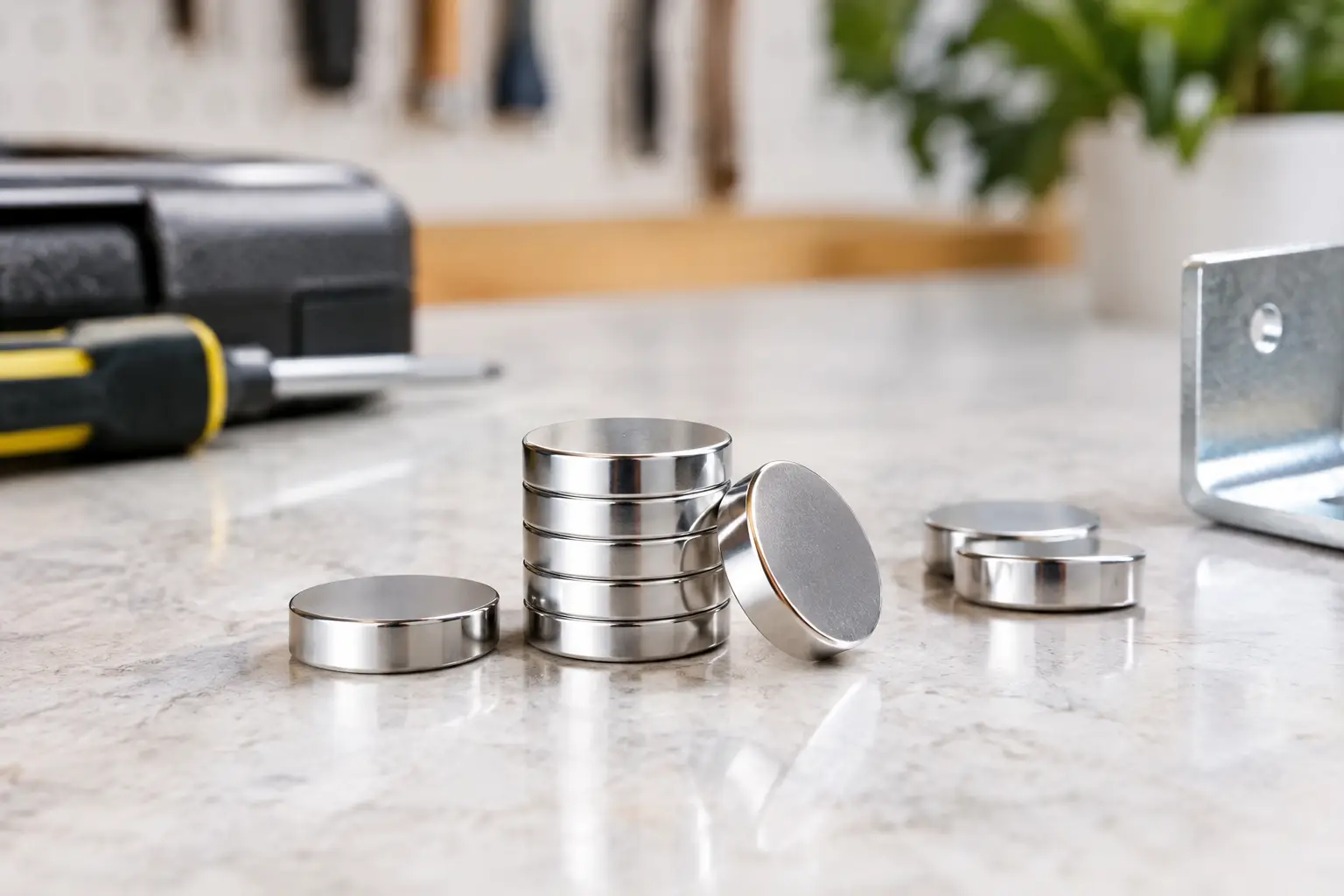
Strongest N52 Disc Magnets for Secure Fixing
A small magnet that lets go at the wrong moment can spoil an otherwise sound job. For cupboard doors, removable panels, display fittings and workshop jigs, the strongest N52 disc magnets provide serious holding power in a compact, clean-fitting format. The key is choosing the right diameter, thickness and installation method for the load, rather than relying on grade alone.
What Makes N52 Disc Magnets So Strong?
N52 is a high-performance grade of neodymium magnet. Neodymium magnets are the strongest commonly available permanent magnets, and N52 sits at the upper end of the standard grade range. That makes an N52 disc a practical choice where space is limited but dependable pull strength matters.
Grade describes the magnetic material, not the finished magnet’s holding force. Two N52 discs can perform very differently if one is wider, thicker or working across a larger gap. A larger contact area generally increases pull on a flat steel surface, while extra thickness can help the magnetic field reach further through material or a small air gap.
This is why the strongest N52 disc magnets are not simply the smallest discs carrying an N52 label. The best option is the disc that delivers the required holding force once it is fitted in the real assembly.
Pull Force Depends on the Setup
Published pull-force figures are useful for comparing magnets, but they are measured under ideal conditions. That usually means direct contact with a thick, clean, flat piece of mild steel, with the magnet pulled straight away from the surface.
Most projects are less forgiving. Paint, powder coating, veneer, tape, a recess that is slightly too deep, or a thin steel strike plate can all reduce the effective hold. A magnet used in shear, where the load slides down the face of the steel, will also hold far less securely than one pulled directly apart.
Allow a sensible margin. For a closure that needs to feel positive, or a fixture that must not drop when knocked, choose a magnet with more capacity than the bare minimum. It is much easier to reduce the gap during fitting than to replace an underpowered magnet afterwards.
Choosing the Right N52 Disc for the Job
Start with the object being held and how it will be used. A lightweight cabinet door has different requirements from a removable retail sign, and a timber jig in a busy workshop needs more security than a simple craft closure.
Diameter is often the first dimension to consider. A wider disc gives more surface contact and is usually preferable where there is room for it. Thickness matters when the magnet must work through a material layer or when a deeper magnetic field is needed. For flush-fitted timber doors, a shallow, wide disc can be effective. Where the magnet sits behind a panel, a thicker disc may be the better choice.
Think about the matching surface too. An N52 disc attracts ferrous steel, but it will not grip aluminium, brass, copper or most grades of stainless steel. If the mating part is non-magnetic, fit a suitable steel strike plate or use a second magnet with the poles correctly aligned.
Polarity only becomes a concern when magnets are paired together. Like poles repel and opposite poles attract. Before committing adhesive or drilling a recess, test every pair and mark the intended facing side. This simple check prevents a frustrating installation error.
Size for the Gap, Not Just the Recess
A magnet seated too far below the surface loses a surprising amount of useful pull. For concealed closures, keep the faces as close as practical and make sure both components meet squarely. Even a small gap created by a proud screw head, uneven paint or misaligned drilling can weaken the result.
This is particularly relevant with cabinet doors and access panels. A door may seem to close well by hand, yet fail to stay shut after repeated use if the strike plate does not meet the magnet fully. Accurate positioning matters as much as magnet strength.
For a moving or misaligned part, consider whether a magnetic catch is more suitable. Catches can give a more controlled closure where a bare disc magnet would be exposed to sideways forces or inconsistent contact.
Where Powerful Disc Magnets Work Best
N52 disc magnets are popular because they solve fastening problems without bulky latches, visible hardware or complicated mechanisms. In cabinet making, they create discreet closures for cupboard doors, service hatches and removable trim panels. In retail fit-outs, they can support changeable displays, signs and cover panels where a neat appearance is important.
They are equally useful in the workshop. A well-chosen disc magnet can hold templates, locate guards, retain tools in a fixed position or secure removable stops on jigs. For small manufacturing runs, they offer repeatable positioning without slowing assembly with clips or screws.
DIY users often fit disc magnets into timber boxes, wall-mounted organisers, speaker grilles and bespoke storage solutions. Their compact size is a real advantage, but only when the magnet is protected from impact and installed on a stable surface.
There is a trade-off. A very powerful magnet can make a lightweight lid or panel awkward to open, particularly where there is no finger pull. On a frequently used cupboard, a moderate disc or a magnetic catch may deliver a better user experience than the highest possible pull force.
Fitting N52 Disc Magnets Properly
For timber and MDF, a clean, accurately sized recess gives the most professional result. Drill or rout the pocket carefully so the magnet sits flush, then bond it with a suitable adhesive. The recess should support the magnet around its edge rather than leaving it proud and exposed to knocks.
Cyanoacrylate can be useful for small, close-fitting installations, while a quality two-part epoxy is often a stronger choice where there is a little clearance to fill or the part will see repeated loading. Ensure both surfaces are clean, dry and free from sanding dust before bonding. Follow the adhesive curing time rather than testing the magnetic hold immediately.
Avoid striking a neodymium disc with a hammer or forcing it into an undersized hole. Neodymium magnets are powerful, but they are also brittle. A sharp impact can chip or crack the magnet, damaging the coating and reducing its service life.
Pulling Apart Is Different from Sliding
If a load will hang vertically from a steel surface, it is relying largely on shear resistance. In that situation, friction and the finish of both surfaces matter greatly. A smooth, painted plate may allow the item to creep down even when the quoted pull force looks generous.
Design against sliding wherever possible. Add a small mechanical lip, locating pin, ledge or stop so the magnet holds the part in position while the support feature carries the downward load. This approach gives a more dependable result and puts the magnet to work in the direction where it performs best.
Durability, Coatings and Working Conditions
Most neodymium discs are supplied with a protective coating, commonly nickel-based, to help resist corrosion and provide a neat finish. They are well suited to dry indoor applications, including furniture, displays and workshop fixtures. For wet, coastal or permanently outdoor environments, the coating can be vulnerable if scratched or exposed over time.
Heat is another consideration. Standard N52 magnets are not the right choice for every high-temperature application. Excessive heat can permanently reduce magnetic strength, so keep the magnet away from hot machinery, radiators, ovens and other sustained heat sources unless the magnet specification confirms suitability.
Handle discs carefully during assembly. Larger or thicker N52 magnets can snap together with enough force to pinch skin, chip their edges or damage nearby finished surfaces. Keep them away from children, sensitive electronic equipment and anyone with a pacemaker or implanted medical device.
When a Disc Magnet Is Not the Best Format
Disc magnets are excellent for flush closures and direct face-to-face holding, but they are not the answer to every fixing problem. A countersunk magnet is often better when a screw-fixed installation is needed. Block magnets can provide a longer contact area for catches, jigs and timber assemblies. A purpose-made magnetic catch may be the practical option when alignment, repeatable closing action and simple fitting are priorities.
Magman focuses on high-strength magnetic hardware because the right format is as important as the right grade. Selecting by the actual job – load, gap, surface material and direction of force – gives better results than simply choosing the biggest magnet that will fit.
A strong magnetic fixing should feel effortless in use: secure when closed, easy to release when needed, and unobtrusive once installed. Measure the gap, allow for real-world conditions and choose the N52 disc that gives your project a reliable margin of strength.